
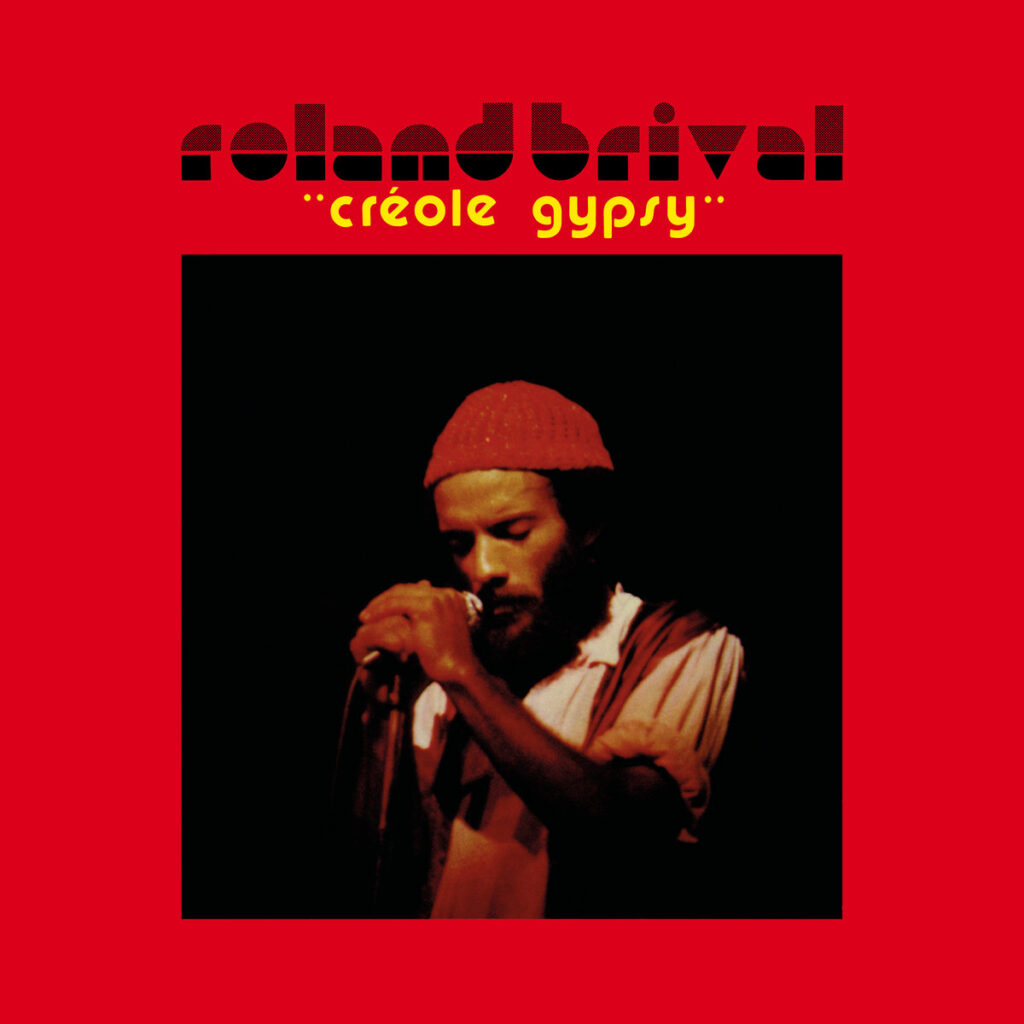
Many extraordinary works fade quietly into obscurity, only to be rediscovered years later. Roland Brival’s Créole Gypsy belongs firmly to this overlooked category, a staggering, deeply political, and intensely beautiful work of Pan-Caribbean spiritual jazz that has remained a ghost in the annals of music history since 1980. Now, rescued from obscurity and newly remastered by Soundway Records, this holy grail of Antillean music finally demands the reckoning it has always deserved.
Appreciating Créole Gypsy begins with understanding the life and perspective of its creator. Born in 1950 in Fort-de-France, Martinique, music represents just one dimension of Roland Brival’s versatility. He is a celebrated novelist, poet, literature critic, painter, and sculptor. Having spent his youth absorbing the artistic cross-currents of Paris and the vibrant jazz scenes of New York, Brival eventually returned to Martinique. He assembled a formidable ensemble of the island’s top musicians to record his debut album with a singular vision: to articulate the complexities of Créole identity, colonial injustice, and universal love.
The music industry of 1980 was not ready for such uncompromising synthesis. His label at the time flatly rejected the record. Undeterred, Brival self-released Créole Gypsy, and it circulated almost exclusively within a tiny, local audience in Martinique, becoming a fiercely protected secret among serious crate-diggers and jazz aficionados. Today, presented in a luxury flipback sleeve by Soundway, the physical presentation of the record finally matches its majesty.
What makes the album so distinctive is its seamless marriage of American spiritual jazz sensibilities with the ancestral roots of Martinique’s bèlè and carnival traditions. If you’ve ever been curious about what a Caribbean counterpart to Gary Bartz or Jon Lucien might sound like, this album offers a clear answer. The entire album is underpinned by the insistent, hypnotic polyrhythms of the ti-bois, a traditional percussion instrument typically made of bamboo and struck with wooden sticks, which roots the free-flowing saxophone and cosmic Rhodes piano flourishes firmly in Caribbean soil. Sung in a fluent mix of Créole, English and French, Brival’s voice is an intriguing instrument of its own.
The album opens with the title track, washing over the listener with the spiritual clarity of ringing bells and a languorous, melodic jazz bassline, while Brival’s masculine, enchanting vocals glide above rolling percussions. Just as you settle into the groove, the beat switches, punctuated by a visceral cry, and makes way for a soothing female choir whose backing harmonies pave the way for an atmosphere of profound relaxation. It is a brilliant, scene-setting overture.
This tranquility is immediately shattered by the second track, ‘ABCD’. Here, we are thrust into a frantic, fast-paced percussive storm. The track is built around an infectious, repetitive chant of “ABCD,” providing a chaotic anchor while Brival delivers his melodic, almost rhythmic poetry with enthusiasm. It feels urgent, a burst of intellectual and physical street energy.
Reclaiming the album’s jazz-inflected, melodic bass foundation, ‘Tan Jou Mab’ introduces a rich, classic 80s-style saxophone, layered pleasantly with shakers and congas. It is here that Brival’s literary and theatrical background truly comes through. Delivering enigmatic French lyrics, he switches between sluggish, deliberate phrasing and a dramatic, sprechgesang style. The effect is mesmerising.
The emotional and historical centerpiece of the record arrives with ‘Tunji’. The title itself is profound, derived from the masculine Yoruba name from Nigeria meaning “re-awake,” “reborn,” or “wakes again” (often a shortened form of Olatunji, meaning “wealth has woken again”). It signifies a child believed to be the reincarnation of an ancestor, a concept that ties the African diaspora back to its roots across the Atlantic. As the name “Olatunji” is reverently chanted throughout, Brival delivers an intriguing performance reminiscent of neo soul. The track is a slow, pacing, salsa-style ballad that aches with history and a sense of spiritual resurrection.
Moving into the penultimate track, ‘Chaj Mile-a’, the listener is greeted by a loud, powerfully melodic harmonica, a brilliant textural choice. The female chorus returns, backing Brival’s rhythm and reinforcing his lines, creating a call-and-response dynamic that feels communal and uplifting.
Finally, the album closes with ‘Just For You (Eden)’. Shedding the heavy political and ancestral weight of the preceding tracks, this is a pure, unadulterated sax anthem. “C’mon baby / just hold my hand,” Brival croons. It is a love song, yet executed with the same sophisticated style that defines the rest of the record, rough and appealing.
Roland Brival’s Créole Gypsy is a crucial reclamation of Antillean cultural memory. The masterpiece is forged in the crucible of colonial history and diasporic longing, still it remains fundamentally joyous and artistically unbound. Soundway Records has done the music world a monumental service by unearthing this key piece of the Caribbean jigsaw.
Soundway’s reissue of Roland Brival’s Créole Gypsy is out now