

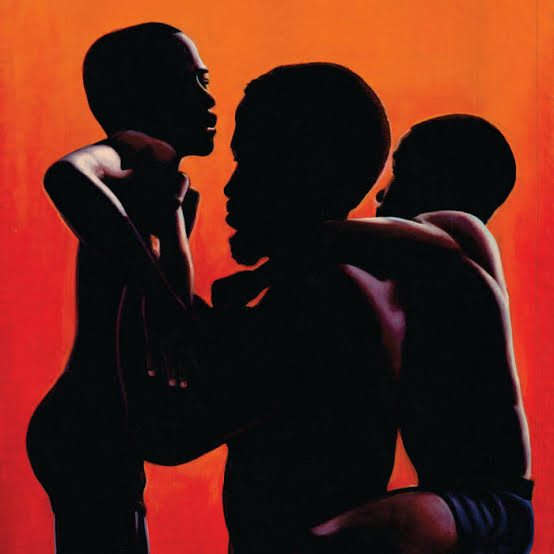
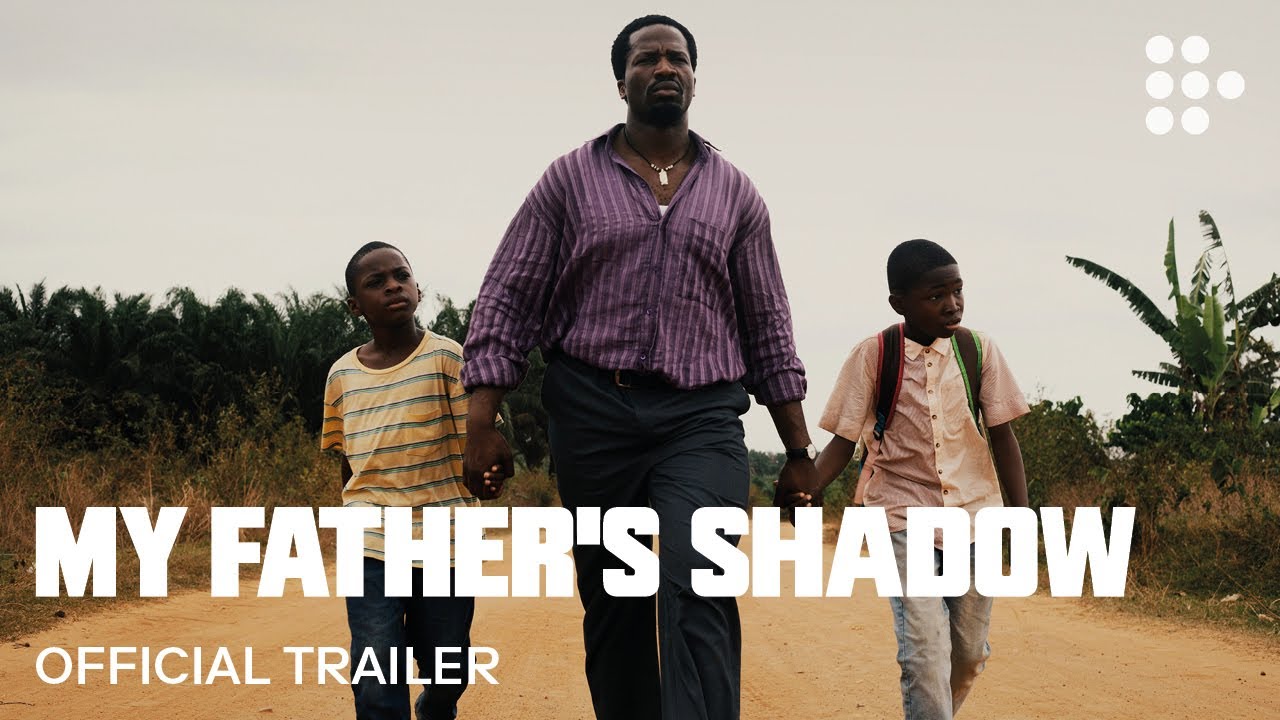
The summer of 1993 in Lagos exists in the collective memory as a period of suspended animation. It was a time defined by the heavy, humid silence that precedes a storm, specifically the political storm of the 12 June election annulment and the subsequent creeping dread of the Abacha years. When Folarin, the patriarch in Akinola Davies Jr.’s My Father’s Shadow, mutters that “sometimes… it’s hard to know what to do,” he isn’t just speaking to his sons; he is articulating the paralysis of an entire middle class caught between the remnants of colonial order and the erratic pulse of military rule. To capture this on record, Duval Timothy and C.J. Mirra have avoided the easy route of highlife nostalgia or kinetic / frantic Afrobeat. Instead, they have produced a score that feels like a psychogeographic map of a city holding its breath, opting for a subterranean minimalism that prioritizes texture over melody and atmosphere over anthem.
The record begins with the hauntingly sparse ‘Incantation.’ It is a two-minute prologue that functions like a slow-bleed of light into a dark room. A solo vocal rises through a thick layer of reverb, sounding less like a performance and more like a private ritual being overheard. This isn’t the polished choral tradition of a Lagos church; it’s something older and more skeletal. For a Nigerian listener, this track bypasses the intellect and hits the nervous system. It evokes the quiet of a Lagos morning before the generators roar to life, a brief window where the air is still cool enough to think. It sets a precedent for the entire soundtrack: this is music concerned with the spaces between things, the silences between words, the shadows between father and son.
As we move into ‘Arriving,’ the score shifts into a more corporeal space. Here, the collaboration between Timothy and Mirra becomes tactile. We hear rhythmic, panting vocals that act as a surrogate for the heat and the physical labor of navigation. There are whistles, echoing synths, and the occasional sharp burst of distortion that feels like the glare of the sun reflecting off a rusted Danfo bus. It captures that specific sense of “arrival” in Lagos, not a moment of relief, but a sensory assault that demands immediate recalibration. The track mimics the way the city’s noise floors are never truly silent; there is always a low-frequency hum, a rising cymbal crash of activity, a sense that something is being built or broken just out of sight.
‘Journey Begins’ and ‘Journey To Lagos’ represent the record’s most expansive moments. Timothy’s signature piano work, usually defined by its emotive, repetitive phrasing, is here submerged in Mirra’s atmospheric production. It’s adventurous, but the adventure is tinged with a distinct sense of “long-throat” anxiety. The instrumentation speaks where the characters cannot; it builds into an immersive experience that feels like moving through the various strata of Nigerian society. You can almost feel the transition from the manicured lawns of Ikoyi to the dusty, high-stakes streets of the mainland. The music doesn’t just “score” the scenery; it inhabits it, providing a sonic analogue for the internal journeys of Folarin’s sons as they grapple with their father’s complicated legacy.
The score takes a sharp, discordant turn with ‘Puppet Dance.’ It is a track that feels intentionally “agitating”, mimicking the performative aspects of life under a junta where everyone is dancing to a tune played by invisible hands. It is followed by ‘Horses,’ which relies on the bold, resonant bass strings of a guitar. The choice of instrument here feels significant, there is a groundedness to it, a weight that suggests the burden of lineage. The rumbling percussions that close the track aren’t military cadences, but they carry a similar threat, sounding like someone in a small room with a heart beating too fast. It captures the stoicism required to survive 1993, a year where masculinity was often a cage of one’s own making.
‘Beach Arriving’ is perhaps the most visceral piece of sound design on the album. It features a rising, low-end rumble that sounds like a distant explosion or a collapsing building. It’s an ethereal, richly harmonic piece, but one that is constantly being threatened by encroaching noise. In the context of the film, it serves as a reminder that even in moments of leisure or escape, the political reality of the country is never more than a few miles away. The use of pads and synths here is lush, but they feel thin, as if the reality of the world is about to tear through the fabric of the music. It’s a masterful use of tension that reflects the fragile peace of the era.
As the narrative winds toward its inevitable conclusion, ‘Passing On’ introduces a brass instrumentation that feels like a weary nod to the bands that traditionally play at a Yoruba funeral. However, it quickly pivots back to a cinematic piano line. It’s a beautiful, soul-calling transition that feels deeply human. Then comes both parts of ‘Coup’, where melody is abandoned for pure suspense. The keyboards and percussion are jagged and unpredictable. For those who lived through the actual coups of the nineties, the sound of the radio was the most terrifying thing in the house. Timothy and Mirra capture that specific frequency, the sound of a nation’s fate being decided by a few men in a dark room while everyone else waited in the silence.
The album culminates with ‘Funeral’, a track which finally lets grief out of its box. The lyrics in the Yoruba language are not just ornamental; they are foundational. They ground the entire experimental journey of the score in a specific soil, a specific history. It is a “moody” and “soulful” mourning that avoids the saccharine tropes of most Hollywood film endings. Instead, it feels like an honest accounting of loss – the loss of a father, the loss of an era, and the loss of what could have been. The “shadow” in the title is finally revealed to be a long one, stretching from the private grief of a family to the public mourning of a country.
What Duval Timothy and C.J. Mirra have achieved here is a rare feat in contemporary scoring. They have created a work that is academically rigorous and sonically innovative, yet remains “familiar” to those who know the texture of the life it describes. It is a record that rewards deep listening, revealing layers of texture and delicate harmony that reflect the complexity of its subject matter. This isn’t just a soundtrack for a film; it’s a vital piece of the 2026 release landscape that demands we look closer at the shadows we’ve inherited. It speaks with a quality that is “top notch,” not because it is perfect, but because it is honest about the messiness of being alive in a time of change.