


CELESTE, Lyon’s avant-garde metallers, had an unexpected viral moment in November last year. Five women on a girl’s night out travelled from Liverpool to Birmingham for what they assumed was a gig by easygoing, Mercury-nominated singer Celeste. Instead they walked into The Asylum venue (surely a clue this wasn’t the gig they were looking for) after support band Grief Ritual (surely an even bigger clue) finished up, just before the headliners took to the stage and pummelled the sparsely attended audience into submission.
Realising the group’s mistake, one sympathetic metalhead in the crowd took them under his wing and the gang ended up staying for the whole show, cheering the band on. They ventured into the night to continue their festivities. Their chaperone went home where he promptly wrote up the incident on X for likes and shares. The day afterwards, CELESTE (the band, who prefer their name styled in all caps, which helps) had a flurry of interest greater than anything since their formation in 2005. The story resonated with anyone who had ever imagined going to a metal show by mistake.
I first saw CELESTE, on purpose, in the Spring of 2017 supporting Inter Arma at another sparsely attended show in Bristol. They wore their trademark red head torches accompanied by relentless strobe lighting and billows of dry ice, as if they were miners in search of the heaviest moment possible as the mine collapsed in around them.
Headliners Inter Arma had released Paradise Gallows in 2016, one of the best metal albums of the decade. With CELESTE they had recruited kindred spirits committed to blending various forms of extreme metal together: sludge, black metal, doom, death metal, post metal, etc. Now in the middle of this decade, we can see that the 2010s thrived on this process of concoction. The 2000s had seen heavy metal’s mainstream evolve from nu metal to the New Wave of American Heavy Metal, metalcore and deathcore, back to a classic “Heavy Metal” sound. With metal’s centre ground turned inside-out and back again, the genre’s innovative thinkers turned their attention to the fringes.
When CELESTE released the newly remixed and remastered Morte(s) Née(s) (trans. Stillborn) in 2010, they helped give birth to a new vanguard of heaviness, supported in places like the increasingly experimental Roadburn Festival in Holland. Europe had a strong showing in this regard. Norway’s Kvelertak released their self-titled debut in the same year, which was a mission statement that imagined what AC/DC would sound like if they had formed after the Second Wave of Black Metal. Belgium’s Amenra had emerged a few years previously and were exploring the same hinterland where hardcore was spliced with extreme metal. Amenra released albums on Relapse Records and Neurot recordings, and spawned the Church of Ra collective which included Ghent’s superb Oathbreaker (now back with us after a prolonged absence).
Where the centre couldn’t hold, the widening gyre began to spin faster. Fifteen years later, Morte(s) Née(s) is still a whirlwind. Its crisp, bright production lets the music blaze like a cold sun. Opener ‘Ces belles de rêve aux verres embués’, a song the band says they’ve performed live more than any other, is emblematic of their sound. Antoine Royer’s pummelling drums are front and centre in the mix, and on the following track, ‘Les mains brisées comme leurs souvenirs’, he holds the song on the precipice of collapse before hauling it forward. Guillaume Rieth’s guitar work gives the songs texture and delineates grandiose shapes in the darkness which lead many to describe this kind of music as “blackened”.
Though CELESTE use full diminished chords, and melodic configurations like the minor 3rd, flat 2nd and flat 5th, which give the album the texture of black metal, bassist and vocalist Johan Girardeau decried the influence at the time of the album’s release. He even described the production of black metal as “total crap” in an interview with this website. That tallies with the crystal clear production in evidence here, but he’s changed his tune somewhat with this re-release, describing ‘Ces belles de rêve aux verres embués’ as a “sharper turn toward the black metal spectrum” than the music on the band’s previous two albums, Nihiliste(s) (2008) and Misanthrope(s) (2009).
The first four songs on Morte(s) Née(s) show a band that only knows how to escalate. They distil the suffocating aggression of their sound best in the two minutes of the superbly titled ‘Il y a bien des porcs que ça ferait bander de t’étouffer’ (trans. ‘There Are Plenty of Pigs Who’d Get A Hard-On From Suffocating You’). CELESTE whip up a storm in ever-tightening circles, with Girardeau’s roar and gargling enunciation wrapping around the syllables of his native tongue. Just as Kvelertak sing in Norwegian, CELESTE’s decision to sing in French really works for them, with the language’s rhotic, guttural “r’ wrenched from the back of Girardeau’s throat in the opening line of ‘En Troupeau des Louves en Trompe l’Oeil des Agneaux’: “Forte de sentir enfin tout revenir”.
The song with no lyrics, ‘(s)’ – instead with a disturbing underlying sample of a woman whimpering and screaming in pain – is where the album’s themes hit home. These include violence against women and the betrayals people commit to undermine each other, and themselves. There are cracks of hope, such as reaching back to childhood innocence on ‘Un miroir pur qui te rend misérable’, though this culminates in bodies found “Au fond au creux de cette marre” (trans. “Deep in the hollow of this pond”).
Referenced artists
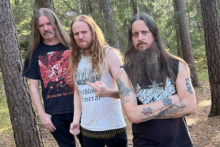
Inter Arma
Columnus Metallicus: The Best In Heavy Metal For April
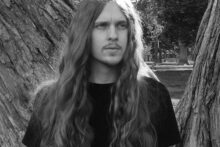
Kvelertak
Columnus Metalicus: June’s Heavy Metal By Pavel Godfrey

Cult Of Luna
Columnus Metallicus: Heavy Metal For February Reviewed By Kez Whelan
Grief Ritual
Grief Ritual
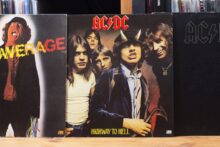
AC DC
Three Album Run: How Rock Music Never Bettered AC/DC’s Powerage, Highway To Hell & Back In Black
Doom metal makes its first serious foray into the material on ‘(s)’ and once established, it gives the songs a chance to breathe. When they slow things up, CELESTE draw serious power down into their songwriting. Album closer ‘De sorte que plus jamais un instant ne soit magique’ is a thirteen-minute journey which begins in disorder. But, with the piano and strings accompaniment of ensemble Les Fragments de la Nuit, the album ends, as Girardeau describes it, “like a requiem”. The song is a release from the album’s stifling clutches, but also one where we escape into a foreboding future.
With Morte(s) Née(s), CELESTE refined a sound which would carry them into the ensuing fifteen years. They owe a lot to the depth-charge intensity of post-metal pioneers Cult of Luna, for one, but with this record crafted their music so that it was almost uniquely oppressive. The album taught them when to take it to the limit and when to open things out just when it mattered. CELESTE’s Audiotree session from 2018 in the wake of 2017 album Infidèle(s) showed a band that had sharpened up their attack, and was further honing what they had already perfected here. Morte(s) Née(s) remains the claustrophobic soundtrack to a bad night in, and as it transpires, an accidental night out too.