It’s 5 May 2023 and Georgian anarcho-industrial collective Quemmekh are playing the Holoseum in Tbilisi’s old town. They’re flanked by wall-to-wall screens depicting burning cop cars and riot footage as a tall, imperious, rainbow-ribboned shaman – performed by queer Tbilisi icon Andro Dadiani, who has since found political asylum in Brussels – stands in the audience with a live sheep on a leash. It’s a gripping, emotionally violent and unforgettable show.
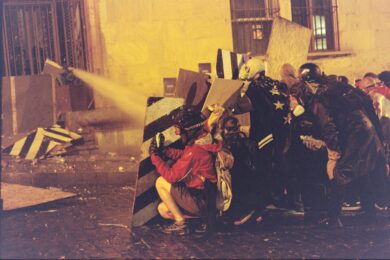
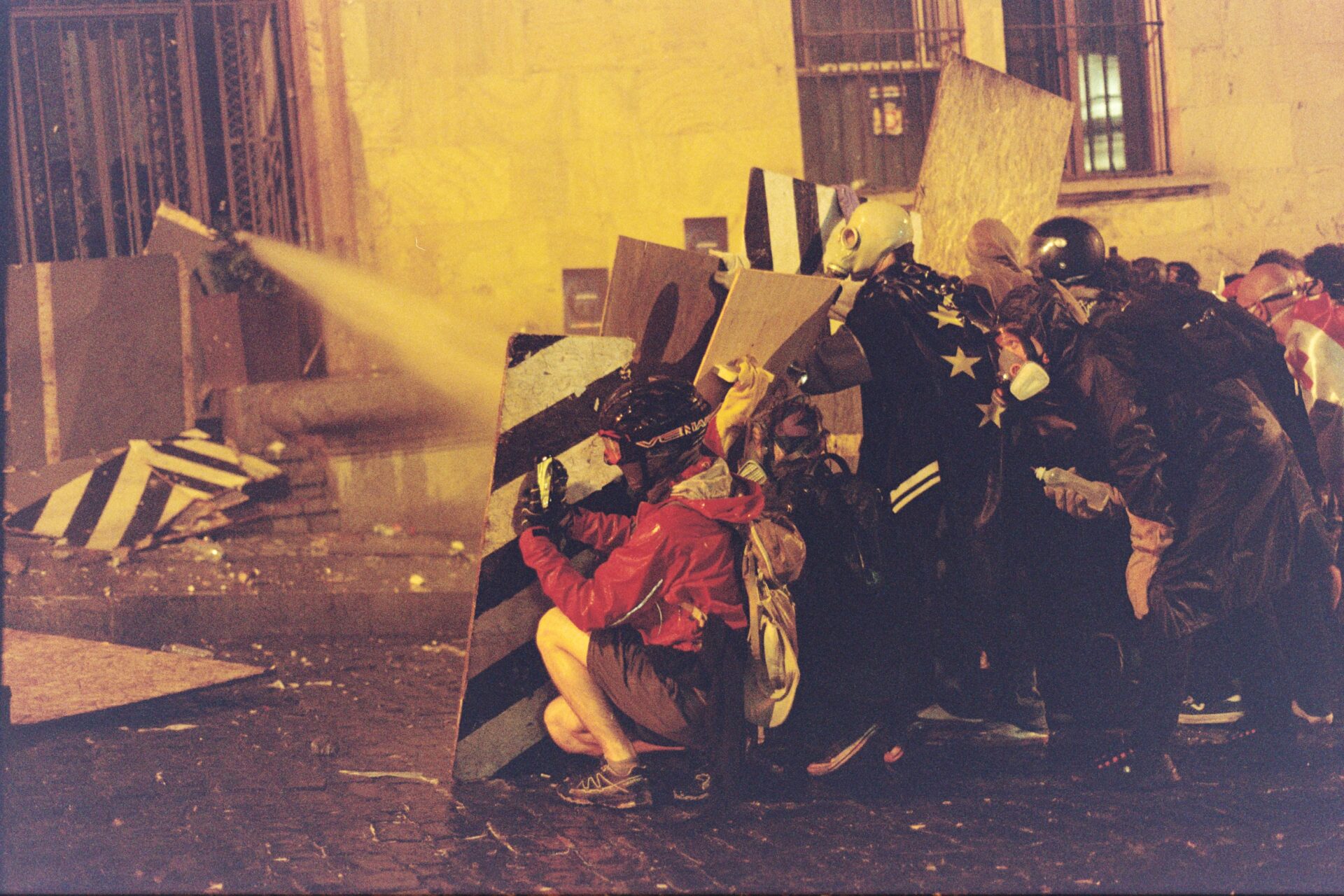
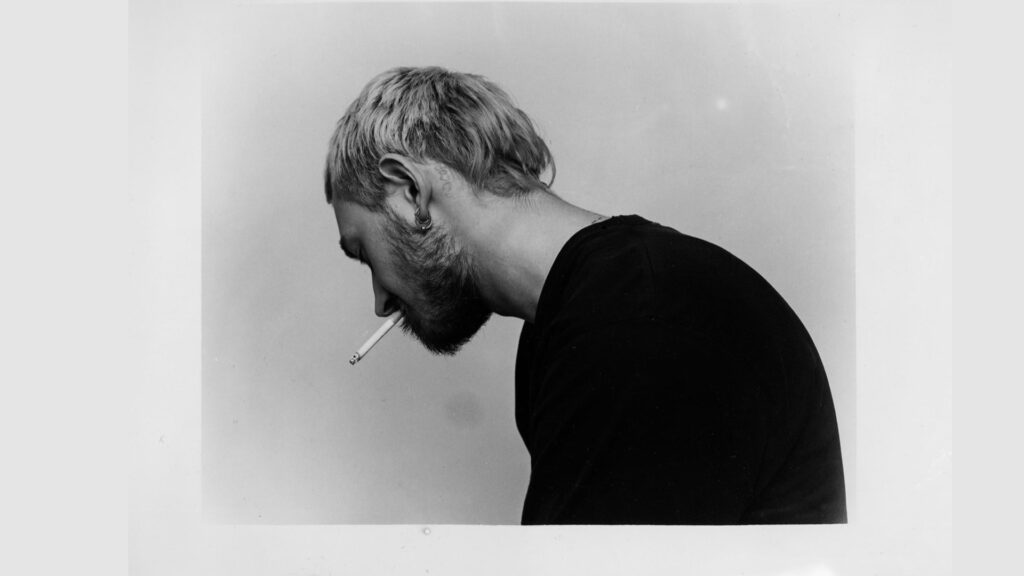
Flash forward to spring 2024 and the city’s main artery Rustaveli Avenue is choked with incendiary protests against a proposed Foreign Agents law commonly perceived as having been designed to mute and eliminate civil society. The law obliges all organisations receiving more than 20% of their income from abroad to register as ‘Foreign Agents’ and to submit comprehensive accounting to the government. On paper this may sound harmless but in the residual paranoia of the post-Soviet sphere the term ‘agent’ is a pejorative one and can close many doors. In a small country such as Georgia NGOs serve a vital function at infrastructural and socio-economic levels; since the law got passed various animal shelters, for example, have since closed down having been proscribed as foreign agents. Sandro Kerauli, chief Quemmekh architect/bandleader was detained – “I was arrested, yes. Two days, fines, intimidation – nothing heroic, just routine repression.”
The Georgian spirit is a stoic one, however, and this is most certainly not their first game of Russian roulette…
The Georgian Dream party has governed Georgia since 2012, under the reported influence of eccentric Russian-made oligarch Bidzina Ivanishvili. During the 2024 spring and winter resistance actions it threw all of its might at the nightly throng of protesters, the city centre engulfed in tear gas as water cannons prowled, hummed and hosed. The newly formed Trade Union Of Musicians In Georgia (TUMIG), the first of its kind in The Caucasus, and originally conceived for traditional functions such as labour rights, fair pay and publishing legalities, quickly pivoted. “Following the ‘Russian Law’ protests and the subsequent arrest of several artists, we launched ‘Georgian Musicians for European Future,’” Oto Berdzenishvili, founder of TUMIG, tells tQ. “This initiative not only helped cover legal fees for detained protesters but, more importantly, demonstrated the unwavering unity of Georgia’s musical community.”
This tiny Caucasus country sandwiched between Turkey, Armenia, Azerbaijan and Russia has a history of repelling incursions – sometimes successfully, sometimes partially. After the collapse of the Soviet Union,a civil war and a coup d’etat, it became a new republic in 1995 under Eduard Shevardnadze, and like much of the post-Soviet sphere, struggled to unite under any specific ideology, so severe a shadow did the USSR cast (lest we forget, Stalin was born in Georgia). One aim gradually settled in the consensus, however, that the country should look to European democracy and eventual EU membership as a model for the future. Georgia’s path to Euro-Atlantic alliance was constitutionally enshrined in 2017 – ironically by the very government that has since pulled every manoeuvre to derail it from that goal. In 2008, Russia invaded Georgia in a short but indelible conflict that sees Russia still occupying 20% of Georgian territory via South Ossetia (Tskhinvali) and Abkhazia, and occasionally moving the physical razor-wire border demarcations under cover of night, inch by inch.
After receiving EU candidacy status in December 2023 things briefly looked rosy until Georgian Dream started unrolling the Foreign Agents Law and further repressive legislation, eventually announcing a year later that they would be stalling EU integration until 2030 (deemed by many to be an arbitrary date, easily euphemised as “we’re not going to bother at all”). This triggered an even bigger wave of protests than in the spring and the government responded in kind with a sadistic slew of measures beyond the regular protest deterrents. These included “torture vans” with blacked-out windows so beatings could be conducted invisibly, and the deployment of “titushky” – anonymous thugs in black masks sent out into crowds to beat and assault protesters with no paper-trail ties to the government, and thus free from any accountability. Mass imprisonment of political prisoners followed. Laws were fast-tracked in a tiered way to severely constrict rights to freedom of assembly. Hypotheses abound as to why this pivot away from the West was made so suddenly, but one has it that it stems from a fraudulent Credit Suisse banker having embezzled a chunk of Ivanishvili’s wealth before committing suicide in 2020. This was apparently enough to plunge the de facto ruler into a simmering paranoia about a western conspiracy to plunder his wealth. It’s worth noting that Ivanishvili resides in a glass palace on a mountain outside of Tbilisi and maintains a shark tank, a private zoo and a vast art collection.
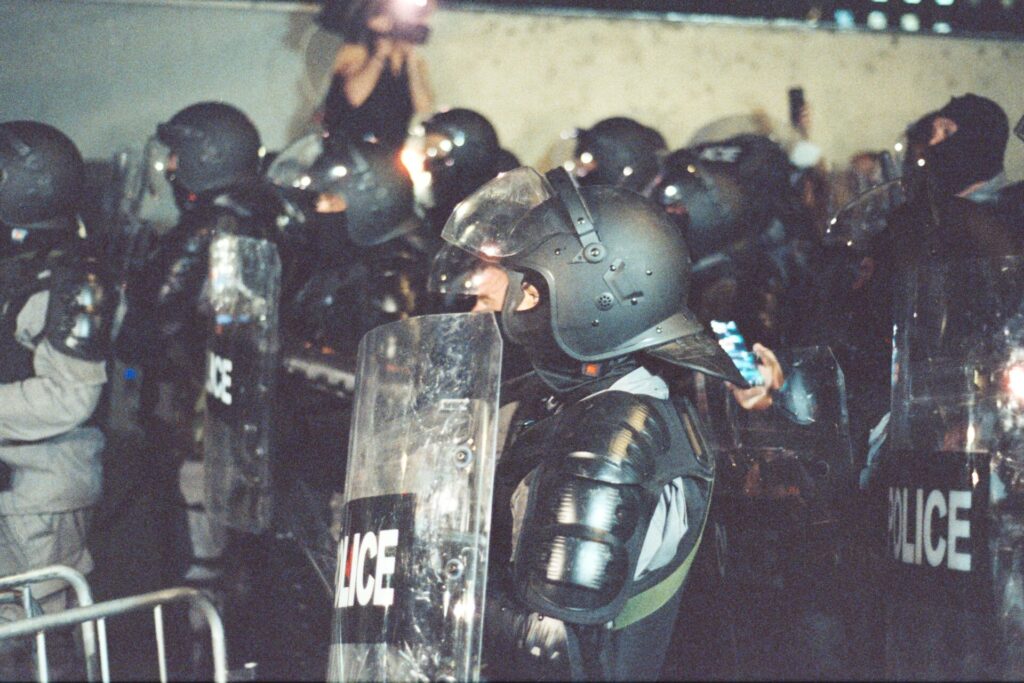
Whether Georgian Dream is a pro-Russian government remains to be seen, but whatever their orientation, the pivot to oppressive authoritarianism and their use of obscene state violence is undeniable. And if they aren’t pro-Russian they’re certainly doing an excellent job of cosplaying at it, quoting heavily from the Kremlin’s playbook in their anti-LGBTQ+ discourse and post-Surkovian prattlings about “sovereignty” and “peace”.
Meanwhile, the musical underground is exploding with vigorously diverse and colourful talent. As is historically the case, culture has been reactive, and with Georgia’s potential Euro-Atlantic future held to ransom in the interest of an oligarch’s consolidation of wealth and power (Georgian Dream can be thought of as a corporation rather than a government) Georgia’s cultural scene has blossomed profoundly.
tQ speaks to Quemmekh’s Sandro Kerauli. “Under the Ivanishvili regime, power is quiet, opaque, and cowardly,” he says. “It doesn’t need tanks – its atmosphere and aspirations are enough oppression. Quemmekh isn’t opposition media. It’s a pressure point. If the system is choking culture, then culture has to push back with its full body. The opposition right now is fragmented, reactive, and still too polite. There’s moral clarity among people, especially the younger generation, but institutionally it’s weak. Too many leaders are stuck in old scripts while the regime has already moved into something more cynical and post-ideological.”
Oto Berdzenishvili: “To bridge the gap between the arts and social justice, we developed the “Musical Accents” project. When a community faces an injustice or a crisis, we bring the music to them. We use live performances to amplify local issues before they escalate.”
Tato Rusia from Tbilisi ensemble MokuMoku: “The politics affects the landscape and the landscape is our lives. When there is unrest in the country, which is rightfully being protested – it’s the air we breathe. It’s a small country so everything is concentrated.”
All the more impressive is that (aside from a Soviet-inherited state-funded model for traditional musicians) almost the entirety of the Georgian music scene is self-organised, grassroots and DIY with only a handful of labels among an ocean of self-releasing artists. There are Leno, CES, and Stockton which house some of the bigger artists like MokuMoku and Bedford Falls, but even these bigger bands handle almost everything outside of manufacture and distribution themselves. And while this mutually-supportive community has not been eroded by the aggressive competitiveness that can occur within more concretised industry models, it does also necessitate projects such as TUMIG to ensure that these underground artists and musical educators are getting paid.
TUMIG’s Oto: “Only months after our founding, we were admitted into the International Federation of Musicians (FIM). We are proud to announce that TUMIG will host the 20th Annual European Group Meeting in Tbilisi. Being part of FIM provides us with a direct line to world-class professionals, ensuring that as we build the Georgian music scene, we do so with global expertise and solidarity”. Tbilisi will host the FIM conference from 3 to 5 March 2026.
In the four years I’ve been living in Georgia I’ve been exposed to gripping, eclectic and unpredictable music almost every night – here is a distillation of what I consider some of the best and most ingenious artists currently working.
MokuMokuPressure (Feat. Aine Merme)Stockton
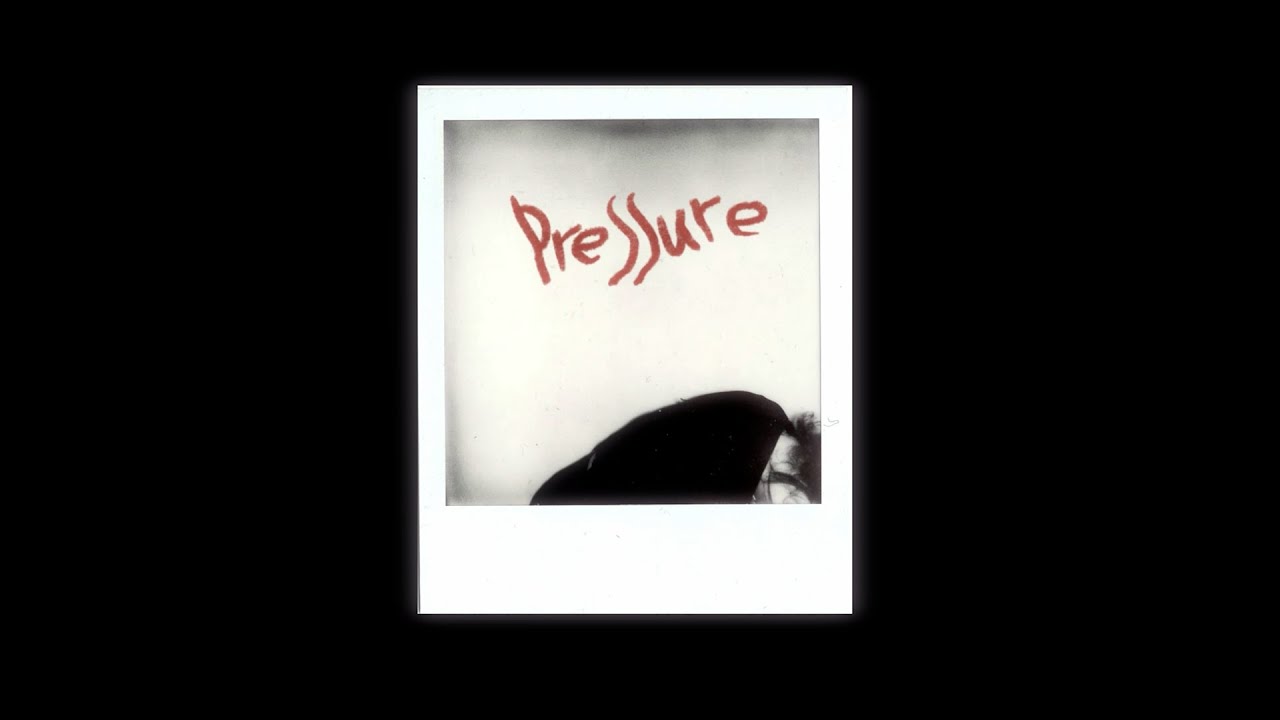
Tbilisi’s MokuMoku formed ten years ago when two young beat-makers Tato Rusia and Jondo Japaridze pooled their influences, gradually accumulating live musicians and producers until they were an eight-piece collective channeling trip hop, jazz, post rock, ambient and sixties film score aesthetics into a thunderous and sensual beast that frequently steals the show at Tbilisi Open Air – the biggest annual Georgian festival,which last year morphed into a two-day radical cultural action in light of that encroaching authoritarianism . Their live shows can swerve into high-powered improvisation – when I last saw them perform at Mutant Radio it was like hearing Talking Heads lock horns with Innervisions-era Stevie Wonder. Last summer they toured Germany, with a date on the legendary MS Stubnitz – an ex-Soviet fishing vessel repurposed as an avant-garde venue, currently moored in Hamburg.
MokuMoku’s MC Tato Rusia: “It gradually became an 8-piece over several years – We run it like a democracy and sometimes, like any democracy that doesn’t work but when it does it’s amazing.”
Will Kolak‘Mzes’Bloom
The track ‘All My Friends And Enemies Are Fine’ launched Will Kolak into the scene in 2023 with searing guitars, ingenious melodies and surging power-trio dynamism. Since playing Tbilisi Open Air in 2024 they’ve enjoyed increasing profile in Western Europe,playing Mad Cool Festival in Madrid in Summer 2025 in addition to regular dates across Spain and Portugal.
“I’m super happy that my music is giving me opportunities to travel around and see beautiful places, meet amazing people with the same interest, same influences,” says frontman and principal songwriter Tornike Tsorikishvili “2025 was the first year that we played outside Georgia, we did a few shows in Germany and Spain, and I must say the underground is very similar in every country; we deal with the same problems, we are enjoying the same brew, we mosh the same, we deal with same traumas.”
“In Georgia we’re all touched by the regime, the corruption is huge and everyone is struggling – except for the high-class, obviously.”
Quemmekh‘Burnt Gardens’ (Feat. Andro Dadiani)Self-Released
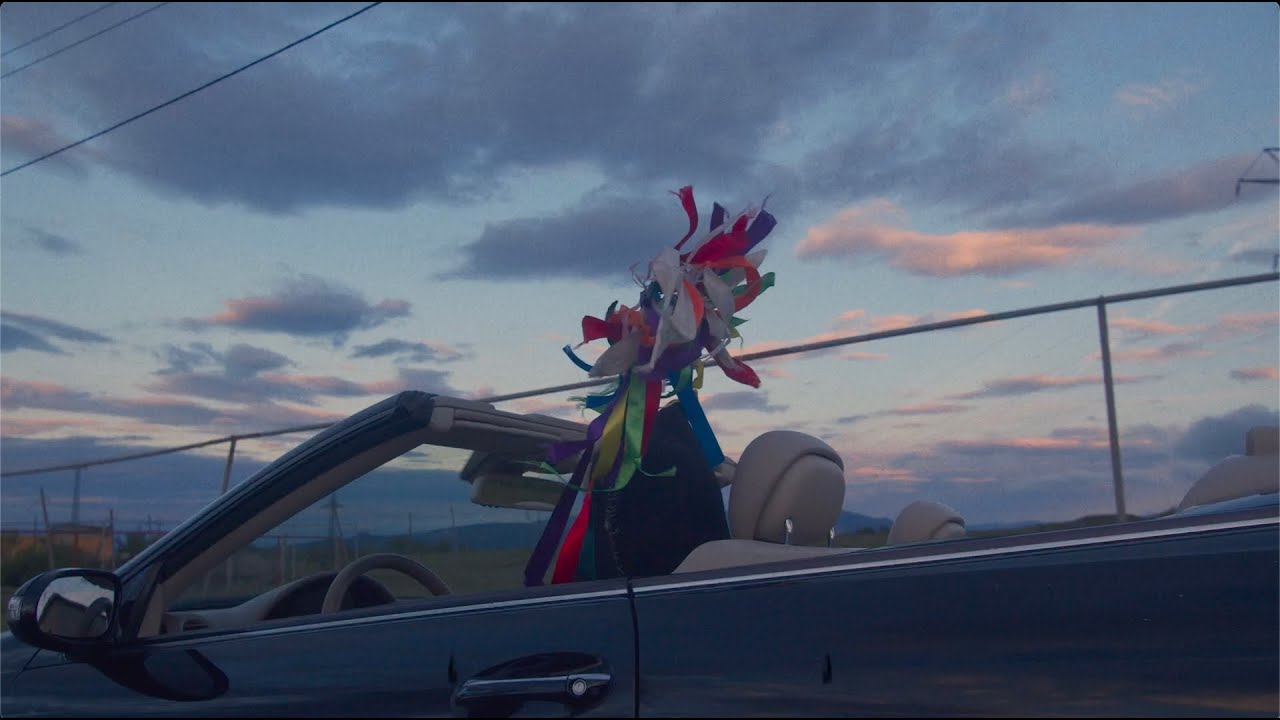
Quemmekh formed in Tbilisi around 2015. This song features Andro Dadiani , a queer performance artist and Tbilisi alternative icon who also performed the shaman role from the video at the 2023 Holoseum gig.
Quemmkh’s Sandro Kerauli: “I started It less as an “artist band” and more as an art syndicate – a reaction to stagnation, hypocrisy, and the polite silence expected from artists here.
“The name Quemmekh doesn’t have a neat dictionary translation, but in Georgian pronunciation it echoes the word for “cannon.” We wanted a name that would match a sudden, explosive arrival on the local art scene, so Quemmekh emerged as a deliberately altered transcription. Musically, I sit between industrial metal, electronic body music, and protest noise. Heavy guitars, synthesisers, club-ready rhythms, and confrontational vocals filtered through post-Soviet trauma, Georgian street politics, and rave culture. You can mosh to it or dance to it. Both are valid responses.”
Quemmekh are one of the more overtly politically-charged bands in Tbilisi,outside of the more generic (but no less exciting) punk and metal scenes. They’ve just been signed to UK label Revolution, about which Kerauli says: “We’re not changing what we do to fit the label; the label came to us because the project already had a spine. That’s important.”
Aine Merme‘Writing A Love Song Is Brave’Self-Released
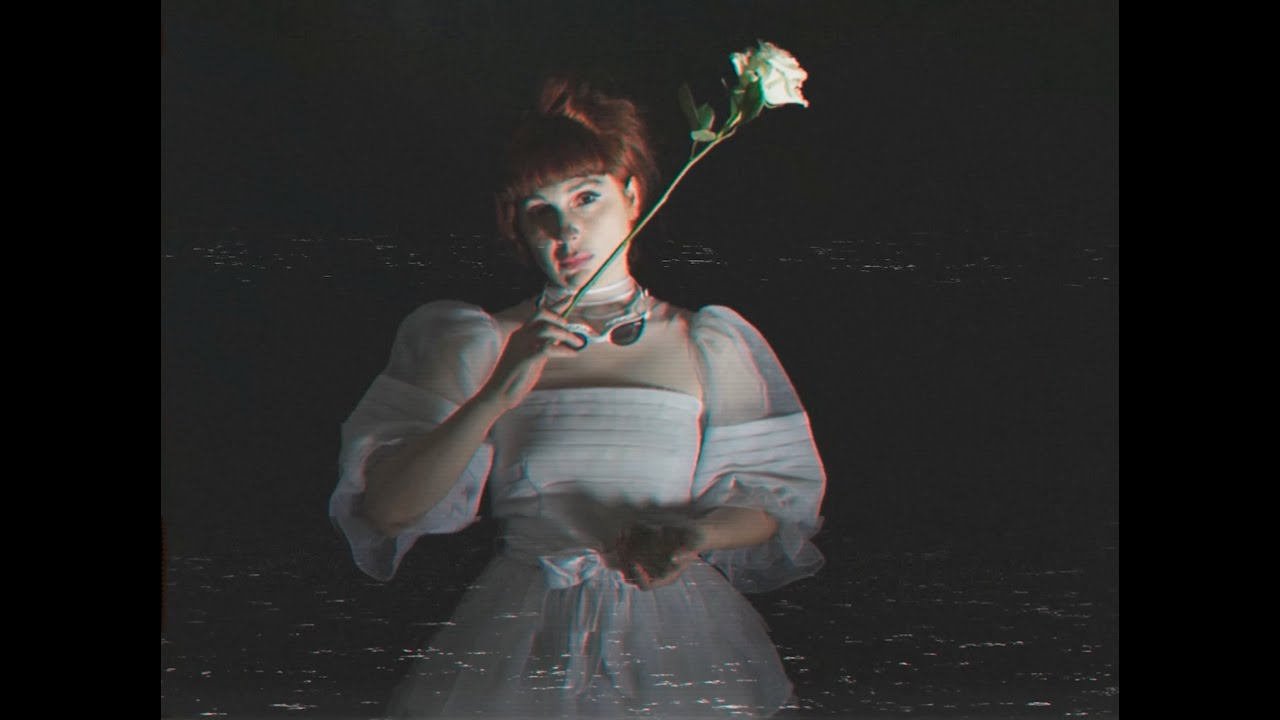
Aine Merme, aka Natuka Natsvilishvili, sings on MokuMoku’s aforementioned ‘Pressure’, but their primary output is a steady stream of maverick and sinuous avant-pop that’s up there with the likes of Mitski in terms of vision, innovation and execution.
“Overall, I simply dissociate into a sea of multi-character narratives within my mind,” she says. “I fish for whatever is there – observations, memories, or different kinds of feelings and perceptions – and let them move like molecules in hot water. When they collide and evaporate, I capture that vapour and transform it using my musical abilities. It is often chaotic and symbolic, because you cannot put vapour into words any other way. It isn’t meditation or liberation, but a process of transformation that flows by itself, perhaps gaining only a bit more intensity in times of emotional vulnerability.”
Psychonaut 4‘Mzeo Amodi’Immortal Frost
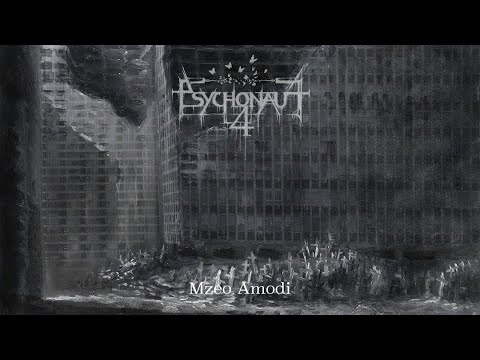
Formed in 2010, Psychonaut 4’s “depressive, suicidal black metal” has seen them become one of the biggest Georgian bands, touring internationally and signed to Immortal Frost Productions. Soon to be playing with Atilla Csihar’s first band Tormentor in France, they have performed in over 24 countries. Frequently programmed on the Sunday afternoon main-stage at Tbilisi Open Air festival, the juxtaposition of a receding sun and their desolate, pummeling squall is at once absurd and perfect ,and despite international success they’re not above playing tiny DIY punk bars like Paperbox Bar when they’re in Tbilisi.
Sakartvelos Gaumarjos.