

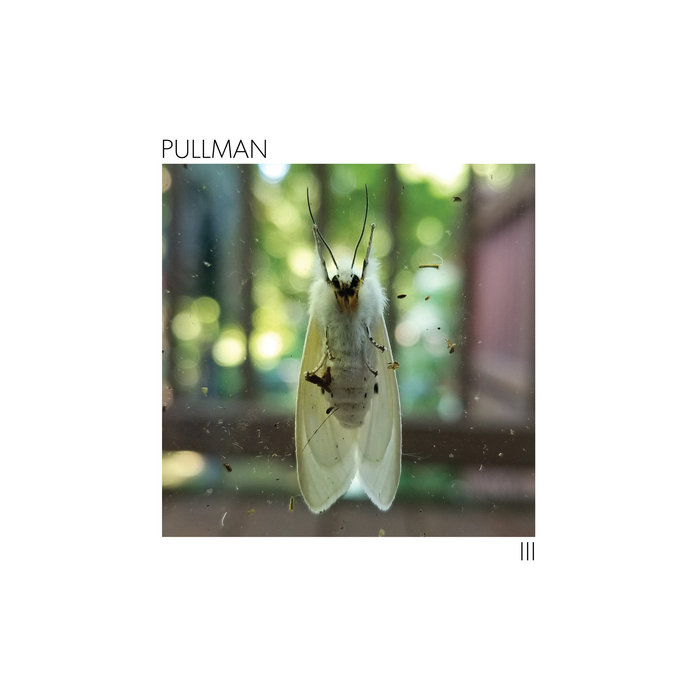
The instrumental supergroup known as Pullman first slunk onto the scene with their dream-like debut of genteel post-rock, Turnstyles and Junkpiles, in 1998. Consisting of Tortoise’s Ken “Bundy K.” Brown, Chris Brokaw of Come (the alternative indie outfit rather than pre-Whitehouse electronics obliterators), Curtis Harvey from Rex, and Doug McCombs also of Tortoise and Eleventh Dream Day, they followed this, in 2001, with Viewfinder for which they enlisted the drumming talents of Tim Barnes, whose CV includes working with Silver Jews, Jim O’Rourke, Wilco, Sonic Youth, and so many more. A studio-only outfit, the group then quietly dispersed to focus on their separate projects for a couple of decades.
A glorious return from the off, III begins amidst a shocking cloud of fuzz with everything a little broken up around the edges. The cascading, blown-out harmonics are reminiscent of the back half of Sleater-Kinney’s ‘Modern Girl’. Buried within the distortion lies a melodic heart, thumping thunderously on.
‘Thirteen’ finds fingerpicked scurries interrupted by the buzz of an almost tuned radio. It peters out into soft drones fitting somewhere between the electronic patchwork of Fennesz’s Endless Summer and the primitive guitar that John Fahey made his name with, albeit the more playful realm of Fahey’s Days Have Gone By or the more recent, bucolic, soundscapes of Daniel Bachman.
The slow fade-in of slide guitar and delay-stunted shimmers signals the arrival of second track, ‘Weightless’, which then motors along like the world drifting by a trundling train’s window. You can’t quite latch on to anything for longer than a few moments, just a fleeting glimpse before it’s gone. The only thing that seems to sustain is the mood cast by the sun and haze.
The banjo strings of closer, ‘Kabul’, intertwine with surging celestial drones and the momentum of stomping percussion. These sounds are both textural and interchangeable, swapping focus between the constituent parts as if you were able to direct your ears with the same intent as your eyes.
A gradually growing interplay of plucked notes, edging distortion, and gain-cranked guitar volleys make up the 13-minute ‘October’. Forthright licks leap from a carpet of soft gauzy tones and burnt-cornered time. It’s as if thoughts arise for just a second or two before they are gone again. It’s the transience of memory. A sustained outpouring. A baseline of notes, thoughts, and ideas constantly trickling along with great leads emerging from the softy teased six-strings and gentle pulsing bass, like shards of sunlight poking through a blanket of clouds.
Sadly, around the start of the pandemic, the news was made public that Tim Barnes had been diagnosed with early-onset Alzheimer’s Disease. A condition that has reduced his speech to little more than “yes” and “no”. He is now situated in a full-time memory care facility decorated with posters of his past work and performances. It’s tricky not to listen to this album with that knowledge in mind. Just as it must have weighed heavy upon the musicians performing these lustrous washes of sound. For III, Pullman have rekindled the magic that made them such a staple nigh on 30 years ago, but the passage of time has taken its toll.