

Norway’s prominence in extreme metal can be attributed not only to the dark, saturnine winters of Scandinavia, but also to deep-seated pagan traditions and the rebellious anti-Christian black metal counter-culture that emerged in the 1980s and 1990s. These elements intensified conditions necessary for the development of genres such as Death and Black metal.
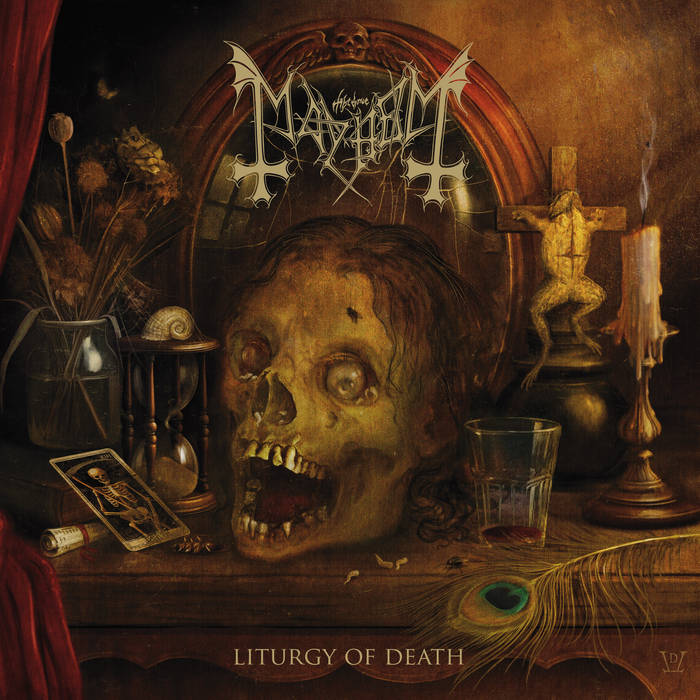
As pioneers of the Norwegian Black Metal scene in the 1980s, Mayhem have continued to reign for over four decades in death and black metal, releasing new material roughly every five to seven years. Their seventh studio album, Liturgy of Death, is their “most commercial record” and the most thematically focused to date, according to Hungarian-born vocalist Attila Csihar.
There is a lot to unpack within each song, thematically and lyrically. The album moves fluidly between Latin, English, Norwegian, and is densely informed by research into death as it appears throughout ancient literature, poetry, paintings and architecture. Mayhem, especially in their latest studio release, are fully preoccupied with death from a religious perspective, especially in the fear it inspires.
Musically, Mayhem has managed to stay relevant without sacrificing the sounds and techniques ubiquitous in black metal, foundational to their genre. Aside from the slow opening of the first track, which is atmospheric and almost symphonic in tone, ‘Liturgy of Death’ quickly plunges into fusillading, hectoring percussion. ‘Despair’ is even more immediate, erupting into a relentless blast-fest of double-time, stampeding drums, searing tremolo riffs, and textures reminiscent of second-wave black metal.
Across the album, Csihar proves himself a top-tier metal vocalist operating between growling, shrieking, operatic wailing and other inhuman vocalisations. Necrobutcher’s presence on bass is equally notable. In a genre where the instrument is often buried, his lines remain audible and forceful, contributing to the chaos, rather than disappearing into it.
The songs on this album are densely layered, with several drawing heavily on church-influenced textures such as organs and operatic chanting. There is deep irony in Mayhem’s use of ecclesiastical sounds, particularly when paired with notorious idols and iconography in their music videos and album covers. They repurpose the aesthetic of organised religion as an antithesis to itself, yet this renunciation also functions as a form of acknowledgement. Much of modern religious rebellion is, after all, rooted in the fear of death and disagreement with the guilt religion instills in its adherents. To fixate on the opposite is, inevitably, to engage with the very thing itself.