

There are not many cellists like Ishmael Ali. A musician who not only handles the cello but also plays guitar, moving effortlessly between rhythm-driven collective music, experimental electronics, and song-based forms. He is known from widely different contexts: as a guitarist in the genre-blending dance band Je’raf, as a cellist in Kahil El’Zabar’s Ethnic Heritage Ensemble, and as a provider of rough, bow-scraped sound fragments in Hearsay’s tightly woven whirl of beats and turntablism.
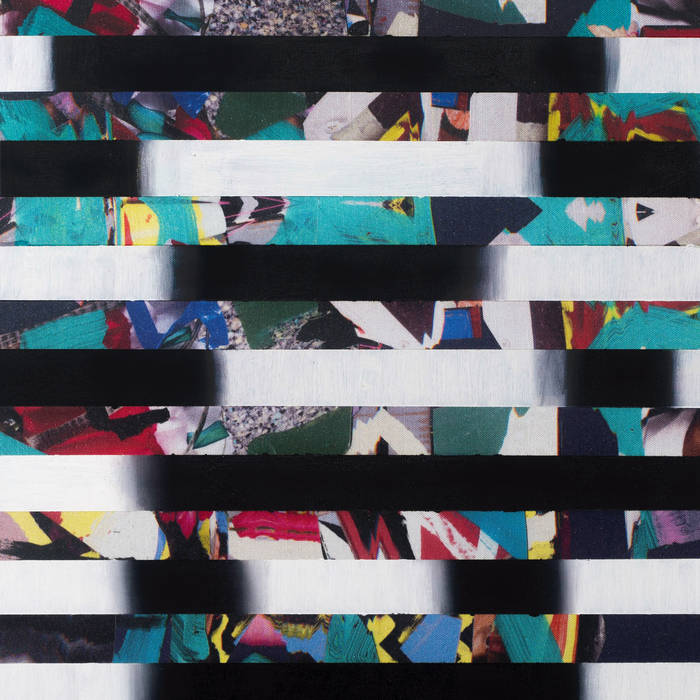
Now Ali debuts under his own name with Burn the Plastic, Sell the Copper – an album that on first listen may seem dense and a little difficult to enter. With him is a circle of notable Chicago musicians, including Ed Wilkerson Jr. (tenor saxophone and clarinet), Corey Wilkes (trumpet), Jim Baker (piano and ARP), Brianna Tong (vocals), and Bill Harris (drums and percussion). Yet there is nothing here to suggest a break with the past or a need to define himself in a single way. On the contrary, Ali weaves his many musical experiences into an album that functions as an open, multilayered mosaic.
There are groove-oriented tracks like ‘Stars in My Pocket’, where a loosely swaying drum figure carries Ali’s soulful vocal. On ‘Pastiche’, the cello’s lines collide with fluttering, skewed beats, while ‘On Nights of the Full Moon’ pairs a restless Geiger counter with Wilkerson’s saxophone. Bicycle bells, vocals, and humming mingle with electronics, and jazzy dialogues between double bass and saxophone constantly shift the focus. At one point, a voice even appears belonging to the Argentine poet and philosopher Jorge Luis Borges. As a listener, you too have to stay sharp. Ishmael Ali is not about easy-listening jazz.
The shorter solo cello pieces act as concentrated counterweights. In ‘Vitality of a Brushstroke’, Ali repeats the cello’s strokes in a mantra-like fashion until the sound gradually distorts and dissolves. The improvisations are both sparse and frenetic, functioning as acid-tinged palate cleansers between the ensemble tracks. In the closing piece, ‘Every Circle a Moon’, Brianna Tong lays her bright, dreamy vocal over a lurching urban pulse, accompanied by the album’s final solo interventions from the horns.
Summing up Burn the Plastic, Sell the Copper is not easy. There is constantly something in motion, something brewing. Even when the music approaches something relaxed, new rhythms grind beneath the surface. It is a mess – but a poetic, intelligent, and beautiful one. As challenging as the album can be to step into, it is just as difficult to leave behind.