

In just the first three weeks of 2026, the world has become more uncertain than it has been in the entire past twelve months. Low temperatures in Kiev, protests in Minneapolis, marches in Nuuk, Greenland. Is anyone else wondering where the world is heading? Overwhelmed by this news, it would be best to hibernate and wait out what is overwhelming us.
Andrew P.M. Hunt – one quarter of one of the best contemporary “guitar” bands, Ex-Easter Island Head, and at the same time an exceptionally creative solo artist – returns with an EP lasting just twenty minutes. Released a year and a half ago, Atlas of Green juxtaposed acoustic and synthetic textures, dehumanised sounds alongside the most lyrical. The result was an emotional album, enclosed in an incestuously intimate, sensual microcosm.
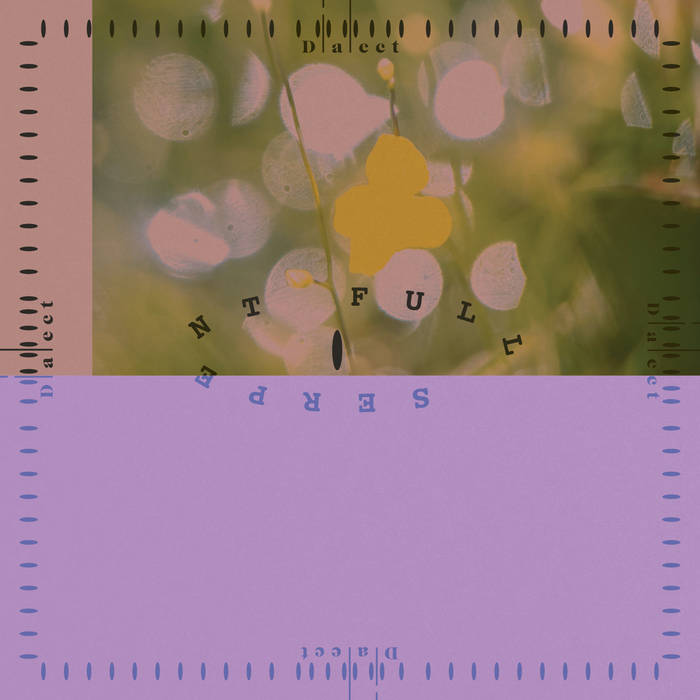
Today, I wonder what role EPs play, a form that fall between a single and a full album. Full Serpent is just such a small, boxed-in whole: an expansion of ideas familiar from the album, but shown in a different light, anew, in a different reality. In some ways, an outsider album, with its own microcosm and musical language, can take you out of what is now and here. When I listen to Full Serpent – and I listen to it over and over again because it ends quickly – I get the impression that it was created on a micro scale, precisely for the needs of winter sleep. This is not music for a booming sound system, but for a small speaker, perhaps a Bluetooth one, which you can pack into your backpack and listen to with your ear almost cuddled up to the sound.
At times, it reminds me of the folktronica style of early Four Tet or Múm albums: delicate, intimate melodies in which folk does not mean acoustic sound, but subtlety – loops, swirls, emotional uplift, fragments of vocals or moving samples. There is also something of the Japanese artist Asuna here, who, in his 100 Keyboards project, brings out hundreds of children’s instruments and builds a musical world from them.
Dialect’s music has a childlike naivety about it – playing with sound, contemplating it, detuning and looping it. But that doesn’t mean it lacks maturity. When rhythm appears, it’s more in the form of a slight pulsation, as in ‘Ev’ry Portal Past’. The melody is sometimes a bass backing track or a solo piano part.
‘Sky Receiver’ sounds like a suite sung by R2-D2. It’s about the duality of a technologised world in which emotions are still hidden, a clash between an insensitive reality and the tenderness found in the dustbin of history. ‘Little Fragment’ begins like a developing (or unwinding) broken tape; in the background, cicadas reappear for a moment. Subtle chord changes, repeated endlessly, a line of flutes – a charming miniature.
The title track sounds like an experiment: several tapes played simultaneously, cut-up vocals that are both folk and retro-futuristic. Processed voices, cicadas somewhere in the background – on the edge of civilisation. Sounds like android reflections and experiences of the world in a post-apocalyptic scenario. A delicate bass line, then a rhythmic buzzing in the background, scraps of something between post-opera and autotune, forming a phantasmal song. At the end, the electronics gradually fade away: all that remains is a barely perceptible line in the background, machine reverberations, screams, and a melancholic piano part in the foreground. Antiquity meets futurism here. The tools are thoroughly technoid and electrified but arranged in song forms – perhaps folk – filled with emotion.
Referenced artists

Ex-Easter Island Head
tQ Subscriber Release: Ex-Easter Island Head
Everything is crowned by the uplifting ‘Eusa’, which starts with a sound reminiscent of a futuristic accordion loop. The song is inspired by a character from Russell Hoban’s post-apocalyptic novel Riddley Walker, set in the ruins of civilisation. It brings the whole thing together like a lens, appearing as a souvenir from an imaginary world or a found mascot that brings solace by repeating a simple melody. In the aforementioned book, knowledge is passed on through puppet shows, and religion is based on the legendary figure of Eusa.
A romantic, trance-like carousel with a hidden, almost imperceptible crescendo – it does not explode but keeps you in suspense until the very end. Dehumanised singing, hope. Boxed music: trying, searching, listening. It’s lifting. Well, maybe this is the best way to show how Dialect works on us with music – simple things can produce bigger feelings.