

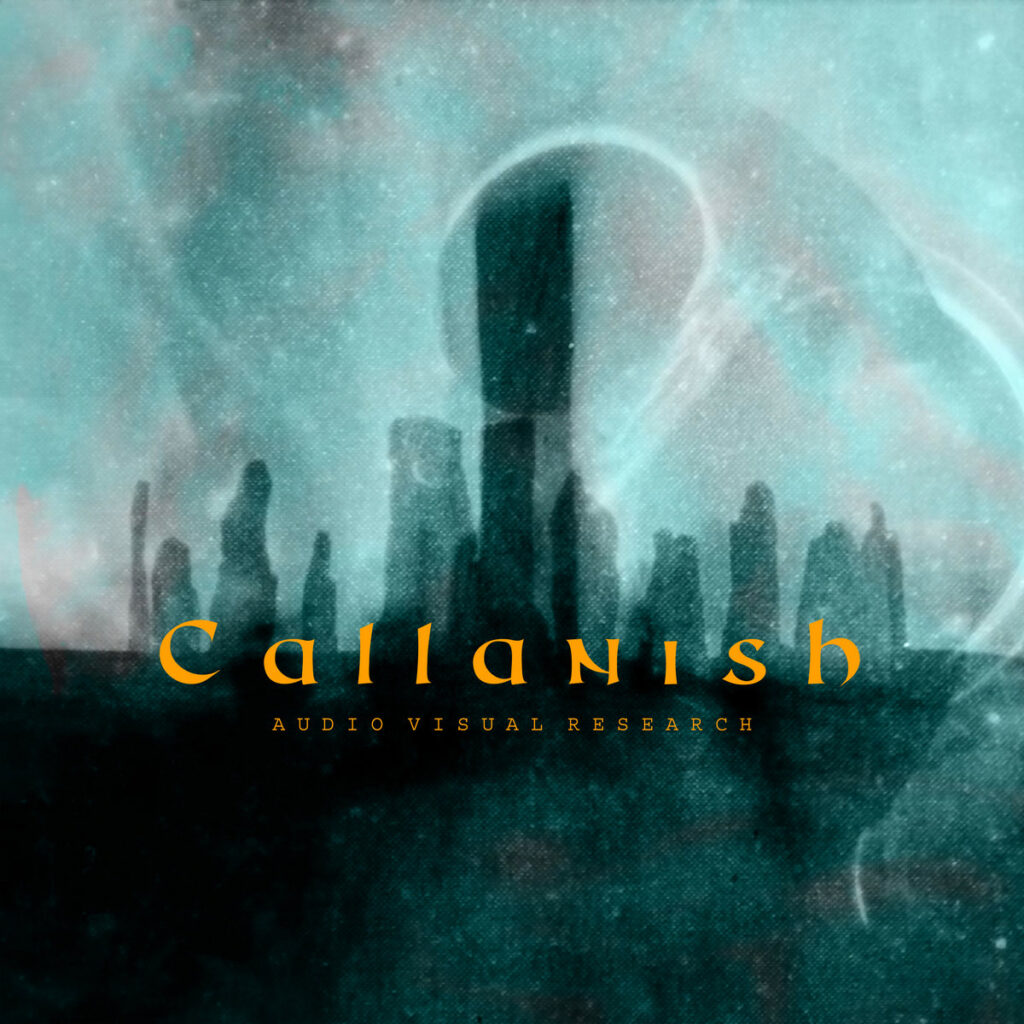
For many of a certain vintage – this writer included – any contemporary fascination with ancient stone circles and ritual landscapes owes less to academic / archaeological study than it does to the children’s television shows of the 1970s that were steeped in lithic terror. The obvious and oft-mentioned touchstone today is the 1977 ITV series Children Of The Stones, a seven-part drama set in a village encircled by ancient megaliths where something is palpably and profoundly wrong.
But Children Of The Stones was only the tip of the menhir. Go back another five years and we have Escape Into Night, another ITV children’s horror series which tells the story of Marianne, a young girl whose drawings bleed into increasingly vivid dreams, which in turn seem to blur the dream/reality boundary. The original tapes of this cult show have long since been lost – black and white recordings remain available – but many remember the chilling moment when the monoliths Marianne has sketched and pinned up around her house, reappear in her visionary dream state but now with huge eyes that blink in unsettling detail.
Of course, for those of us who grew up with such programmes, memory has sharpened their edges. The recollection remains far more terrifying than the footage itself, but the imprint on impressionable young minds is every bit as intense and lingering as the first opening of the third eye. For good or for ill, the image of ancient stones has long elicited a Pavlovian response of disquieting fear and unsettling dread.
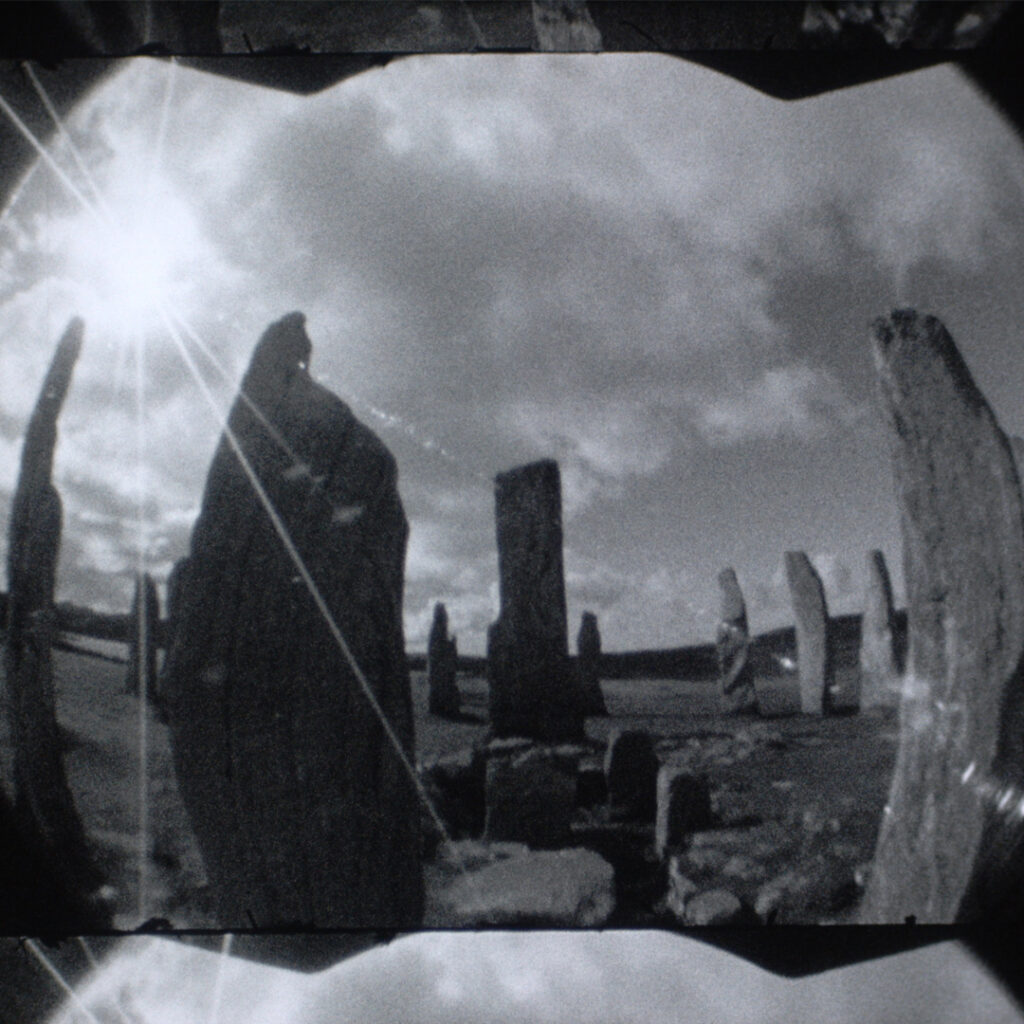
Which is precisely why Callanish Audio Visual Research feels like both a recalibration and a long overdue corrective. Far from reheating folk-horror tropes or attempting to conjure eldritch menace, this multimedia meditation, which spans film, soundtrack and book, reframes the 5,000-year-old, great stone circle complex on the Isle of Lewis in the Outer Hebrides not as a ring of malign sentinels but as elemental witnesses. The camera serves not to provoke fear but to reinforce a mood of magic and wonder; similarly, the music works in tandem to underline and bolster the visual presentation. Rather than unsettle, the project attunes itself to the elements and to the stoic presence of the stones themselves.
That it adopts a psychedelic approach should come as no surprise, given that its creators are the filmmaker and visual artist Julian Hand, and musician and producer Demian Castellanos, both of whom have a celebrated track record in this field. Hand has directed videos for the likes of cosmic Americana evangelists The Hanging Stars, who’ve most recently worked with folk veteran Bonnie Dobson, as well as designing the cover art for Emma Tricca’s sublime album Aspirin Sun and light shows for rock&soul testifier Jim Jones. Castellanos is better known as the creative force behind The Oscillation, the restless and ongoing musical entity that’s moved from the skull-crushing attack of albums such as Wasted Space and Untold Futures through to the more liminal and ambient meditations of the Singularity Zones series of albums.
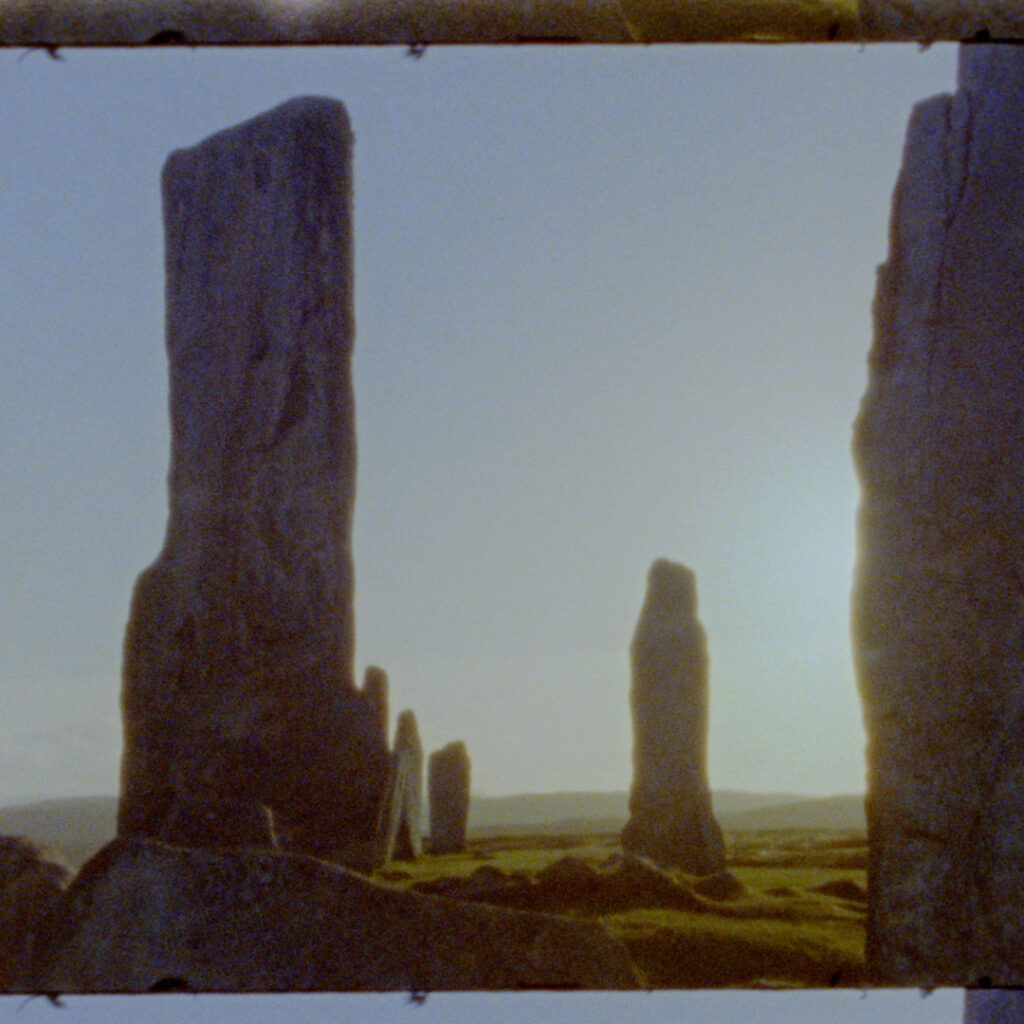
The 30-minute film leans heavily into the folklore of the area. According to local (atemporal) myth, the stones are the remnants of giants who stood against the sweep of Christianity, their current state a punishment for their refusal to convert. And so, divided into six phases, the film embraces a recognisable arc while tracing a journey that strengthens the notion of the stones as symbols of resilience rather than the stuff of science fiction nightmares. Throughout, the prevailing mood is of reverence, not of fear or, worse still, exploitation. These stones don’t threaten; they endure. Weather-beaten yet unbowed, they emerge not as malevolent relics but as magnificent testaments to resistance and a spirituality rooted in wind, tide, salt air and shifting horizons as they turn their gaze West across the sea. Here, mystery is not something to flee from, but something to embrace.
It begins at a remove – the island caught in a monochromatic fish-eye gaze, with the horizon curved into something approaching a halo. And while the lens exaggerates isolation, it also creates a mood of intimacy. A forceful drone – ‘Orbit’ – rises from the soundtrack before tribal pulses and hissing textures insinuate themselves into the mix. The stones are initially peripheral, half-seen interruptions among lesser rocks, until gradually the camera reveals their stature. Upright, deliberate, markedly other, they assert their presence without theatrics.
As colour bleeds into the frame, dawn bends light around the stones’ edges and psychedelia arrives not as a gimmick but as revelation. The sun silhouettes their forms, flattening them into glyphs before restoring depth and shadow. Here, the music turns bucolic yet resolute, acoustic strums carrying devotional weight. The stones move from the background and into the narrative core, their stillness paradoxically dynamic. When the film widens its scope to reveal the full sprawl of the complex, the effect is remarkable. These monoliths don’t stand in defiance of wind and rain but in collaboration with them. Hand’s edits spiral and dart, imbuing them with a personality which edges toward the mythic. Castellanos responds in kind, his score swelling from pastoral murmur to purposeful crescendo.
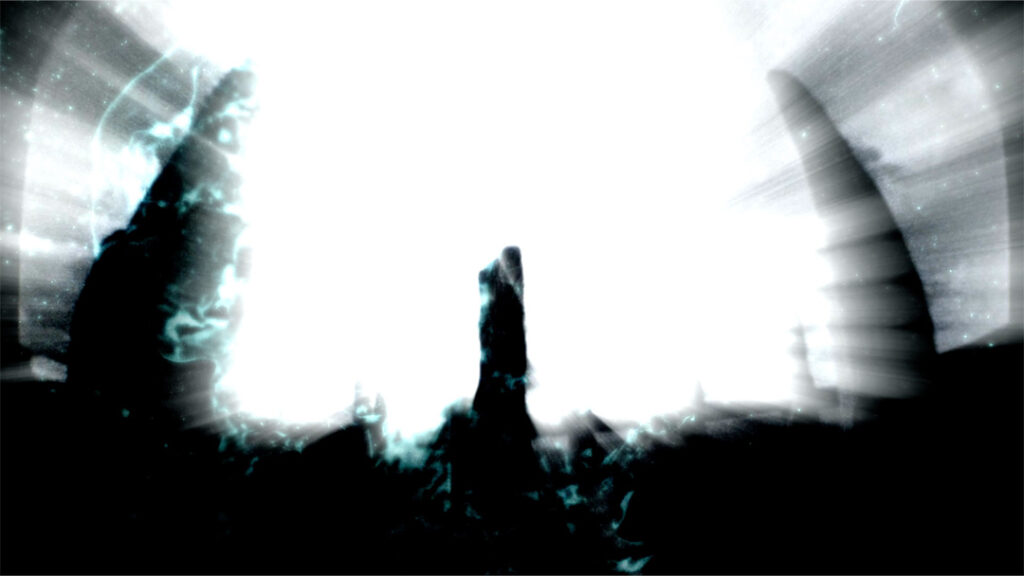
As the moon drifts into view, the music takes on a gently folky yet cosmic air (’Lunar’), alluding to moment when it completes its 18.6-year cycle. At Callanish, when the timing is just right, the moon climbs from the distant ridge known as Cailleach na Mointeach – ‘The Old Woman of the Moors’, or more fondly, ‘The Sleeping Beauty’ – before eventually settling behind the circle’s central stone, as if that’s its sole purpose.
A return to earth follows with field recordings of gulls and gusts of wind restoring balance. And finally, at dusk, colour deepens once more and an intense, almost triumphant drone surges beneath the image of the stones facing a blazing sunset, their silhouettes transcendent. Here the stones stand as bulwarks in a digital age of half-truths, distortion and lies. Holding their gaze steady, the invite is extended to contemplate an existence rooted in nature.
In drawing us away from the glare and grind of the technological everyday, Callanish Audio Visual Research offers a rare recess via a glimpse of something simpler and slower. Such a retreat may not be scalable, but its value lies in knowing these sanctuaries exist. So while we may not know the true meaning of the stones, their presence remains somehow reassuring. And that can only be a good thing.