Burnt Harbors is the latest entity used by Richard Skelton to make music about the times we now find ourselves living in. A composer and artist with an extensive, fascinating catalogue, Skelton’s music is generally instrumental and could be described as ambient, if associations with relaxation and reassurance could be stripped from the word. Alongside the music released under his own name, he has devised separate identities which he uses to record music about the USA. Burnt Harbors is an evolution of his Imperial Valley moniker, under which he made several albums about the Great Depression and the Trump ascendancy.
Blood High Star consists of two tracks, each twenty minutes and one second long, representing either side of the USA/Mexico border. The first track, ‘Notes on another requiem’, reflects the Nevada Desert. During the course of the Imperial Valley project, Skelton moved from using archive recordings towards music based on live instrumentation. The seething menace that hangs over the desert like a miasma is generated by swelling, metallic strings, like Laura Cannell performing in an industrial wasteland. Punctuated with percussion that may equally be field recordings from a scrapyard, we are left in no doubt about the darkness of the mood. The repetition and development of a two-note figure is hypnotic, but the experience is fully unsettling. The track ends with a snatch of a field recording made at the ‘No Kings’ protest on June 14, 2025 – a speech, ending with the words, “authoritarians are never satisfied with the power that they have, and so they test the bounds, they push the limits, they break the law…”
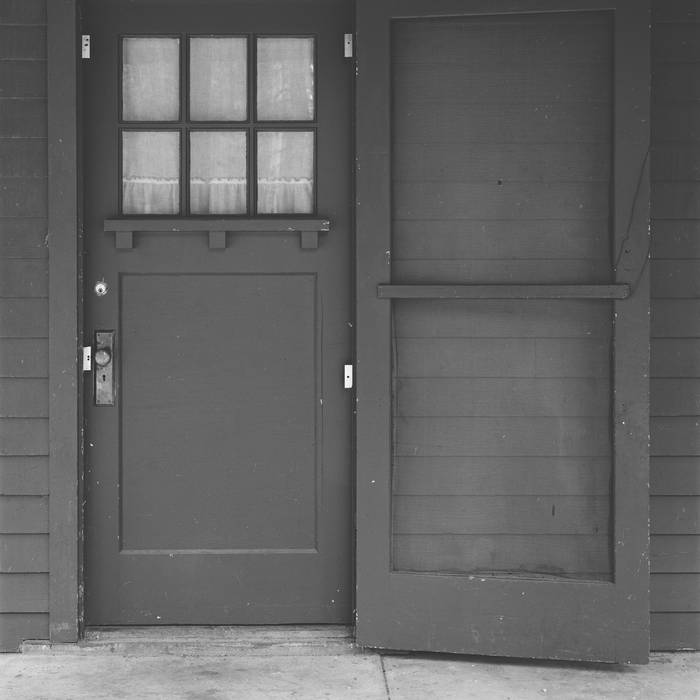
The second track, ‘En el valle, las sombras’, has a sunnier feel. It uses woodwind then mariachi-inflected brass, pushing to musical highs in strong contrast to the sounds of Nevada. There is a sense of trance about this track too, but it is the psychedelic perspective you would want from a desert, an empty space for inner consciousness to occupy – rather than overwhelming, external noise. Towards the end of the track, Chihuahuan poet Gaspar Orozco reads from his work, ‘Hojas de un cuaderno Híkuri’ (‘Pages from a Híkuri notebook’). Híkuri is the peyote cactus in indigenous Mexican Wixárika culture. Orozco writes about the peyote experience, intoning “Soñamos puertas, puertas con signos de fuego” (‘We dream doors, doors with signs of fire’). While the track’s title implies threat, Skelton accesses deeper time and deeper consciousness to place the machinations of American fascists in perspective.
Skelton’s music as Burnt Harbors is deeply felt and meticulously layered: its origins are conceptually complex. The original Imperial Valley identity reflected his interest in Dorothea Lange’s famous Depression-era photographs of labour camps in Southern California. These were transmitted through the fictional persona of a field-recordist-ethnographer called C.F. Moore. He shed this historical perspective with the last Imperial Valley recording, American Memory, and Blood High Star is a contemporary political response to the gathering storm north of the border. The multi-layered narrative feels more confusing than helpful, in amplifying the music’s message. We need resistance if we are to defend our democratic values, and Skelton is clearly boiling with righteous rage. Both sides of the coin on Blood High Star pulse with restrained energy. It is hard not to wonder what would happen if he let it all go.