
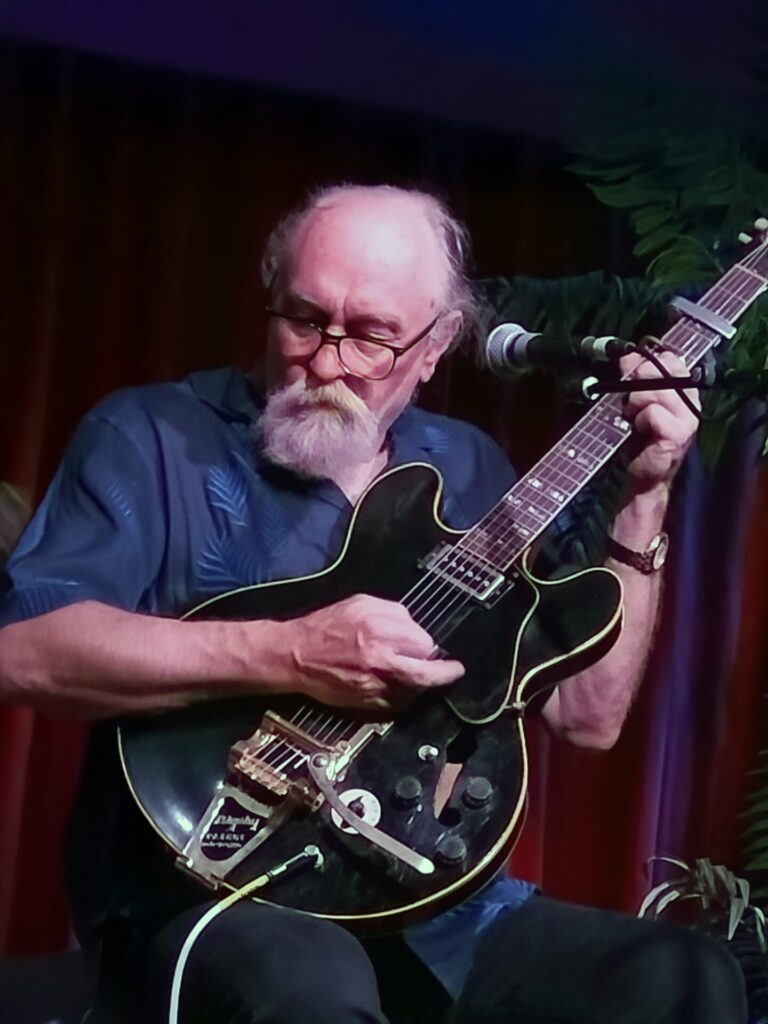
Please meet, acquaint or re-acquaint yourself with Ed Kuepper, one of the greatest musicians to come from post-colonial, or still-colonial, Australia. Were Ed only known as the guitarist in The Saints, he would be revered as the first finger to the socket, directly inspiring such fellow idiosyncratic players as Rowland S. Howard, Larissa Strickland, Kurt Cobain and Guy Picciotto. His relentless playing summons images of bee swarms and electrical surges, an elemental ferocity and economy divorced from even the heroics of their only true precedent, The Stooges. As the primary songwriter and guitarist for The Saints – one of the unarguably great bands of the 1970s – Kuepper cut three albums with singer Chris Bailey, drummer Ivor Hay, and bassists Kym Bradshaw and Algy Ward that both exemplify and defy age and context. This is due to the clarity, energy and commitment of the band’s approach, which neatly sidestepped both period English caricatures of Australians as hapless yokels and the tall‑poppy‑ism back home that enforced a culturally flat humility through insistent, jolly malice.
After EMI dropped The Saints in 1978, and Bailey retained the name, Kuepper effectively switched planes mid-air to Laughing Clowns, an equally thrilling, but more challenging proposition. With Kuepper (now singing as well) and drummer Jeffrey Wegener as its core, Laughing Clowns fought reductionist labels like ‘jazz-punk’, befuddled rock audiences with a perhaps justified aversion to saxophones in rock, and their own rotten luck. Revolving line-ups (featuring once and future members of The Necks and Crime and the City Solution among others), drugs, and the tyranny of distance that seemed to thwart an entire generation of Australian genius, bar Nick Cave, wore the band to a sour nub. In 1985, after three albums and several EPs and singles, Kuepper pulled the plug.
He again pivoted quickly, establishing a solo career that (initially) seemingly made concessions to glossier production and less jagged song structures, but no less wilful and distinctive. 1985’s Electrical Storm began a near album-a-year run of fifteen years marked by consistent dignity and form. Now nearly twenty-five albums deep, with intermittent group forays with The Aints!, Asteroid Ekosystem, Saints ’73 – ‘78 (the first three albums performed with Hay, Mark Arm, Mick Harvey and others) and a live stint in the Bad Seeds, Kuepper is still churning forward. His most recent album with Dirty Three drummer Jim White, 2025’s After The Flood, reimagines Saints, Laughing Clowns and solo songs as two high divers entwined in the same magic dance Kuepper enjoyed with Hay and Wegener.
One can’t help but suspect had Kuepper stuck to one ‘brand’ or developed a more attention seeking or less inscrutable public persona, he might be as ‘big’ as Cave or, say, Robert Smith or Mark E. Smith (both of whom may conveniently serve as goalposts for Kuepper’s eccentric voice, as dry as a lime-burner’s boot). But then he wouldn’t be Ed Kuepper, and his lack of show has its own appeal. This is not to say he lacks personality either. His songs are stuffed with rich, droll comedy, a peculiarly stoic agony, and lightning strikes of anger and insight thankfully untethered to political football. Whether one is new or a fan of any or all stages of his long pursuit, a tower of song awaits to explore, revisit and marvel.
The Saints – ‘Know Your Product’ from Eternally Yours (1978)
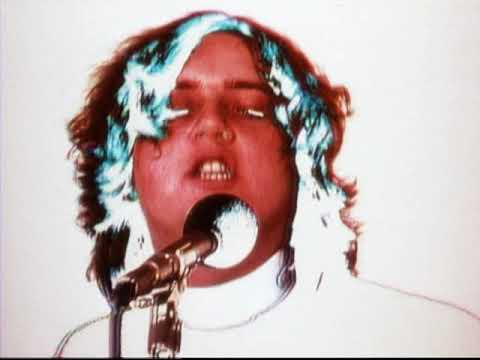
As an album-opener, ‘Know Your Product’ is a party / riot / general strike-starter on a higher plane. It somehow combines Stax horns, the swing and swagger of Elmore James through Dave Davies’ bladed amp and an almost impossibly snotty expansion of ‘Satisfaction’ that makes its allusion explicit: these are lies and brainwashing. Christgau termed it received protest at the time, but he had too much to think. The Spectacle was only getting started in 68. In 78 it was still pissing its pants but somehow old hat. Almost fifty years later, with the commodification of consciousness proven limitless, this song is painfully relevant. Supposedly released to general bafflement, the band’s lack of interest in codification combined with classicist manoeuvres that obscured how radical they truly were, doomed them. EMI allowed them one more album, where, bloody-minded until the end, they doubled down on a losing hand.
The Saints – ‘Brisbane (Security City)’ from Prehistoric Sounds (1978)
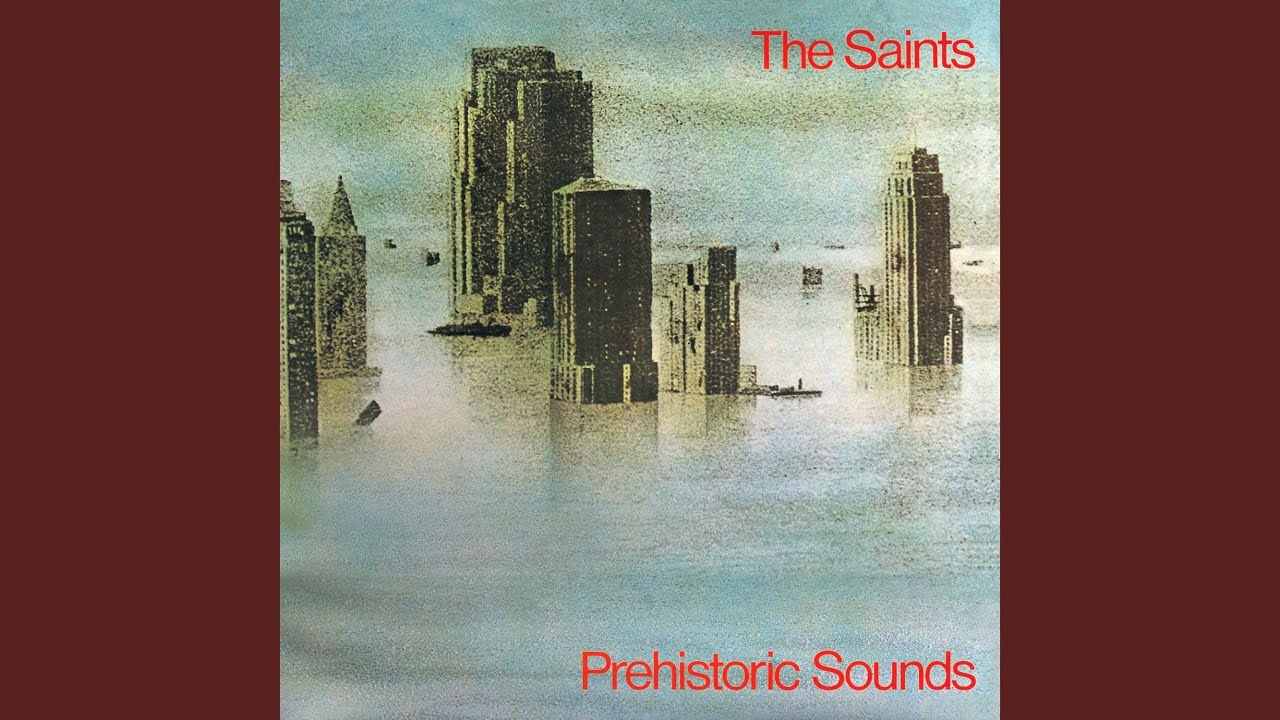
The Brisbane of Saints songs was a dull, fragrant void; a corrupt police state in classic British colonial style under the thumb of tinpot premier Joh Bjelke-Petersen from 1968-1987. ‘(I’m) Stranded’ was an S.O.S. Here, Kuepper’s lyrics tease out the leaden psychogeography of the city under its regime (slow-rolling cops), its effects on fellow citizens (remaining still so as to not attract abuse, the self-erasure of fruit about to rot), the ongoing echoes of Australia’s miserable past, and underneath a burbling frustration, an unsentimental expression of hope for what must be, in spite of everything, home. Halfway through the song, Kuepper’s smeared thresh and Hay’s magnificently nervous, skittering drums signal a great escape toward a reconception of home via the multi-tracked saxophone of Roger Cawkwell (a sideman for Rebop Kwaku Baah and one time member of Mahavishnu Orchestra). This break signposts both the imminent end of the original Saints and Laughing Clowns’ future M.O.
Laughing Clowns – ‘Holy Joe’ from The Laughing Clowns (1980)
In which the rock & roll / R & B trimmings of The Saints are unceremoniously plunged into a rather icy bath. The shock is Jeffrey Wegener. As unique / incredible as drummer Ivor Hay is, Wegener (Hay’s unrecorded predecessor in the Saints) animates Kuepper’s more ambitious songwriting with revelatory, Krupa-esque rolling toms. He provides both a feather bed for, and madly spurs on, Kuepper’s morse code guitar, Dan Wallace-Crabbe’s minor, sawdust-floor piano, Ben Wallace-Crabbe’s mordant bass and Bob Farrell’s plains-blown sax. Eerie undercurrents of Weimar expressionism, Javanese nursery rhymes and yes, jazz, anticipate the strange Pharoah Sanders / Gershwin / Morricone Western mash-ups of The Las Vegas Story and today’s genre agnosticism. Arguments the Clowns’ approach was wilfully difficult / obscure are exposed by the conviction and cohesive force of the ensemble’s playing, which is never less than inspired. Kuepper’s lyrics are more poetic and seemingly more cryptic but still refer to the same conspiracies-in-plain-sight, with ever-more visible strings attached.
Laughing Clowns – ‘Everything That Flies (Is Not A Bird)’ from Everything That Flies (1983)
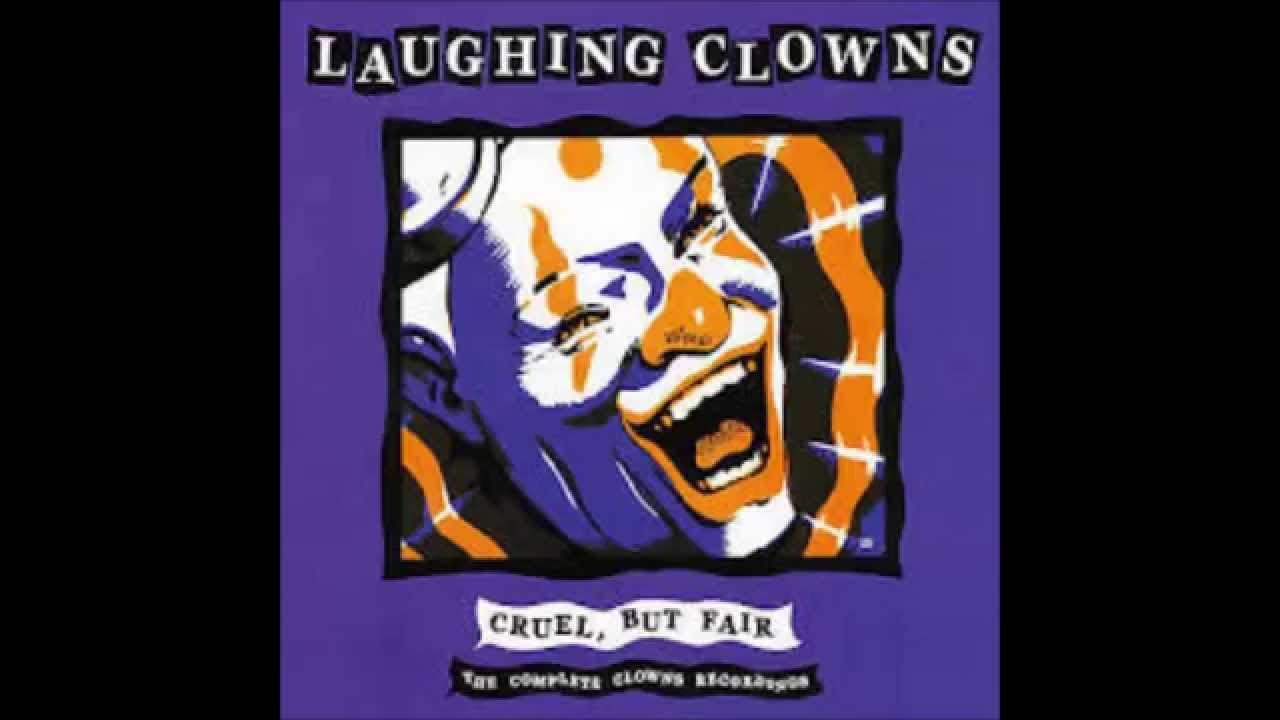
‘Everything…’ features otherworldly guitar from Kuepper as visionary as that which would typify Sonic Youth, but more sophisticated and painterly than their primordial state in 1983. Wegener and new bassist Bif Millar sound like they’re skipping rocks on golden ponds, while fellow new members Louise Elliot’s saxophone and Peter Doyle’s trumpet provide the sticky hook, climbing the bell-like overtones of Kuepper to urge the group to new heights before bursting in air. In this whirlwind, Kuepper casts fleeting, exquisite images: Babylonian rites; possibly a womb as shared ecosystem of air and water; a land-traversing wind and sea on hind legs; pre-asteroid raptors or possibly the band in full flight. That the song doesn’t collapse under the weight of its own ambition is a minor miracle. The weightless quality and sensitivity of their ensemble playing and, most importantly, listening to each other informs the group’s aesthetic peak.
Laughing Clowns – ‘Eternally Yours’ from Law of Nature (1984)
What flies must land. The group’s turnover accelerated. They lurched between Sydney and London, with whispers of the same narcotics issues that plagued The Birthday Party and The Go-Betweens and would leave Wegener incarcerated for stints during the Nineties. Millar was replaced by The Apartments’ Peter Milton Walsh, who in turn was replaced by Paul Smith. A pre-Necks Chris Abrahams plays on the record but the group on this, their most plaintive and straightforward song, is Kuepper, Wegener, Elliot and Walsh. Kuepper may be addressing Bailey, perhaps Wegener, perhaps any old Eighties archetype, the independence of the addressee having curdled into a narcissism (or addiction) that’s sucked dry what once held everyone. The group would morph yet again, with three new members, then collapse during the making of their final album, Ghosts Of An Ideal Wife.
‘Master Of Two Servants’ from Electrical Storm (1985)
Hopefully a nod to Italian playwright Carlos Goldoni’s ridiculous 1746 comedy The Servant of Two Masters, Kuepper’s inadvertent or deliberate inversion is a lyrical and musical ouroboros. Hate and love eat the other and their supposed master, the body, in a closed loop. The loop forms a mirror and catches Kuepper’s gaze, his eyes roll at his own predicament, a romantic comedy as dawning horror. His eyes, now unable to stop, affix to the mechanical hare of his multi-tracked mandolin, leading the rest of the song round and round in a shimmering kosmische skiffle. On his first solo outing, Kuepper sounds like he’s having fun for the first time since The Saints, sometimes veering toward a hyper-competent Legendary Stardust Cowboy, even allowing final Clowns pianist Louis Tillett a glissando.
‘Also Sprach The King Of Euro-Disco’ from Rooms of the Magnificent (1986)
A classic pop single more or less confined to Australian shores and the lower reaches of its charts, that, like all best pop, shouldn’t work but does. There are deadpan Morricone leads, stately horns, a harmonica outro that surely caught Johnny Marr’s ear, and the slightly warped ‘Paperback Writer’-esque top line that leads into the euphonious mantra: “And you’re still winding windows while I follow”. Ex-Clowns Diane Spence, Paul Smith and Chris Abrahams reappear along with Mark Dawson, a less wild, more in-the-pocket drummer who would play on all his solo albums for the next decade. The Nietzsche joke of the title might even carry over to the eternal recurrence of its 12-string strums and backbeat. Perhaps the Laughing Clown had become the Laughing Prophet? Perhaps Kuepper genuinely believed Grant Miller was the Übermensch.
The Aints! – ‘Red Aces’ from The Church Of Simultaneous Existence (2018)


Settling into a consistently great solo career (see Honey Steel’s Gold, Black Ticket Day, A King In The Kindness Room, and Jean Lee And The Yellow Dog), Kuepper simultaneously pursued desire paths with the Crazy Horse-ish The Aints! in the early 90s, duo tours with Wegener and later Bailey, Laughing Clowns and Saints reunions and a Bad Seeds cameo in the 2000s. He reformed The Aints! with Peter Oxley (Sunnyboys), Paul Loughhead (Celibate Rifles), Alister Spence (with whom he currently plays with Necks bassist Lloyd Swanton in Asteroid Ekosytem) and a brass section to play ‘73-78 Saints live. In 2018, The Aints! released the fantastic Church Of Simultaneous Existence, with songs meant for the fourth Saints album, set aside with the Clowns’ formation. ‘Red Aces’, like all early Saints singles, is a ripper, with Kuepper driving the improbable feat of making a guitar in the fusspot-compression era sound genuinely exciting.
Ed Kuepper and Jim White – ‘Swing For The Crime’ from After The Flood (2025)
That Kuepper and White can equal the heights of the 1978 original, one of the Saints’ finest, without referencing it all that directly, speaks to both the spirit of their connected playing and the ecstatic hum that somersaults them forward. Released last year on the first-rate 12XU label (Water Damage, Exhaustion, Voice Imitator), After The Flood lets old songs recede and pushes their tidal energy and emotion to the fore. White is the ideal partner for Kuepper here. As part of the Holy Trinity of Australian Drummers with Hay and Wegener, White summons not only them but the best of his work in The Dirty Three, Venom P. Stinger and Xylouris White. As for Kuepper, he never shows off, even when his playing levitates in an extended midair fouetté. Fifty years of recordings and his newest is just as worthy as that first single on Fatal. Dumbfounding.
Ed Kuepper and Jim White’s After The Flood is released on Friday