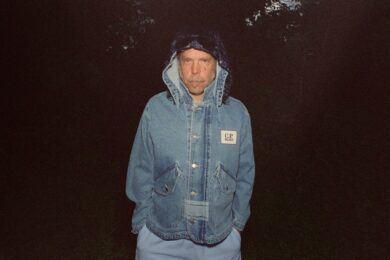

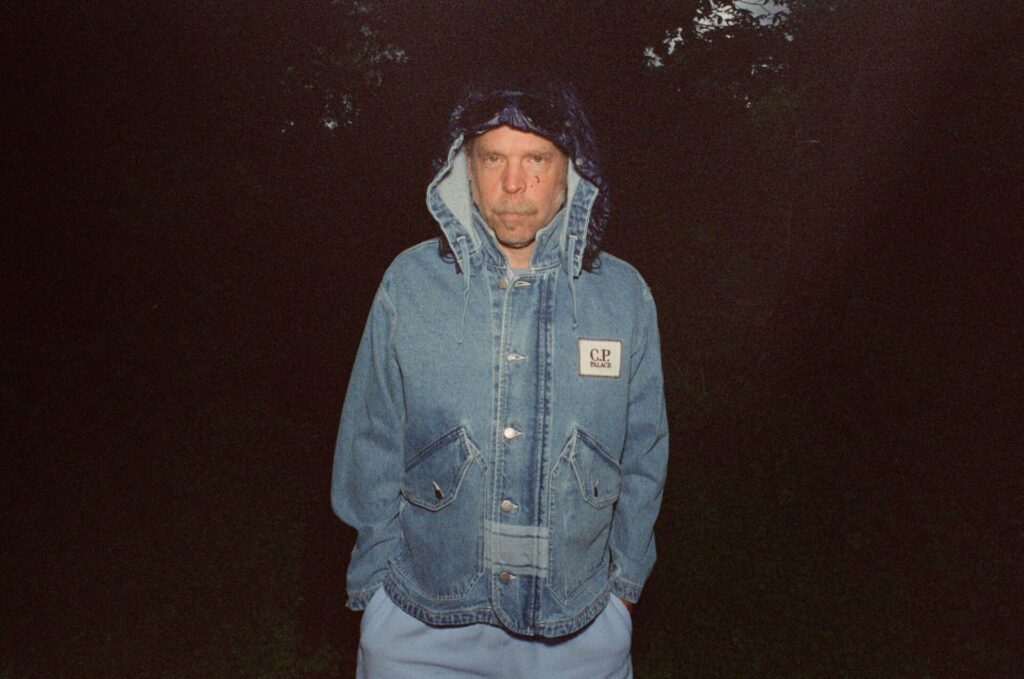
The first time I went to America, I went to Louisville, Kentucky, walking across the Big Four Bridge over the Ohio River, wandering around Germantown and Shelby Park, looking for Will Oldham. He was born there in 1970, and grew up around the sounds of hardcore, art punk and DIY. He sat obscured wearing a helmet on the cover of Slint’s debut album Tweez – and photographed the quarry-swimming cover to their follow-up, 1991’s post-rock-igniting Spiderland – before releasing his own genre-splicing music from 1993, which dug its nails into me properly from his first album as Bonnie “Prince” Billy, 1999’s I See A Darkness.
Living a nomadic life as a young adult, Oldham returned to Louisville properly in 2006, after his father’s sudden death, and has lived there ever since, now with his wife of ten years, textile artist Elsa Hansen, and their eight-year-old daughter. He makes it clear today that the city’s history, studios and venues keep filling the well of his music, and on his beautiful new album, We Are Together Again, he’s collaborated primarily with Louisville musicians, told stories of local people, and used a local studio, End Of An Ear, run by Jim Marlowe, which captures the curious creativity of the city.
“You enter this decrepit industrial warehouse complex with a two story high sliding gate with barbed razor wire on top in the oldest neighborhood in Louisville, called Portland,” he explains, on a Zoom call from home. “It feels very Mad Max when you enter it – it’s got an animal rescue shelter, a haunted house for Halloween, where artists are making all these sculptures and effects, then the studio with these cosy two tracking rooms, and the soundboard room.” He’s a generous interviewee, interested, interesting, kind, and articulate. “I love the fact that where we’re making music is both real and it’s not real, like the place where this music is going to exist, just inside of people’s brains.”
Oldham has tried to “map out Louisville a little bit” in his 13 selections for this special Baker’s Dozen, which is a sweet understatement. He’s thought a lot about the creation of the city itself. “It’s only here because boat traffic had to stop at a certain point, because the river was non-navigable, before the canals and locks were built in the late 1800s. I’ve started to think about just the the general psychology of of a city that exists because people had to stop and unload, and how a city serves people from upstream and people downstream, how our identity is almost this as this conduit, or this nourisher, or as this service between other cultures and other communities.” He talks about military service workers coming to Kentucky because of Fort Knox. “I love speaking to these people aging out of air travel about their memories of spending time in the 60s along a certain corridor downtown on 4th Street, where there were jazz clubs galore. Louisville has a super strong jazz history, a super strong blues history that’s changed my life and blown my mind, and the gospel music here is insane, too.”
Louisville’s musical riches have also made him think about how music made in the close proximity of a place, can have unknown, profound effects on the people beyond it, especially at a time when America is a frightening place to be. “There’s this feeling of dread and fear, and then you walk around Louisville, and you almost can sense this uptick in proactive human connection, which is really, really necessary, but also very, very comforting.” He finds it hard to talk about music, he adds, because music can change people’s feelings so radically. “When I’m listening to music, my life might be changing, but the people who made that record will probably never know that my life is changing. But it’s made me start realising, when going out and being in shows,that people are not only listening to music, but experiencing and appreciating it. Over my last few albums, I’ve been realising that interpersonal communication and interdependence are not things that should be taken for granted.”
The 13 albums Oldham has chosen shows that these characteristics have flowed in Louisville’s music scenes for years, and still carry him.
Bonnie “Prince” Billy’s new album We Are Together Again is out now via Domino and No Quarter Records.
To begin reading Will Oldham’s Baker’s Dozen of Louisville records, click ‘First Selection’ below.