
The ‘Zensor’ was located in Schöneberg. In this neighbourhood it was less about politics, class struggle and punk rock, but the atmosphere was more suitable for bohemians, artists, filmmakers, mannequins and the omnipresent gay scene.
I initially bought my records in Neukölln, on Karl-Marx-Straße, either at the Zip or Music Land store. Their advertisements in public transport read: ‘Everything from Abba to Zappa’, and these stores were run by ageing hippies who were very sceptical of the recent punk and new wave movements. They tended to a small fry like myself with the utmost arrogance when I requested to listen to the new Ramones or enquired about a band that had not (yet) found its way into their assortment of Krautrock, hard rock and jazz rock. I had probably heard the name Zensor being dropped at the Antifascist Festival meetings and memorised it because of the ironic wordplay in its name, and also due to the experiences at the other shops that I just described.
So it came to pass that at the first opportunity I took the U7 to Eisenacherstraße and strolled through Akazienstraße into Belziger-straße. Burkhardt a.k.a. ‘Zensor’ had set up his shop in the backroom of Blue Moon: a clothing store whose shop owner Armin imported the newest trends from London, while staying ever faithful to his beloved 50s Teddy Boy style. Creepers – the blue suede shoes with thick crepe soles – petticoats and colourful long jackets called ‘drapes’ dominated the showroom.
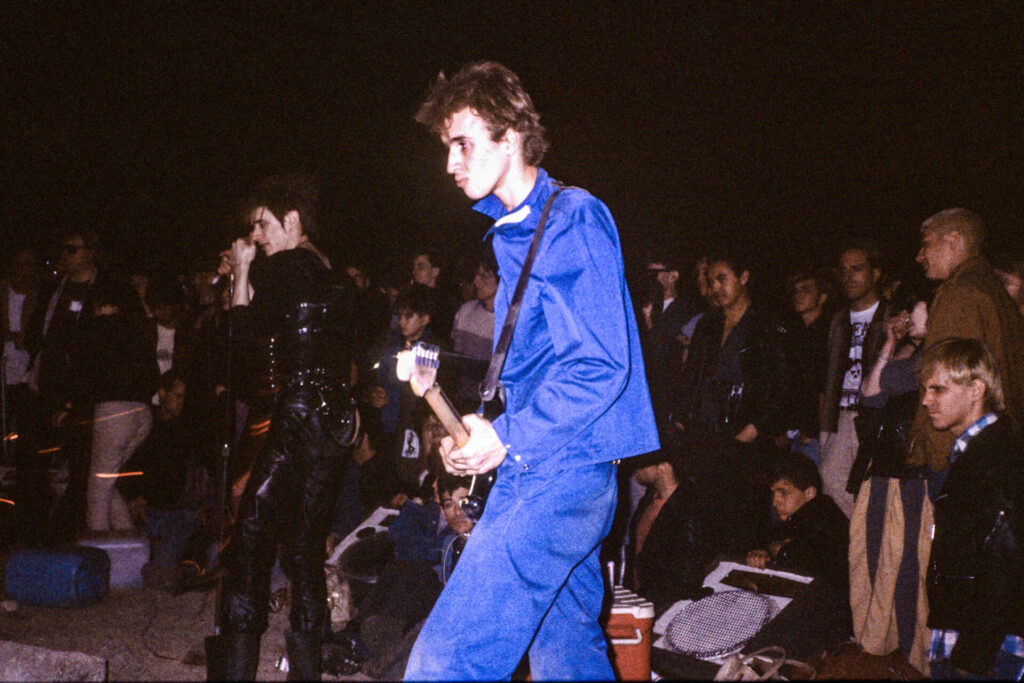
In 1979, at a New Year’s Eve party, I had a spray can with me and Armin offered me fifty Deutschmarks if I sprayed the name of his shop on the house wall on the other side of Kyffhäuserstraße. I executed my part of the deal immediately and undauntedly, and so won his long-lasting sympathy and discounts on punk T-shirts. However, I was mostly in it for the treasure that lay waiting for me in the backroom of Belzigerstraße 11.
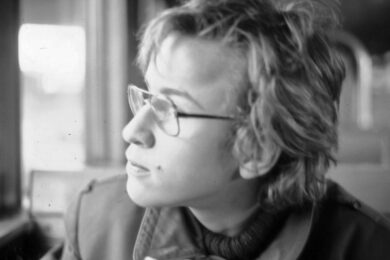
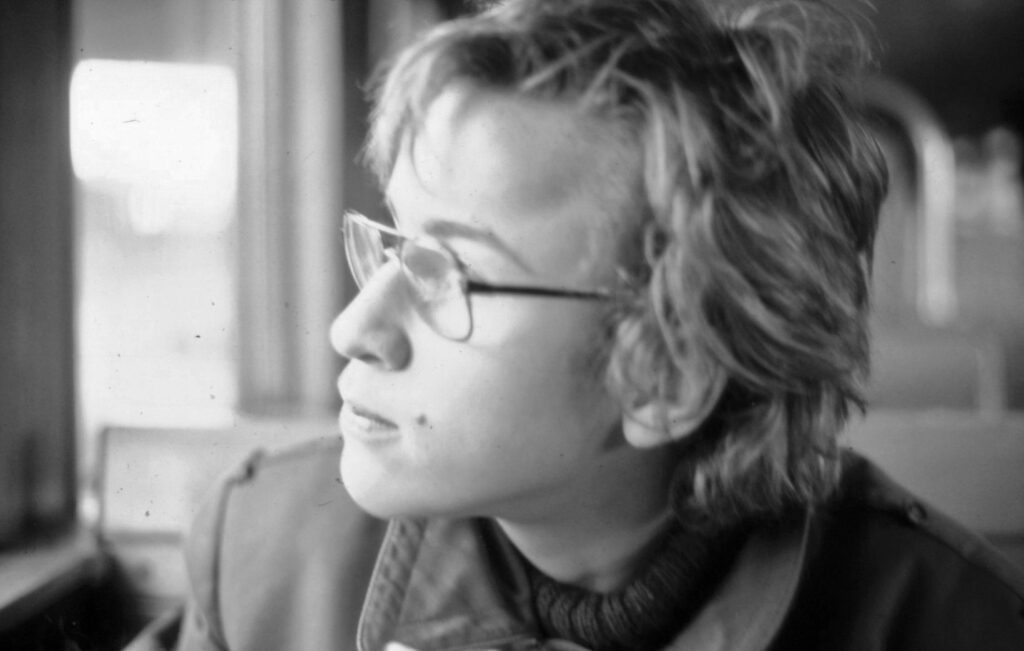
Burkhardt was quite a few years older than me. He was a chain smoker and ran his shop with an inimitable nonchalance. He had very smooth brown hair and sported a mop-top in true Beatles style. He seemed imperturbable standing behind his counter in his turtleneck sweater and making only the absolutely necessary movements. The first few times I visited Zensor and browsed through his boxes with records he kept an eye on me all the time, and although he pretended everything was business as usual I could sense it amused him to observe me. He patiently and elaborately answered all my questions, and it was never too much effort for him to dig up all the obscure records that I wanted to listen to. After a while he grew used to my almost daily visits, in the early afternoons after school or a bit earlier if I skipped class. He also quickly became convinced I wasn’t out to steal anything and often left me alone in his shop while he went out on some errand or for an extensive lunch.
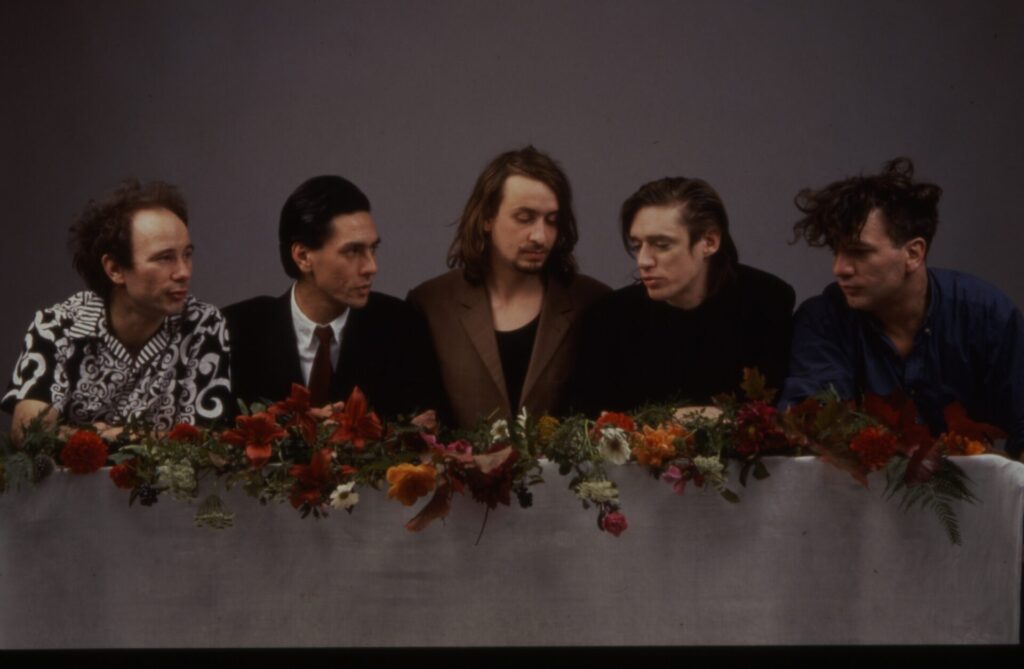
The time I spent at Zensor brought me many unforgettable impressions and discoveries, such as the music of Suicide, Plastic People of the Universe, Mittagspause, Mars, DNA, Teenage Jesus and the Jerks, Faust, The Nihilist Spasm Band, Moondog, Sun Ra, Deutsch Amerikanische Freundschaft, The Pop Group, Glenn Branca and especially Throbbing Gristle, to name some of the (now) best-known bands.
Nonetheless it was the myriad of utterly obscure releases, often on 7-inch vinyl, that lay the foundations of my musical development and strengthened my view that music should not be produced by an elite for the faceless masses. On the contrary: the more personal and bizarre a release was, the more respect it would earn from me and likeminded music devotees. Especially productions that were clearly made on a limited or practically non-existent budget were held in very high regard. The more extreme the musical content was, the bigger the likelihood it would find extremely strong support. This way, listening to music became an expedition during which one gathered listening experiences and did non-scientific yet meticulous evaluations. I am eternally grateful for spending so much time at this place during those days, because it revolutionised my listening habits and created a new entrance into the world of music during my puberty. Had I been born five years earlier or later and never found my way to the fertile subsoil of this shop, my development would have been decidedly different. This experience, this excitement during my early years puts all the frustration, all my errors and the pointless insanity that was yet to come into perspective. It encourages me to think and act outside of the established patterns even today.
The Zensor was a cave of wonders, an expansion of my living room, my laboratory of sound, until at 6 p.m., or sometimes a bit earlier or later depending on the customers, Burkhardt closed up and I was left to my own devices.
Referenced artists

Einstürzende Neubauten
Loving The Alien: Einstürzende Neubauten Interviewed
Blast: Distorted Memories – From Einstürzende Neubauten to Symphonic Drone by Alexander Hacke is published by Ventil Verlag. Alexander Hacke will be in conversation about his book throughout April at various venues throughout the UK.