
One night in 2005, at the Institute of Contemporary Arts in London, I went to see Ladytron in the company of John Doran, my former colleague at the ill-fated BANG! magazine but not yet the co-founder of The Quietus, and his mate John Tatlock, later a tQ regular himself, and John D’s co-DJ at superb electro-punk-funk-whatever club night BigSexyLand. The two Johns had known each other for decades, from growing up in St Helens, a half hour train ride from Liverpool where the ‘Tron assembled. They’d only known me for a couple of years. But they knew me well enough to turn to each other, as the green and blue lights whirled through the dry ice, and say “Is this what the inside of Pricey’s head looks like?”
I can’t remember exactly when they made the quip. Perhaps it was the moment in the encore when two chic but austere women, one with a French crop and the other with a sleek bob, stepped forward to do the Agnetha-and-Frida back-to-back thing while the black-clad Ladyblokes behind them pumped out enough dark synth pop kilowattage to drain the National Grid – but they had a point, to say the least.
To me, Ladytron were, and remain, a perfect band, their aesthetic immaculate in both conception and execution. ABBA-meets-Kraftwerk might be the Ladytron-for-Dummies elevator pitch (as long as we’re talking melancholy, elegiac, The Visitors ABBA), but they aren’t (wo)Man-Machines and they aren’t The Robots. No matter how glassy their surfaces, and no matter how frosty and forbidding their performances, there’s something profoundly human about Ladytron. This can only partly be explained by their preference for hand-played analogue synths over digital tools, but also by the devastatingly moving melodies and chord progressions, and lyrics which in one way or another address the human condition (from the exploitation of young women, to the soul of man under neoliberalism, to opaque, mysterious narratives which recall a John le Carré Cold War thriller).
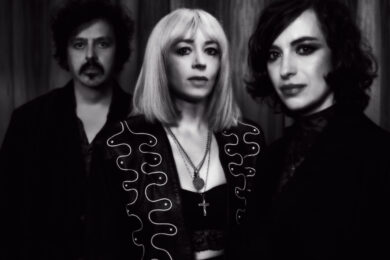
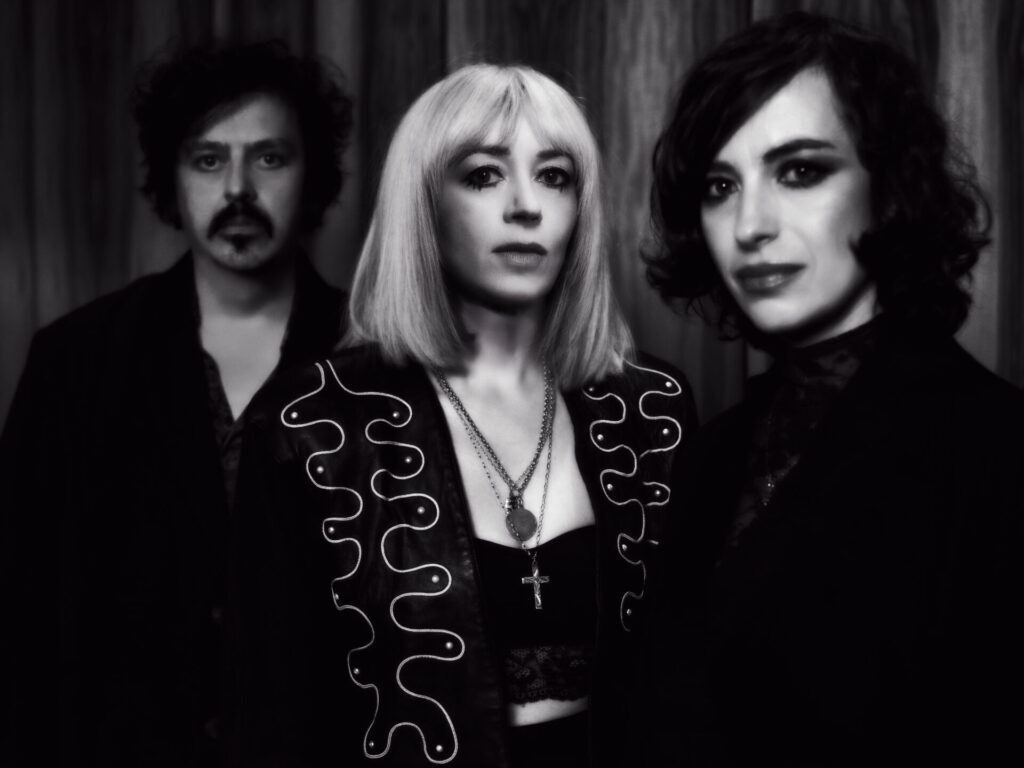
A truly international band whose original line-up comprised Scouser Daniel Hunt, Reuben Wu, a fellow Liverpudlian of Hong Kong heritage, Helen Marnie from Scotland and Mira Aroyo from Bulgaria, Ladytron may have been formed in Liverpool but, unlike many from that city, are not remotely indebted to The Beatles. Instead they belong to the art school / post punk strand of Merseyside music which includes Deaf School, Yachts, OMD, Dalek I Love You, Wah! Heat, The Teardrop Explodes, A Flock Of Seagulls, Lori And The Chameleons, Dead Or Alive and the Bunnymen.
They announced themselves with the subtly sapphic ‘Werk-out of ‘He Took Her To A Movie’ (“And when her heart was sad, he took her to a movie / She’s all he’s ever had, he took her to a movie / And should their love turn bad, he took her to a movie… But so did I”), cemented their reputation with the extraordinary ‘Seventeen’, whose four repeated lines (“They only want you when you’re seventeen / When you’re twenty-one, you’re no fun / They take a Polaroid and let you go / Say they’ll let you know, so come on”) invited endless interpretations – modelling, acting, pop music, pornography – which have only multiplied to a global audience of much younger listeners, and surpassed even that early career high with the majestic ‘Destroy Everything You Touch’, a shuddering synthpop juggernaut with the same overwhelming power and irresistible drive as Bowie’s “Heroes”.
Ladytron’s world is discrete, airtight, hermetically-sealed. They do occasionally venture outside their self-created bubble to collaborate on the production and mixing side (Hunt has recently remixed Emma Anderson and Saint Etienne), and perhaps their most startling extra-curricular project was the two tracks they wrote and produced for Christina Aguilera’s Bionic album. Strangest of all, however, was the music they made for computer game The Sims 3, which featured Marnie singing in made-up language Simlish. But these ventures are rare. Ladytron exist, it feels, on the outside of everything.
Ladytron may have chimed – fortuitously, in certain ways – with Electroclash, but they were never of it. They predated it, and survived it. Unlike the ‘Clashers, Ladytron were mercifully devoid of cliquey in-jokes that only worked in Hoxton, Friedrichshain or Williamsburg (although 604, their 2001 debut album, did have its playful moments, like the daft, disposable cover of the Are You Being Served? theme). Their eyes were always on something bigger and more enduring than being the popular kids in the hipster playground.
Their second album, 2002’s Light & Magic is their masterpiece: as well as the aforementioned ‘Seventeen’, tracks like ‘Cracked LCD’, ‘Flicking Your Switch’, ‘Blue Jeans’ and ‘Evil’ are Ladytron at their finest. With 2005’s Witching Hour they introduced alt-rock guitars to the mix without losing their electronic elegance.
Following their fourth (Velocifero, 2008) and fifth (Gravity The Seducer, 2011), Daniel Hunt emigrated to Brazil, where he has lived ever since, and the band went on hiatus. Eight years later they reunited for their self-titled sixth. In 2023, co-founder Reuben Wu stepped away from Ladytron to spend more time pursuing a successful career in photography, but the band have released two albums without him, that year’s Time’s Arrow and this year’s Paradises.
I talk to Daniel Hunt while he’s back in the UK visiting Liverpool, and we discuss the entire span of Ladytron’s career, before whittling it down to just ten tracks. The selections below are weighted towards the band’s earlier songs, which are inevitably more anecdote-rich, but the 20-song playlist for subscribers redresses the balance and fills in the gaps. Because there has never been a Ladytron album which is less than sublime, and which doesn’t leave you enriched and elevated after listening.
We end by discussing Paradises, which is out this week, but begin when Ladytron, as we know it, barely existed.
‘He Took Her To A Movie’ (1999)
Daniel Hunt: “This track, like several on the first album, belongs to a proto-Ladytron, before we really became a group. I was DJing every week at Le Bateau. It was a kind of a moment, in Liverpool, where the Scouse House thing was so pervasive, and you would have little parties like ours that would be overspills for clubs like Cream, and you would get House clubbers coming and dancing to all your weird psych and northern soul records. There was a particular girl-group record I played, and I just had this hook in my head and I actually ran from the club in the middle of my DJ set to the studio before it was forgotten, because in those days we didn’t have voicenotes or anything. I was working with another singer at that point, Heidrun Bjornsdottir, who was Icelandic obviously, and it was originally intended it for her, but we ended up doing it with a guest vocalist, Lisa Eriksson from Schulte/Eriksson who was studying in Liverpool. There’s this zombie fact about that record that it cost £50 to make. Within a few years it quickly became irrelevant, because in 1999 that was the cost of a day in a cheap studio. Nowadays it would cost zero.
The riff from ‘The Model’ by Kraftwerk was a knowing nod, and I really wish I hadn’t done it because it’s unnecessary, and if you strip it away, it basically gives you the song. It’s really beautiful. At the time, if you remember Elastica doing the Wire thing, it was really in that spirit, these little references. I don’t even remember what the psychology of it was. It was more in the spirit of sampling, I suppose. People locally were excited about it and asking me what I was going to do with it, but I didn’t really have any notion or plan. Ladytron didn’t really exist yet. I suggested Reuben could join as a DJ, because I imagined a project like Deee-Lite. Then I met Helen and Mira, and we became the band. But ‘He Took Her To A Movie’ is kind of this primordial soup from which the band emerged.”
‘Playgirl’ (2000)
DH: The first single was getting traction, but ‘Playgirl’ hastened the need to really organise the band. It was part of a Japan-only EP which became the backbone of 604. It took a while for me to convince Helen that I wasn’t just joking about wanting her to be in a band. So we started recording. And it was really exciting, because the four of us, we looked alike in a strange way, before we were wearing uniforms or anything like that. We looked like a gang and we felt like one. And ‘Playgirl’ is the genuine beginning of what Ladytron would become.,And it’s funny because there was a Scouse House producer at the studio next to mine, who basically taught me how to self-produce. And I remember I could hear him through the wall, late at night, playing this to his friends and telling them it was a banger. And he was proud, in a way, because he’d kind of mentored me. I always think of us as being having been adjacent to dance music, in this case it was literally. We were absorbing it by osmosis. I was out with Lance Thomas who produced 604 with us recently, reminiscing about how it was done. He told me that the late Martin Rushent had called to congratulate him on it. We both agreed that the record isn’t ‘minimal’ as some depict it. It is thick as hell, and hard as nails in places, but we were working with 24 track 2 inch tape then. It’s less layered than what we’ve done since, but minimal, no. And ‘Playgirl’ was the song which opened the door for us. It got us signed, and it was kind of a minor hit in Europe. That’s when things really got rolling.
Kylie Minogue vs Ladytron – ‘Kylietron’ from Bastard Pop Vol.1 (2001)
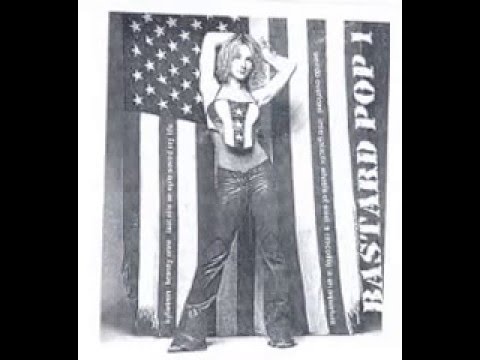
DH: This is weird, because I vaguely remember something about this [a mash-up of ‘Playgirl’ with Kylie Minogue’s ‘Can’t Get You Out Of My Head’], but I don’t think I’ve ever heard it. Maybe Erol Alkan told me about it. But at the time, Soulwax/2 Many DJs had done this Kyuss Minogue thing, this rock version of ‘Can’t Get You Out Of My Head’, so this is how it connects. I was inspired by that, and asked them to do a raucous version of ‘Seventeen’. I’d sent David Deawele the demo of the song, and he was like, ‘Oh, this is an instant classic’, and I thought I’d be cheeky, ‘Can you do me a rock mix?’ and he sent it back 24 hours later, this amazing thing that sounds like Sonic Youth or something. [The riff actually has a strong flavour of ‘A Way’ by Eighties goth band The Bolshoi – SP.] Another rock remix of a Ladytron song was the ‘Eddy TM Temple Of Jay’ mix of ‘Blue Jeans’, with ‘I Wanna Be Your Dog’ riff, but that wasn’t authorised and I was actually furious when it got stuck out like it was the single. I was like, ‘This isn’t our record!’ The label sent it out and there was actually a bad review of it, like ‘Oh God for God’s sake, Ladytron have sampled The Stooges, how lame.’ At the time, it was my pet peeve. I only met Eddy Temple-Morris a long time later. We did an Xfm session for him or something. He was like, ‘You hate me because of this thing, don’t you?’ But it’s over 20 years ago, so I think we’re over it now…
‘Seventeen’(2002)
DH: With this one, we felt that it was special from the very first demo. As soon as the vocal went down, and I filtered the vocal, everyone was excited about it. The lyrical repetition is like a passive hypnosis almost, and then listeners begin to apply their own interpretation with each repetition, and when you change the chords underneath it takes on new dimensions. I don’t consider it something scientific on our part. It was mischievous, like a kind of Situationist stunt, ‘How repetitive can we make this?’ There were a few other lines, originally, but we liked doing things that we weren’t supposed to do. It was like an affront to the conventional wisdom of songwriting. But it was also supposed to be throwaway, like our self-conscious version of the most extremely disposable commercial pop music. Like making something that is almost utterly worthless. That’s why it was fun. But as soon as it’s out there and people are interpreting it and it takes on its own power. And that’s why two decades later this thing happened with TikTok. I’m barely on socials at all, but I had a look at it and it seemed mainly it was young women, talking about their interpretations of it and, in some cases, telling really quite harrowing stories. It had a completely new power for them. We didn’t know what was happening. We didn’t participate in it at all. It was just, suddenly we were being told, ‘Oh, your song’s Top 10 in Romania’. It was actually my niece who alerted me to it. She told my wife, ‘Oh, tell Daniel his music’s on TikTok.’ And I’m like, ‘Oh, so my music’s on the internet, great.’ And she’s like, ‘No, this big influencer has posted it…’ And I’m like, ‘OK you lost me at “influencer”…’ We saw a graph of Spotify plays, and it’s just this vertical line!
‘Oops (Oh My)’ from Softcore Jukebox (2003)
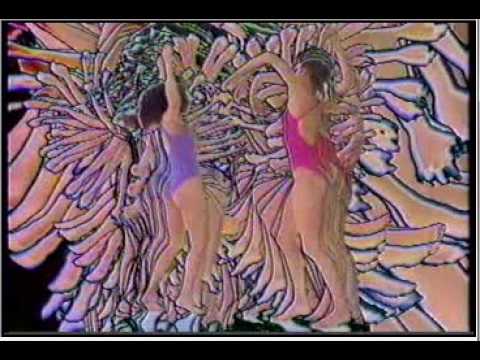
DH: It was current. The original [by Tweet feat. Missy Elliott] was actually in the charts when we did it. We had the idea from when we were in the van. It came on the radio, and Helen sang the vocal. And I just hung this riff on it, which is basically My Bloody Valentine’s ‘You Made Me Realise’. It’s based on that, but played on synths. And we had this session recording booked, for the Axl Of Evil remix of ‘Evil’, so we said ‘Well, let’s just do this as the B-side of that single.’ This was a stepping stone towards what would become Witching Hour, because our producer Jim Abbiss was far more excited about this cover version than he was with the remix, because this was the first time he had done something from scratch with us. We’ve done a few other covers, like Shocking Blue’s ‘Send Me A Postcard’ which we never recorded, same goes for Cabaret Voltaire’s ‘Nag Nag Nag’, and several others which never saw daylight.
‘Destroy Everything You Touch’ (2005)
DH: Recently a Brazilian friend of mine said this sounds like bossa nova when stripped right down to the melody. He sang it to me in Portuguese. And I was like, ‘That’s really eerie’, because it does. And then I remembered that when I wrote it bossa nova was in my head but it was so long ago I’d completely forgotten. That song was written so quickly. I was on my way to Australia. I went for a coffee with a friend in Liverpool, and it was starting to get a bit hard, being away all the time. We’d been away for almost a year, you know. I hadn’t previously felt that way about touring, I’d always liked being on the road, and being with the band but I was just starting to develop this longing for home. I left and I got in a taxi, and I said, “Destroy everything you touch…” into my phone, with the driver looking at me in the mirror. It was like a Hollywood musical. I had a notepad in those days, and I wrote in the second line, and by the time I got to the airport, I had the song in a voicenote on an old Ericsson phone, even the arrangement of it, and that’s what ended up coming out. Our label initially rejected the first mix of it because they thought that the vocal sounded too ethereal. We sent them a version with the vocals dry. Then they came back and said, ‘It’s lost something.’ Yeah, it’s lost that delay and reverb effect on the vocal that you didn’t like! We were exasperated, and then Jim Abbiss said, ‘Take the left channel of one, and the right channel of the other, and put them up together.’ And we looked at each other just like ‘Jesus Christ!’ and just burst out laughing because it just sounded absolutely monumental. It was a happy accident.
‘Fighting In Built-Up Areas’ from Witching Hour (2005)
DH: The very first time Mira came up to Liverpool, we went out clubbing. And then we went back to the studio and recorded ‘Commodore Rock’. She basically just improvised that on the spot in Bulgarian at like, three in the morning. She saw it as a way that she could rap. She said, ‘I can rap in Bulgarian’. So, after the few songs like that we did such as ‘True Mathematics’ and ‘Holiday 601’ I was thinking ‘This sounds so fucking cool. And nobody else has got this.’ That was one of the joys of the early moments. It felt like we were ahead by a good couple of years. ‘Fighting In Built-Up Areas’ is another one, and it’s really good to play live. It’s very dynamic. We did ‘Black Cat’ in Bulgarian after that, and ‘Kletva’ which was a cover of a Bulgarian song. But since then, I think Mira was less keen on doing it. She felt like it was almost like a gimmick. I think we might have attempted to do it once post-Velocifero, but it didn’t feel natural. So that closed that chapter. It was a secret weapon at the time, but it’s not really something that Mira wants to do these days. But we’re still playing ‘Fighting In Built-Up Areas’ live. It’s unique.
Christina Aguilera – ‘Birds Of Prey’ from Bionic Deluxe Edition (2010)




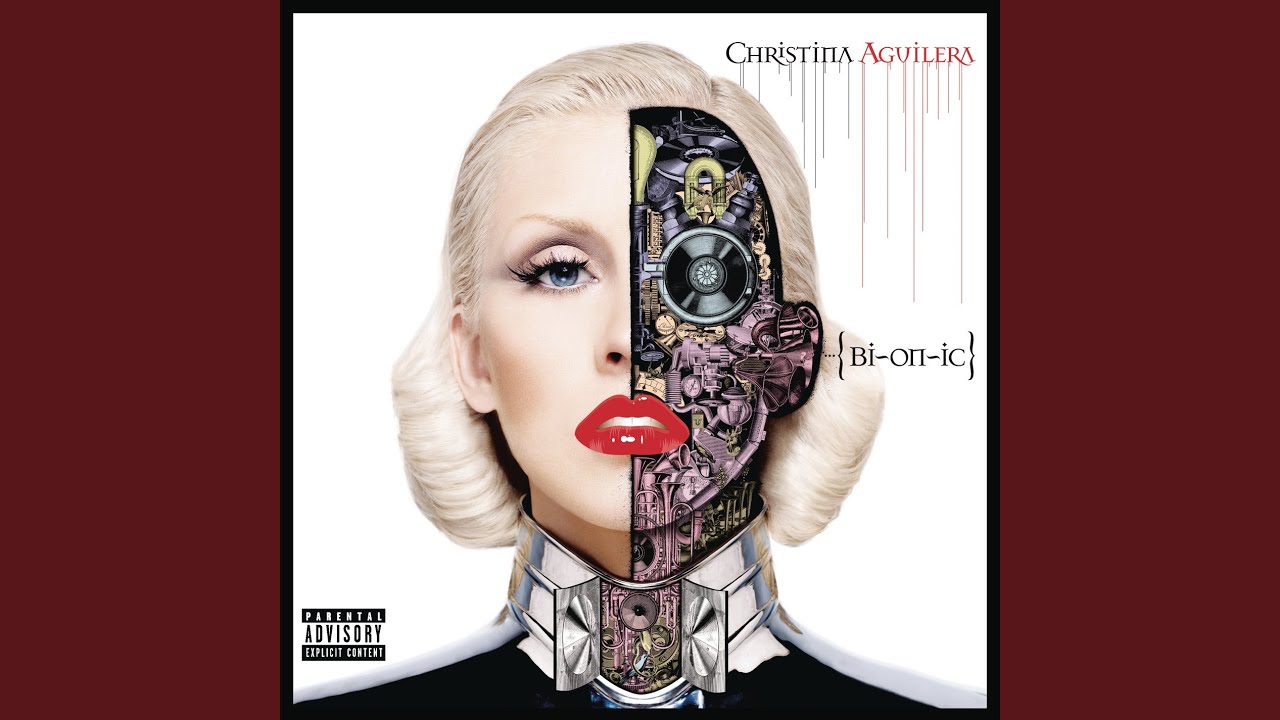
DH: Working with Christina Aguilera came out of the blue. She had her management contact ours to say that she was a big fan, which was obviously a surprise to us at the time. And she wanted to meet us with a view to co-writing and production. So, we went out to LA, a few times, hung out with her and had a laugh, and what struck me is that she was very, very genuine in what she wanted to do. It wasn’t like she’d just heard ‘Seventeen’ and ‘Destroy Everything You Touch’. She was talking about album tracks. She was completely genuine about it. I respected Christina for approaching the artists she liked rather than just paying someone to copy them. Her original vision for that album – and I don’t think this is controversial – was, in my opinion, much better than what eventually appeared, but perhaps it was just too weird for her to put out as it was, so they had to record more material that was maybe a bit more familiar for her audience. But I think that the Deluxe Edition, disc 2, which our songs are on, is closer to what she originally had in mind. And it’s kind of a cult record, I guess, now. I’d like to have done more with her, to be honest. But she’s sound. We had a proper laugh. She lived in Ozzy Osbourne’s old house, and it was his old studio we were working with. It had a bat-shaped swimming pool in the garden. She really liked the house in the show, The Osbournes, and just decided she wanted it and bought it off him.
When we went into the studio the first time, we had ‘Birds Of Prey’, and the first time we heard her sing, with that big intro, it was fucking intense. How we work with Helen’s voice is that it’s always very subdued in the studio, and that’s where the atmosphere, the vibe and the style comes from. But to actually hear someone the studio actually just belting it out, with this massive voice, was shocking actually. The experience also left me convinced that I did not want to be any more famous than we were.
‘Ace Of Hz’ (2011)
DH: This came out as a kind of an accident during the transition from the physical to the streaming world. But basically the tune – not the lyric – had been around for a long time. I wrote it on New Year’s Day 2003, and it was going to be on the next record but ‘Destroy’ overtook it. And it was always in the dish for subsequent albums but never quite got finished. Then when we were doing the compilation, it was like, ‘Oh let’s finally get this one done.’ It was actually one of the tracks offered to Christina Aguilera.
‘Kingdom Undersea’ from Paradises (2026)
DH: I’ve done a few duets with Helen, this record has a few with Mira too, and one where we all sing. ‘Kingdom Undersea’ became a duet because of the response to the demo with my guide vocal on it. Helen thought it should be a duet. It was actually Brian Eno who suggested I should sing more, and to use my voice in combination with theirs. It does sound like the autumn of 1990, which was a coming-of-age time for me, and when I really began with music. This sort of music was taboo for so long, and then it suddenly sounded fresh and novel again to me. There’s a lost modernity there, a way of making records which didn’t last very long, and it doesn’t really have a name. During the recording of this I couldn’t stop laughing at the idea that we would be accused of ‘going baggy’, which has been neither relevant nor a viable career move for 35 years. There has been an excitement within the group and our circle about what became Paradises since the very early stages that I don’t recall for previous records. Sitting on it for two years has been the hardest part.