
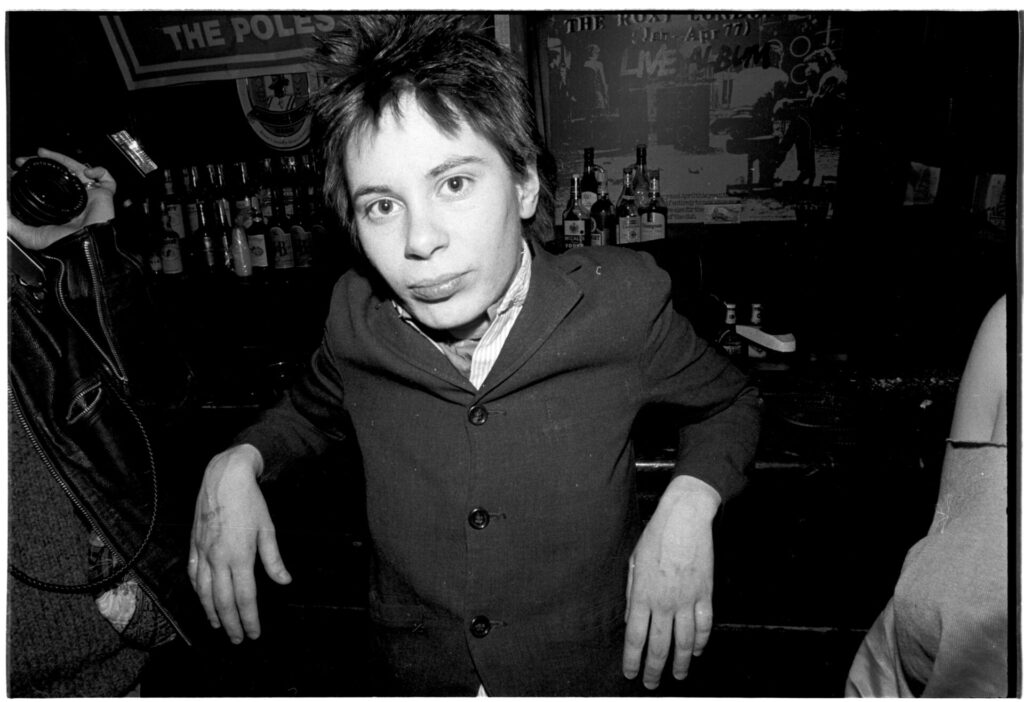
As a critic, I’ve never had a particular knack for analogy. But if tasked with describing the sound of No Wave, I might liken it to a strung-out saxophonist falling down the steel steps of the Delancey-Essex subway station. Its affect I might liken to a panic attack. Whereas punk was propelled by anger, No Wave found fuel in that interstice where anxiety explodes into doom.
Often derided as noise or absorbed into post-punk, No Wave was a momentary music movement that flourished in the ruins of late 1970s New York. I first discovered No Wave in early 2020 while working at The Kitchen, an alternative art space that proved an early supporter of the scene. It was an appropriate moment to dive in. The COVID-19 pandemic made the city feel apocalyptic, like a flashback to the Abraham Beame era.
Hailing from Cleveland, Ohio, Contortions keyboardist Adele Bertei became an integral player within No Wave. After she attended a series of pivotal concerts at Artists Space with her boss, Brian Eno, the producer was spurred to document it all. The resulting compilation, No New York, remains No Wave’s most crucial sonic document. Yet it is neither Eno himself, nor the men included (James Chance, Arto Lindsay) or excluded (Glenn Branca, Rhys Chatham) on the LP that serve as the focus of Bertei’s new memoir No New York. Rather, her focus is the women who not-so-quietly shaped the scene.
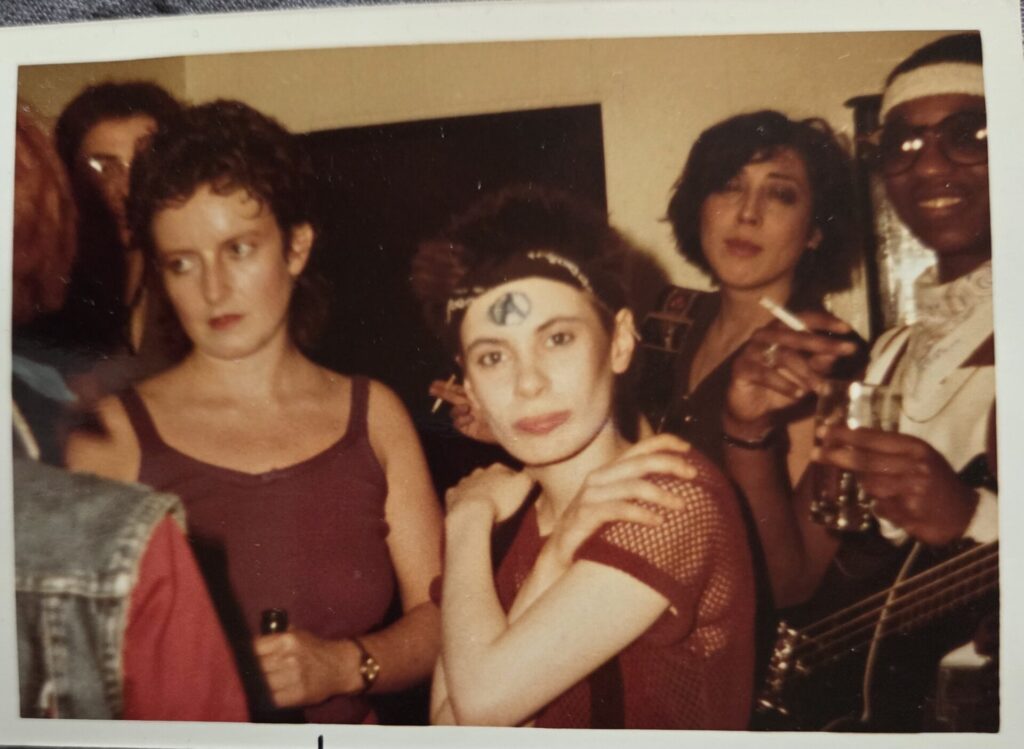
Bertei writes about No Wave’s music with acuity, its sexist shortcomings with clarity, and its women with care. There is no mud slung at Anya Phillips, Lydia Lunch, or Lizzy Mercier Descloux, only tenderness. In a world that still insists on pitting women against each other, this is not only refreshing to see – it’s radical.
Many books have been written about the downtown scene broadly, but only a few have been written about No Wave specifically. It remains a minor movement. Because No Wave cultivated an oppositional stance and sought to literally “destroy” music, it all but guaranteed its own obsolescence. From your perspective, what ideas fueled No Wave?
When we arrived in New York, from Europe and all over the country, we were met by this dystopian rubble. In 1975, we were in the aftermath of Watergate and Gerald Ford’s pardon of Richard Nixon. People didn’t care about New York. It was bankrupt. There was a sense that as artists, we were going to express what was happening in our nervous systems in a way that could not be commodified, that could really reflect the anxiety we were all feeling. Models were already being set in Hollywood in films like Dog Day Afternoon or Taxi Driver. There was this attitude of, “Okay, let’s just tell the truth for a change.”
Punk was rebellious, but it still held to a standardised, three-chord progression, rock-and-roll paradigm. In No Wave, we wanted to completely disassemble music, taking the shards of whatever we were finding metaphorically and throwing them together into a noise that had a system, albeit a fractured one. If you listen to the Contortions, it was noise, but it was very polyrhythmic noise. It had an explosive and dynamic effect. We were also all reading people like Antonin Artaud and Antonio Gramsci, watching Pasolini. A lot of women took courage from Patti Smith. She broke every paradigm of what a woman could be in music.
I love what you said about No Wave being an expression of “what was in our nervous systems.” I feel that as a listener, too. Yes, the music is noisy, it’s discordant. But something about the rhythmic tension just makes me want to listen to these songs over and over. I feel myself entering the trance state Artaud hoped to engender with his Theater of Cruelty. On the flip side, there are people who listen to Eno’s No New York compilation once and then say, “never again”. A date once told me that record was the worst thing he’d ever subjected his ears to.
It’s music as provocation. It was laced with fire and about burning oppressive ideas of gender, genre, everything. It had a lot to do with being in the body, as opposed to taking a more intellectual approach to music.
If you need to nail a mini-thesis next to art, it’s not art, it’s academia. There was a theoretical thing going on with the SoHo guys. But in the East Village, we were like, “No. This is Descartes. This is the animal in the blood.” I think Brian Eno saw that, too, when he picked the bands for No New York.
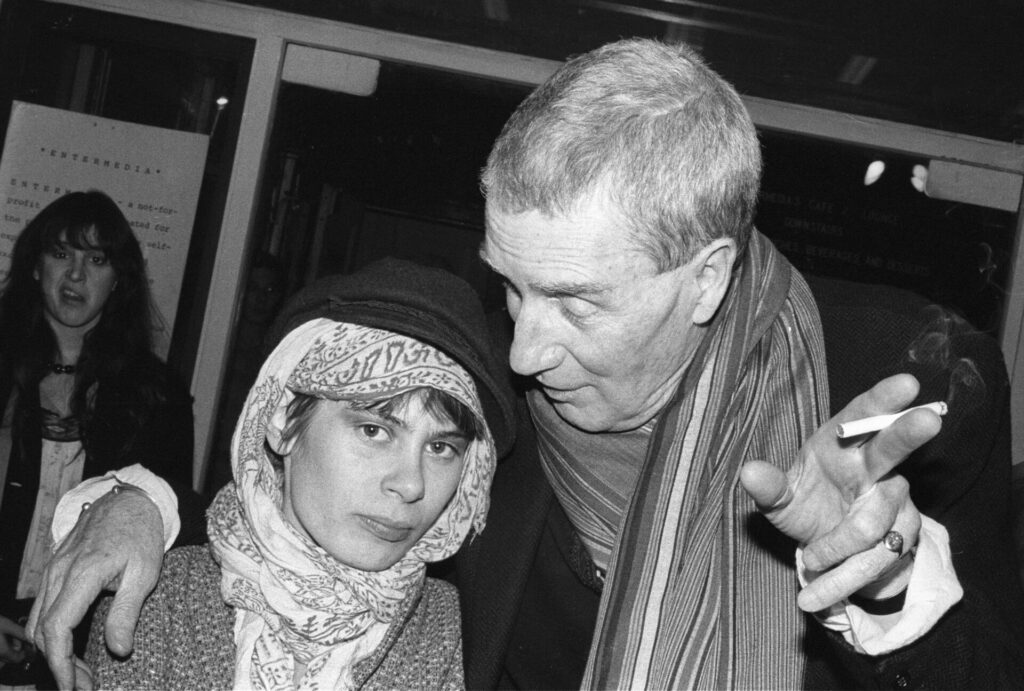
It’s so on-the-nose that Glenn Branca’s band would be called Theoretical Girls. Theory is baked into the very name. But, at least, the girls were more than theoretical – Margaret DeWys played keyboards. That wasn’t unusual for No Wave, where you see such an intermingling of artists across gender identities. Intermingling was really important for No Wave. People throughout your book encounter each other in really serendipitous ways. Meeting Nan Goldin in a gay bar in Cleveland influenced your move to New York; Eno discovered No Wave because he happened to be in the city producing Talking Heads. The energy of the scene was birthed by the diversity of people moving in and out.
Society was much different. We had telephones, but we hardly needed to use them, because we were constantly in the streets running into each other, saying, “Hey, this is happening at the Mudd Club, this is happening at Max’s Kansas City.” The physical proximity sparked spontaneous collaboration across disciplines in a way I’d never seen. Perhaps the closest analogue is France in the 1920s and ’30s.
That feels like an appropriate analogue, because it gestures toward a sort of prognostic cyclicality. I’ve found that my generation reveres yours much like Patti Smith would have revered Arthur Rimbaud, or James Chance would have revered Antonin Artaud. We tend to romanticise a moment that, for many who lived through it, was actually filled with ambivalence. How do you respond to that sort of retrospective romanticisation?
I look at it with a sense of grief, really. The economics are so terribly oppressive for young people today. It’s very hard for any vibrant, revolutionary artistic scene to develop when people have to work corporate jobs to make a living. It’s not going to happen with ring lights, hashtags, and algorithms. Capitalism dances when we feel we have to slap a label on our asses, because then corporations know exactly how to sell to us.
It would be incredible if young people became luddites and tossed their telephones into the streets. We’ve bought into the hypnotism of social media. So, I understand the romanticism. I also understand that there can be a creative thrust toward something other than what we’re being told we have to agree to.
It’s not like pessimism hasn’t beset us before. Back in 1972, David Bowie wrote ‘Five Years’, presaging the apocalyptic doom many would not feel until the second half of the decade. You don’t create a figure like Ziggy Stardust if there’s not already a dystopia that requires diagnosing.
I was just thinking about Bowie’s ‘Where Are We Now?’, off his penultimate album The Next Day. It’s such a beautiful song about grieving for a time that feels lost. But then there’s the coda at the end, “as long as there’s me, as long as there’s you.” That human connection becomes the solace of the song. We’re on the verge of losing that with AI.
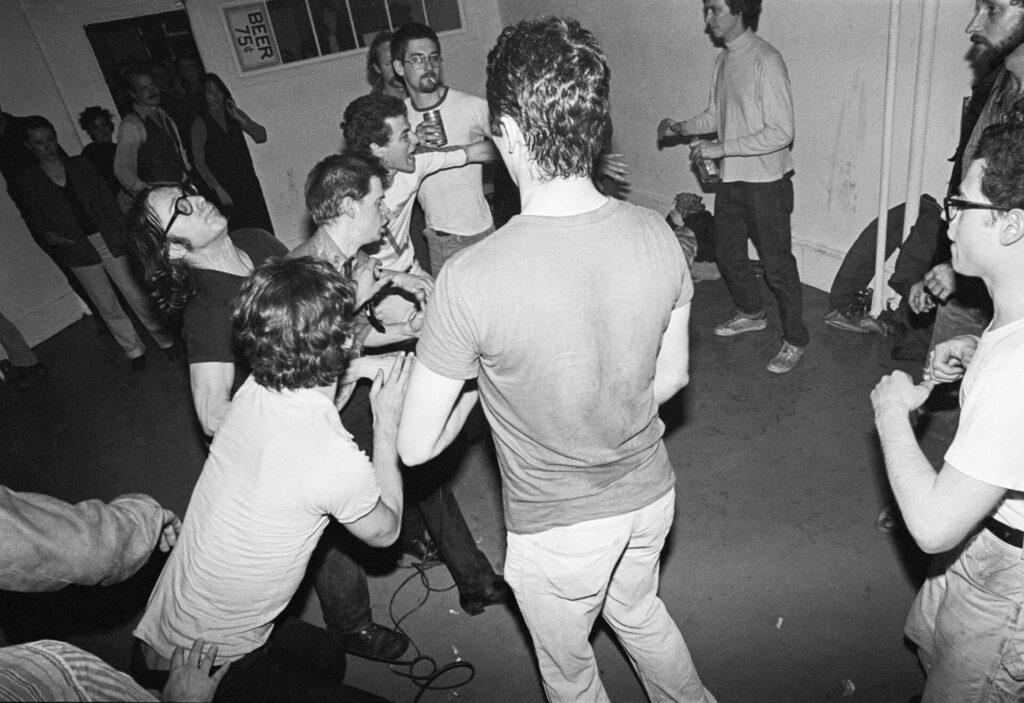
No Wave New York is a celebration of the scene’s energy, but it also feels like an act of mourning, of grief. It almost presents itself as a series of ghost stories, which is captured by the spiral diagram of the deceased that opens the book. Did writing this feel urgent to you – like you had limited time to capture a scene slipping away?
There’s a sadness to it. More and more people from that specific period of time are leaving us. Having been an insider in that scene, I also wanted to write in a diaristic way, where the highs and lows reveal how the personal is also the political. In some ways, it’s a cautionary tale, about drugs and other things.
I also felt an urgency to present the women in the scene in a way we had not been before. There have been great books written about No Wave, and they’ve given women some attention. But No Wave has never been framed as a true revolution of ours. Women came from all over to make art, to make music, to make films.
One thing I love about your book is that you resist gratuitous gossip. You write about the scene’s famous figures with intimacy, but not prurience. I was particularly affected by your chapters about Kathy Acker and Lizzy Mercier Descloux. Both are often framed via the men in their lives. But you give us glimpses of these women through a different gaze.
My writing is very personal, and very honest to my experiences of people. Being a queer woman, I noticed a lot of contradictions in the way women were treated in that time. I had an incredible love for women that I was not afraid of.
I know this might sound odd, but being the child of a schizophrenic mother also drove me to understand women beyond the framework society typically gives us. I wanted to see how women felt beneath the layers of gendered expectations. I couldn’t go along with the two-dimensional characterisations that I saw of a lot of the women in the scene. We were made to be competitive with each other. But I did not feel that at all, and I think a lot of the women in the scene rejected that as well. There was a real camaraderie.
That calls to my mind the importance of the films of Vivienne Dick. In Guerillère Talks (1978), she gives us portraits of eight of the scene’s women, including you. You’re captured with care in your everyday environs, like an inverse of Andy Warhol’s brutal and artificial Screen Tests. Similarly, Acker encouraged you to start writing. It seems women were instrumental in supporting your expansion from music into other mediums.
When Vivienne came to New York from Ireland, she couldn’t believe how strong and self-assured the women were, how androgynous. She was amazed by it and wanted to document it. Being on film was a natural progression for me because I was a dancer, I was a singer. I was already very much in my body. But I turned down some roles. In other No Wave films, the women were basically wallpaper. Men still had a certain entitlement around their art.
There’s a stigma about staying in one lane as an artist. But you should be able to do whatever expression your creativity wants to flow in, whether it’s film, writing, theatre, music. Now that I’m older, I’m distilling all of those avenues into my writing. I like to connect dots.
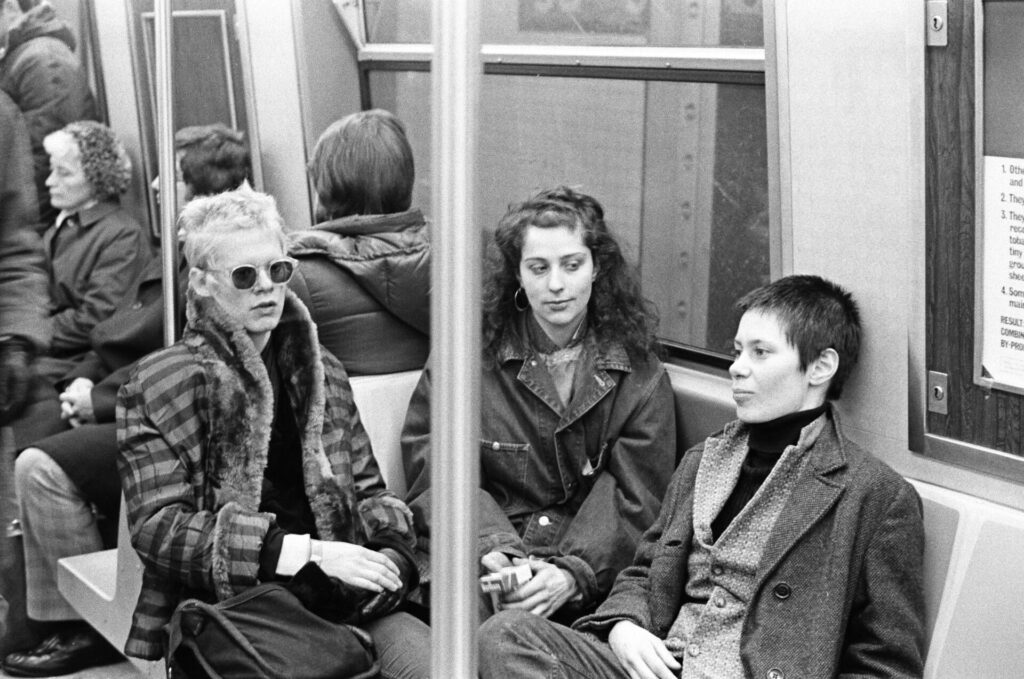
I’d love to end by pivoting forward to the 1980s, and the work you did after you left the Contortions. Though you performed briefly as a solo artist during this period, you also had the ambition to start an all-women band. So, you linked up with Kathy Rey and formed The Bloods, rock’s first Sapphic quintet.
The Bloods was motivated by more than just gender politics. In Kathy, you found a musical partner who shared your love of the Pretenders and your secret weakness for old-school melody. I can certainly relate – my record shelf is populated by as much Burt Bacharach as Glenn Branca. Very few of us fit into any one box.
I had grown up in Cleveland with soul and gospel music, so it was a natural progression after noise to return to melody. Funnily enough, when I was ending my tenure as Eno’s assistant, I remember asking him, “So, after No Wave, what do you think is going to be the next wave of interesting music?” And he said, “Melody.”


The Bloods was about wanting to get into songs that were melodic but also expressed political sentiments. Then I progressed to writing songs which were kind of poppy. I think the ’80s was one of the best moments for pop, especially British pop. Unfortunately, I was out of the closet, and it was a very difficult time to be gay when I was signed to Geffen, which was 1982, 1983. Ellen DeGeneres didn’t come out until the ’90s. So, I ran up against a lot of brick walls.
I really appreciate what you said about the ’80s being a great time for pop. Bands like Scritti Politti, Soft Cell – they were Leeds art students who also cut their teeth reading Gramsci and Artaud. But unlike the No Wave bands, they found something within the form of mainstream pop music that really worked for them.
Another group that was very underrated was the Au Pairs.
You recorded your only single with the Bloods for their label, right?
Yes, exactly. There’s a brilliant track of theirs called ‘Stepping Out of Line’. It’s all about commodification and just so prescient to what’s happening today.
Perhaps that’s the perfect note to end on – bridging past and present by way of praise for an under-acknowledged band that was spearheaded by women.
No New York: A Memoir of No Wave and the Women Who Shaped the Scene by Adele Bertei is published by Faber