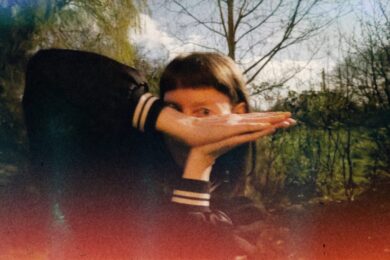

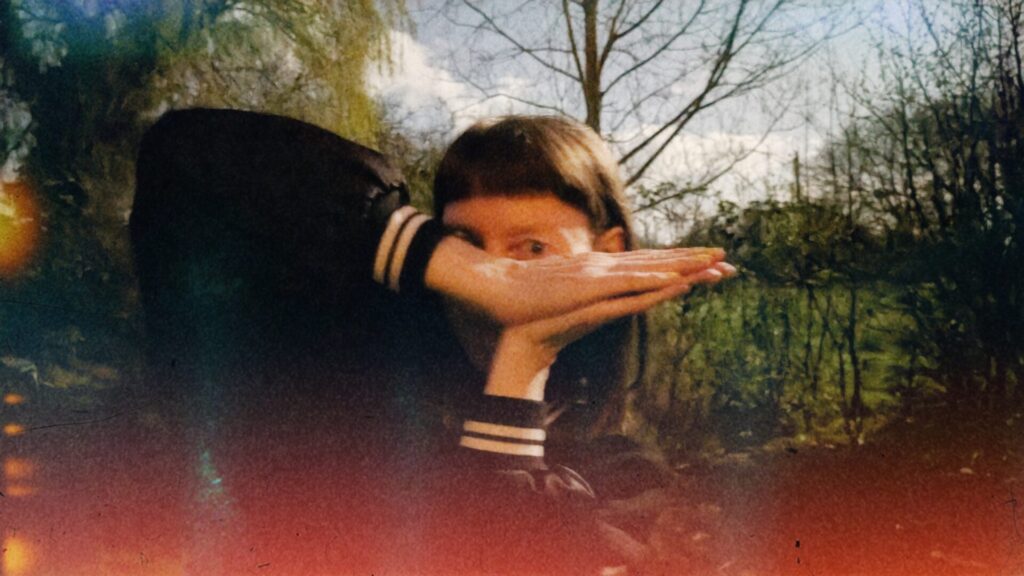
Loula Yorke is a fixture in leftfield electronic music now. She’s one of those artists whose name is a watchword for a very particular sound. In her case this means oneiric, immersive patterns created on a modular synthesiser, often blended with field recordings that have a pastoral sensibility – a feeling which she calls luminous. Her music sits somewhere adjacent to the very gentlest works of Steve Hauschildt or Kaitlyn Aurelia Smith and is represented across a hefty and coherent catalogue. But in fact that is only a very recent development. In fact all her work in this vein has come in the past two years. It feels like longer simply because there’s been a lot of it. Starting with Volta at the start of 2024 there have been four studio albums and two live releases, plus a “sonic journal” mixtape, all of which have come appended with copious sleevenotes and additional online writing, which all goes to really cement that gesamtkunstwerk feel.
“Volta definitely was a tipping point,” she says, speaking from her home in rural East Anglia. “It was 100% creatively and commercially the tipping point.” She laughs at her own use of the word “commercially” and adds: “I’d put ‘commercially’ in inverted commas, but Volta was the moment I started making music full time. While I was making that album in 2023, I got some funding to help me finish it. It wasn’t anything life-changing – something like three grand – but it was enough to make me say, ‘OK, someone believes in me, I’ve got to do this!’ I was already putting so much work into the record; I was learning so much in the process, that it was becoming impossible to maintain the kind of brainpower required to do a professional day-job on to of it. That conflict really, really made me focus… So that’s when I decided, ‘Yeah. I’d actually like to try my hand at actually being a musician and a composer.’”
The change did not come out of the blue, though. Yorke has been deep in the process of sound-making for some 15 years, and she has been immersed in electric music culture for longer still. She has youthful stints spent living in anarchist squat communities in Spain, France and North/East London under her belt.
She and her partner Dave Stitch met at a notorious week-long teknival at Steart Beach in Somerset. She laughs: “It was the long weekend for the Queen’s jubilee. As Dave tells it, he was arriving on site and saw this girl with a shaved head throwing a police road block sign into a hedge to get the queue of traffic moving, and thought, ‘That’s the girl for me!’” Through Dave she became closely involved with the Headfuk soundsystem. She says: “It was pretty much breakcore all the time, or if not then very hard techno. Just about everyone involved had a hardware live act, so I naturally really wanted to do that as well.”
Getting a live act together took a while however, partly because the squat scene which Yorke was heavily involved with went hand-in-hand with direct action. “Coming out of the tail end of Reclaim the Streets, into May Day, anarchists were crossing over with the environmental movement, the peace movement and especially the anti-globalisation, anti-WTO movement. We wanted to achieve an anarchist utopia – very cool man! But it was also very stressful because there was heavy surveillance, a lot of illegal evictions and all the rest of it.” The idea of raving and activism operating in parallel was starting to create a schism: “Reclaim The Streets successfully used the party scene as a tool for protest. When I started going raving it would be normal to get handed printed leaflets about vegetarianism or whatever, but quite quickly the police made it more and more clear to us, ‘We’ll shut you down if you start rabble-rousing.’ That was when the protest side of the scene started frowning on anyone frittering away their time raving.”
The couple spent some time living on a bus, a single-decker Dodge Commando which parked up in various places around London such as Whitechapel, Crouch End and Arnos Grove. “We were squatting in Edmonton and got attacked one night by local fascists throwing gas bottles at our windows and I felt it was time to call it quits.” During the summer of 2006, the couple drove it out to a field off the A12 in Suffolk. A couple of years later the couple were “offered the princely sum of £500 for it by some local travelling folk. Except when the guy had got it halfway out onto the road, the gear stick came off in his hand and we had to give it to them for free”. They had reached the end of that particular road. In 2010 they had become parents and launched their gnarly hardware rave collaboration TR-33N. “I’d always wanted to make electronic music,” Yorke says, “but I’d been very distracted by a million other things.”
She says: “It was only after I had kids that I was like, ‘Oh my god, this is what I have to do.’ As far as the world is concerned you’re not you anymore. You’re just this mum figure. It can actually be quite a good moment to go, ‘OK, I actually want to try being the person who I’ve always wanted to be now!’ It was a good moment to do it, since I’d been forced to break with the past completely anyway.”
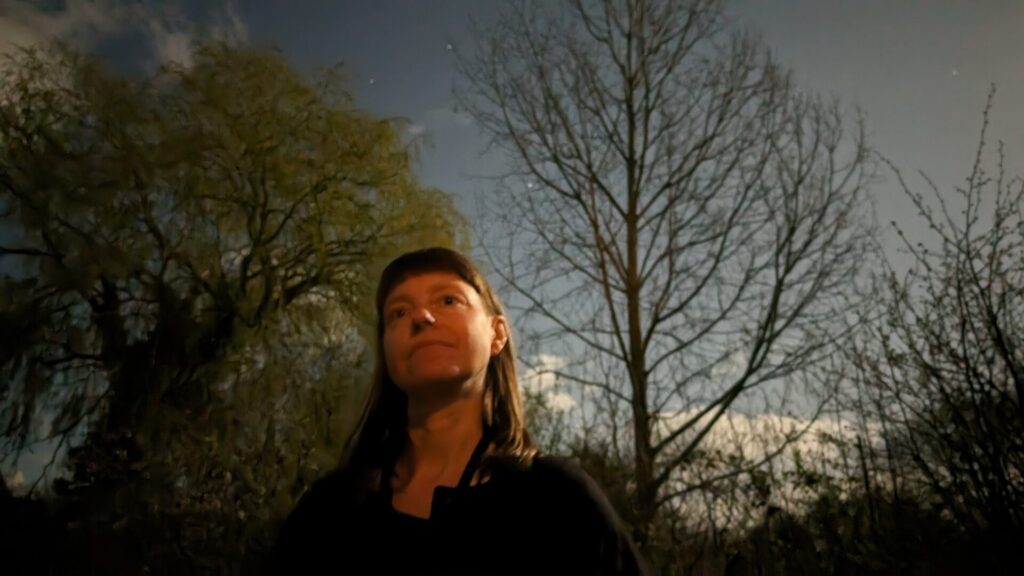
They were still connected to an international network of gritty party music and throughout the 10s she played some fun gigs. There were a couple of sets at Glastonbury’s original “naughty corner” Shangri-La, and one memorable show in the hold of the former East German fish transporter MS Stubnitz when it was docked in East London. As part of TR-33N she released new music on labels like YOSUCKA and Junted out of Detroit, and for the prolific London party crew Das Booty. At this time Yorke was still plugged into activist networks and she cites Temporary Autonomous Art in London as a place where ideals, practice and fun still felt aligned. That said, elsewhere, she was increasingly boggled by the common sight of electronic lineups not featuring a single woman, even at huge events. As a direct result of both things, around 2018 she started Atari Punk Girls, a workshop programme to teach sound-making using self-built analogue oscillators.
It was a transformative moment. “I was running workshops for girls teaching them how to solder at exactly that moment where women were suddenly getting loads of visibility, conversations around race, class, gender were really coming up. It was a good moment for it, and I don’t think anybody needed it explaining to them why it needed to happen.” Over 100 participants came through the workshops in three years, bringing with it the realisation, “Oh, actually there are shitloads of women doing this. It’s just that when you’re in the weeds, sometimes you don’t see the full picture.” It was a time of dramatic change in the idea of visibility; playing shows wasn’t just possible but it was now happening in dramatic fashion.
As for so many artists, the Covid lockdowns were a shakeup: “Day job work was harder and harder to find, and I also realised, I wasn’t just interested in noise-based practice, or music that constantly had a 180bpm kick drum.” The grant and the chance to throw everything into Volta in early 2023 allowed her to go “beyond just improvisational music made on the modular synths. It forced me to say, ‘OK you’re a composer now, you need to create things you can reproduce a second time!’” Steadily since then, through a slew of releases and live shows in a dazzling array of venues from churches to bunkers, Yorke has become more comfortable as thinking of herself as an artist. As such, she has increasingly ambitious projects locked in, not least a remarkable new EP called Salix where she plays a broken 140-year-old reed organ alongside electronic oscillators in duet with clarinettist Charlotte Jolly. Unsurprisingly though, for someone who’s gone through life with autonomy and improvisation as fundamental values, she’s loath to make any big predictions about what’s coming next.
“I did have crazy ambitions at first”, she laughs. “You have to believe that you’re going to be on the Pyramid Stage or whatever, because otherwise, that first bit – the bit where you’re trying to learn how to use these instruments, how to make music when you’re not a musician – is difficult. You have to be slightly delusional to decide to become a composer, when you’re not a composer, if you don’t want to be put off. I do want to make what I do more sustainable – financially, as a practice, and in terms of building community around it – but I don’t have a grand ambition. I am realistic about where I fit in the scheme of things, I just need to keep pushing my niche as far as I can.”
Referenced artists

Kaitlyn Aurelia Smith
Kaitlyn Aurelia Smith
The Salix EP is available to pre-order. Loula Yorke plays at this year’s Acid Horse festival