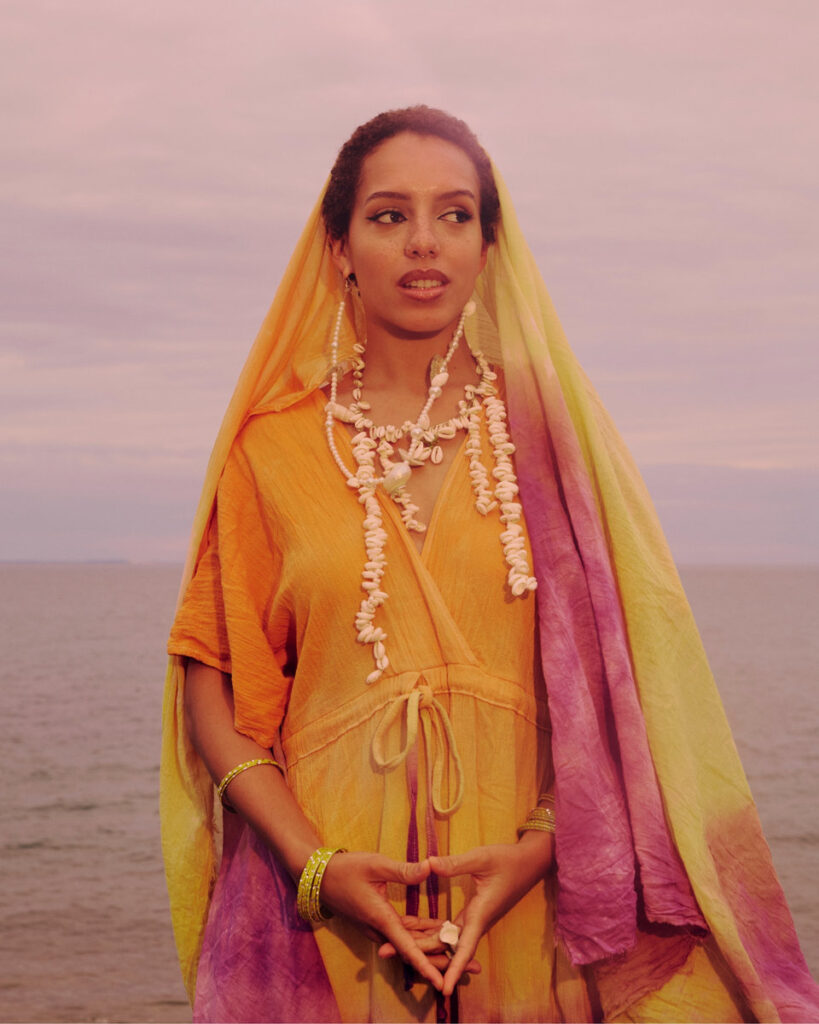
From weaving spoken word truth-telling with improvised jazz, to experimental dub soundscapes infused with ceremonial song, to ambience and electronics laced with field recordings, First Nations artists are pushing the boundaries of the musical landscape of so-called Australia.
Song has been integral to Indigenous cultures for millennia – and before the arrival of the First Fleet in 1788, hundreds of Indigenous nations, languages and dialects existed across the continent today known as ‘Australia’. It would feel remiss not to first acknowledge the violence and dispossession of that colonial project, starting with the Frontier Wars and followed by the formal establishment of ‘Australia’ in 1901.
‘Australia’ was built on massacres, segregation and racist policies with impacts continuing today through systemic and overt racism. For example, First Nations people have recently experienced terrorist attacks from the extreme right. In Naarm (Melbourne) last September, an anti-immigration march led to a group of neo-Nazis storming Camp Sovereignty, the site of a historic First Nations burial ground, leaving several people injured and hospitalised.
More recently in Boorloo (Perth) on 26 January a bomb was thrown at a peaceful First Nations-led Invasion Day rally. These events demonstrate a growing neo-Nazi and fascist threat to which the government barely bats an eyelid – continuing the cycle of violence against First Nations people introduced in 1788.
Beyond this, colonial impacts across ‘Australia’ are varied and reflected in several ways. Not all experiences with the colony have been the same and this is demonstrated through the diversity of musical expression by today’s First Nations artists. We don’t have one sound, one language, one experience or one set of beliefs – which in turn shapes an expansive and rich tapestry of diverse musical expression. Here are a few ways First Nations artists are shaping new ground within the musical landscape of ‘Australia’
Connection to Country – land, water, skies
For First Nations people ‘Country’, refers to the lands, waters and skies they’re connected to. Ways of incorporating Country into music are growing; today more artists are integrating field recordings of Country through song and music.
Kaytetye producer and DJ Rona recently spoke to the Club Elevate podcast about how during the writing process for her 2025 EP It’s All Here, she would open her windows to play melodies out into Country “so that the birds can hear and the wind can respond,” and record the result. “You can feel the shift in energy,” she said. “I’ll just start recording the birds, and they’ll respond to the energy that I’ve put out.”
Truth-telling on the colonial project
Truth-telling is a way First Nations people share stories about culture and their experiences with the colony. When truth-telling is embedded in song and music, it encourages the broader community to engage with and garner a deeper understanding of First Nations experiences, histories and injustices.
A powerful example can be heard in Jamaican/Arrernte artist Solchld’s spoken word release ‘Freedom Come’ – a rally cry and call for the liberation of all Indigenous people confronted by colonial occupation and euro-centric standards of conformity.
Truth-telling can also be heard on ‘Division’ by Malyangapa and Barkindji hip hop artist Barkaa which discusses racism in ‘Australia’, specifically the disproportionate overrepresentation of First Nations people in the justice system. Despite the Indigenous population of ‘Australia’ being close to 4 per cent, recent statistics show that First Nations people represent over 35% of the total prison population – with underlying causes attributed to systemic racism.
Similarly ‘Australia Does Not Exist’ by Drmngnow – which incorporates beats, spoken word and yidaki (a traditional wind instrument) – explores the impacts of colonisation. It brings to the forefront the myth of terra nullius and how countless Indigenous nations existed before ‘Australia’, massacres, attempted eradication and assimilation, setting it in contrast with the survival and resistance of First Nations people.
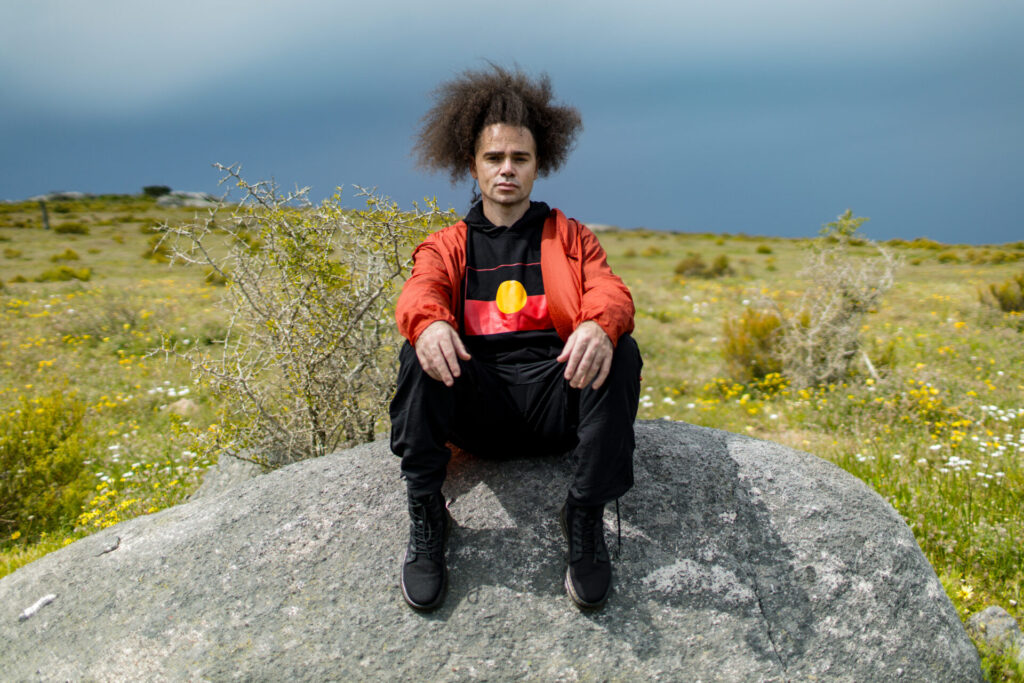
Language as resistance
Language connects First Nations people to Country, culture and ancestors – and artists are using language as a form of reclamation and resistance against the colony and its attempts to eradicate first languages.
During times of earlier colonial control, in some parts of ‘Australia’, many First Nations people were forbidden to speak in language otherwise they would be punished – severely impacting its long-term survival.
With fewer than 150 languages now spoken – down from around 250 languages and 650 dialects pre-colonisation – there’s currently a reawakening and revitalisation of language by many Indigenous artists. In music this is seen through artists learning language, or artists incorporating language they grew up with.
A transportive release centring this is Noongar soul artist Bumpy’s track ‘Maambakoort’ from 2025 debut LP Kanana. ‘Maambakoort’, meaning ‘ocean’ in Noongar language, is a song that evokes the calming sense of saltwater before a storm through soulful vocals, with a chorus in language over a backdrop of gentle guitar, keys and percussion.
Powerful preservations of language can also be heard through the project Crown And Country – a collaboration between Warlpiri elder Wanta Jampijinpa, his father Jerry Jangala Patrick OAM, and producer Marc ‘Monkey’ Peckham – as well as in the work of Yolngu musician Drifting Clouds (aka Terry Guyula) and Butchulla songman Fred Leone’s project Yirinda.
Diversity, self-determination and reclaiming narratives
Across all forms of Indigenous storytelling – visual art, film, theatre, dance, music and more – is an impetus on diversity, self-determination and challenging stereotypes and mainstream expectations of who Indigenous people are and what can be done.
Drmngnow’s ‘Indigenous Land’ demonstrates enacting self-determined sovereignty through song and shows, which he has described as “expressing how our sovereignty has not only survived but thrived despite the colonial violence aimed at erasing it.”
Lyrically ‘Indigenous Land’ reclaims narratives of the history of so-called Australia that are not usually taught in schools. This song, along with the aforementioned ‘Australia Does Not Exist’, has connected with Indigenous people not just in ‘Australia’ but globally, and remains relevant today.
Song as sovereignty
The way First Nations artists in ‘Australia’ are dismantling expectations of musical conformity through sovereignty – the inherent and self-determined rights of Indigenous people – is explored in Yorta Yorta and multi-lineal Indigenous artist Neil Morris’ 2025 PhD thesis Baiyiya Mulana Murrangurang: Song, Sovereignty, Practice through research on sovereignty in connection to Baiyaya (song), Woka (land), Yenbena (ancestors) and Yapaneyepuk (togetherness).
Morris explains: “in considering sovereignty and the ways First Nations peoples assert our identity and self-determination through Baiyiya, it becomes evident that the concept and practice of sovereignty within this medium can comprise vast and dynamic features.
“The impacts of colonialism are undeniable, but what is equally significant is the resilience of Indigenous peoples in shaping our own value systems and practices that continue to express them, particularly in the realm of cultural expressions such as Song.”
He also demonstrates this through his projects, Drmngnow which weaves hip hop, electronic music and sound design to explore Indigenous sovereignty, and experimental instrumental project MINYERRA which incorporates field recordings, electronics and synths, centring sovereignty through song.
Crown And Country‘Wantarri (Gift)’ABC Music
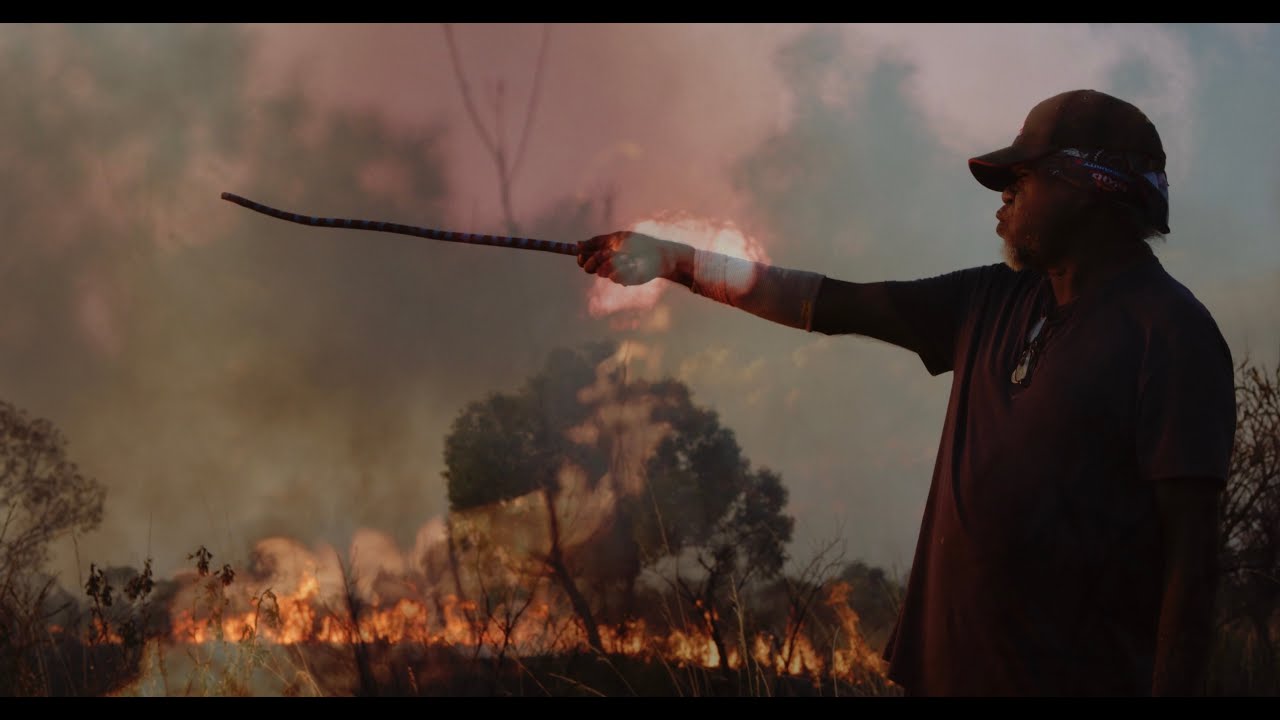
Crown And Country is a collaboration between Warlpiri philosopher and teacher Wanta Jampijinpa Pawu-Kurlpurlurnu, first contact Elder Jerry Jangala Patrick OAM and composer Marc ‘Monkey’ Peckham. Incorporating experimental sounds, dub, language and storytelling, ‘Wantarri’ invites listeners to engage with Warlpiri Country and culture.
Drmngnow‘Ngarwu (Listen’Ngarwu
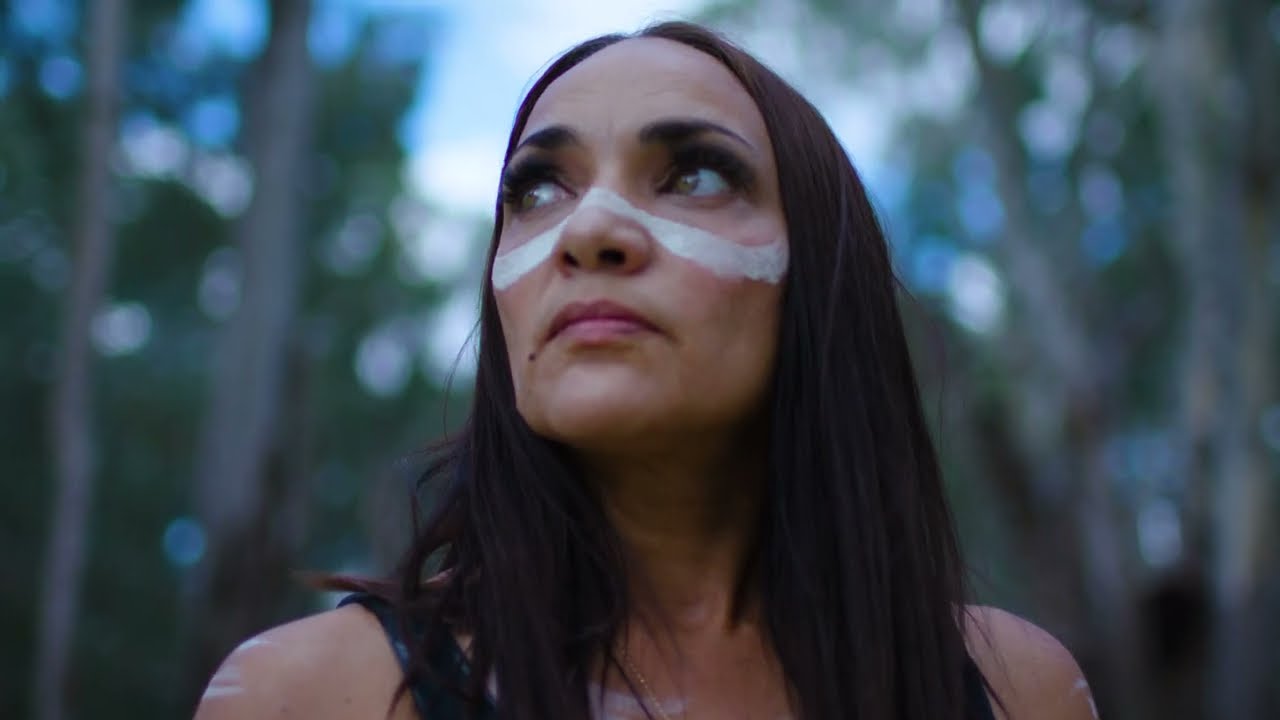
Yorta Yorta and multi-lineal Indigenous artist Neil Morris’s project Drmngnow’s most recent release, 2025 album Ngarwu, incorporates Yorta Yorta language across four of its five tracks. Meaning ‘listen’ in Yorta Yorta, ‘Ngarwu’ centres the importance of deep listening, and honouring the power that we can hold when we listen to ancestral voice.
Rona.‘Show Me’Rarre
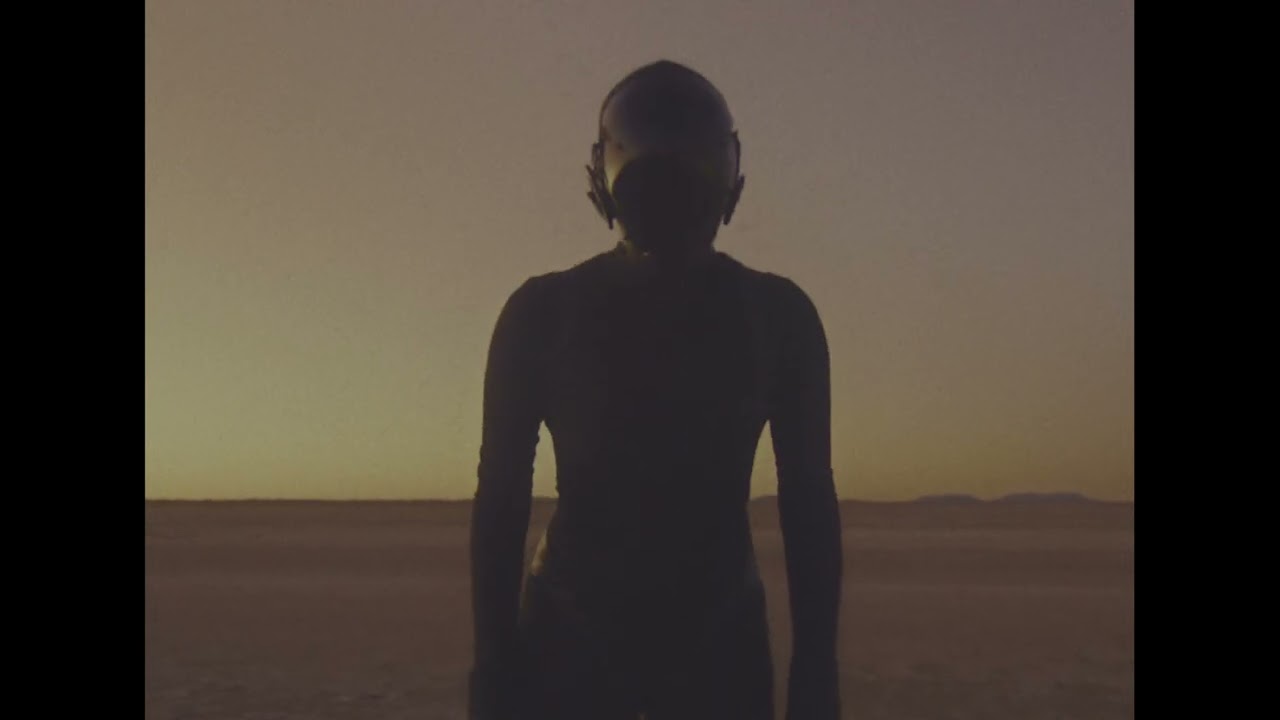
Kaytetye producer and DJ Rona. has incorporated language and shaped soundscapes reminiscent of Country since her debut single ‘Closure’(Ft. Helena) in 2022. Her recent EP incorporates elements of Country, as well as archival recordings of a historical speech from First Nations media pioneer and photographer Freda Glynn on ‘The Blacks’.
Solchld, Callum Pask Trio‘Freedom Come’Self-Released
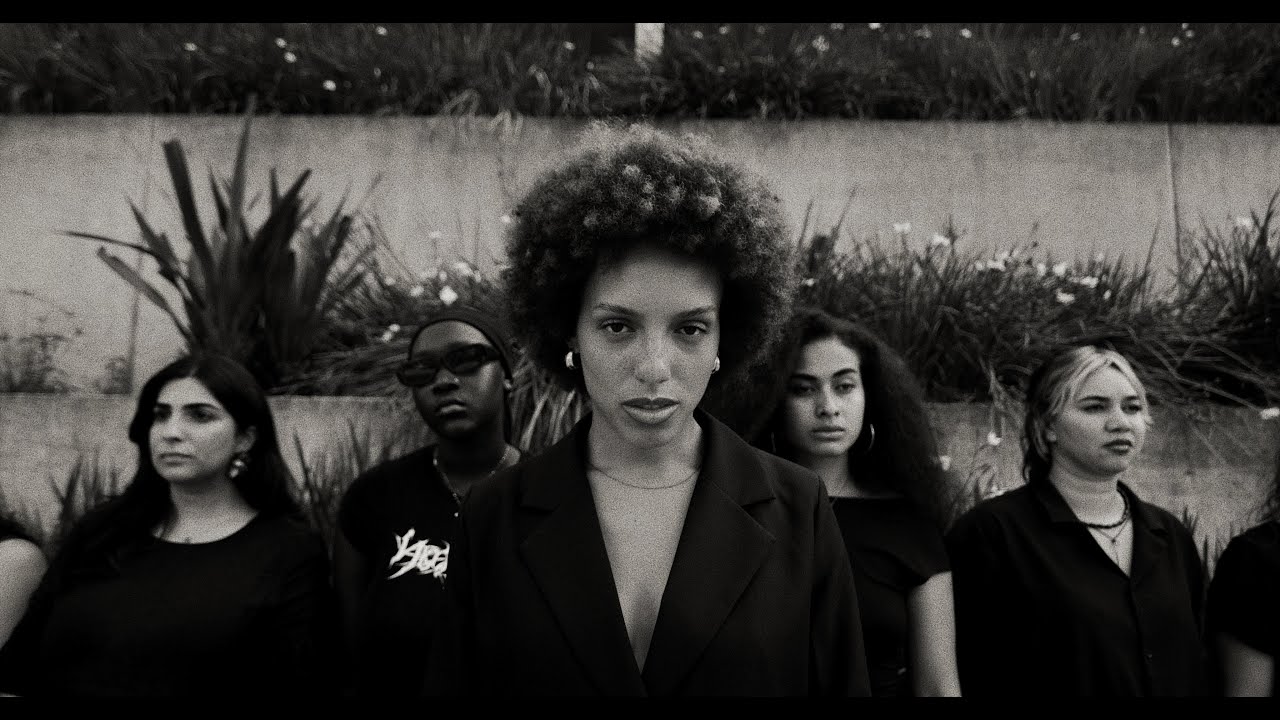
In late 2025, Jamaican / Arrernte spoken word artist Solchld released ‘Freedom Come’ – which honours the protest, survival and solidarity of Indigenous people around the globe. With an improvised jazz backdrop created by the Callum Pask Trio – ‘Freedom Come’ sparks a feeling of survival, strength and resistance.
Yirinda‘Nyun (Brother)’Chapter
Yirinda is a collaboration between Butchulla songman Fred Leone and contrabassist and producer Samuel Pankhurst. Their powerful 2024 self-titled release shapes nine experimental soundscapes around stories told in the endangered Butchulla language.