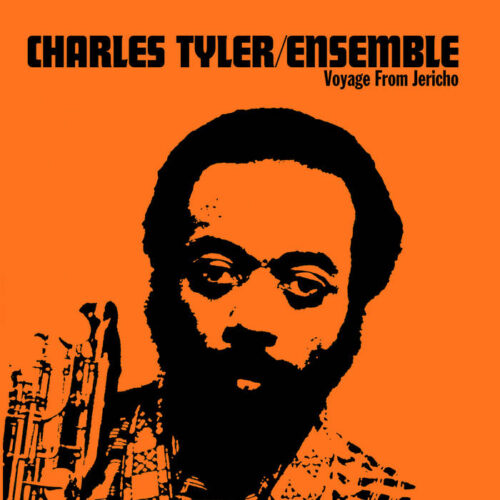

Released 51 years ago on Charles Tyler’s own Ak-Ba records, Voyage From Jericho captures a period when Downtown Manhattan lofts resonated to the sounds of a jazz avant-garde determined to do things on its own terms. Frederiksberg Records’ sumptuous reissue, complete with photographs, flyers and deeply researched liner notes by jazz scholar Cisco Bradley, brings this essential part of Tyler’s discography back into circulation. A brilliant alto and baritone saxophonist, Tyler is perhaps best known for his contributions to Albert Ayler’s transcendent 1965 albums Bells and Spirits Rejoice, but his own leader albums for legendary New York independent ESP-Disk shouldn’t be overlooked. Combining fiery horns with eerie string textures and orchestral vibraphone, Ensemble (1966) and Eastern Man Alone (1967) are remarkable documents of the Black Arts movement. Following their release, Tyler moved to Los Angeles, where he worked in music education and connected with the likes of conduction pioneer Butch Morris and the young saxophonist David Murray.
Returning to New York in the mid-70s, Tyler began assembling the group that recorded Voyage From Jericho: trumpeter Earl Cross, double bassist Ronnie Boykins and drummer Steve Reid. Alto saxophonist Arthur Blythe, whose devastating Alabama Feeling + 1 Tyler would release on Ak-Ba in 1977, was another close collaborator and he appears on the album’s opening and closing tracks. The title track launches the album with a unison fanfare from the horns and bass, supported by Reid’s emphatic drumming. Having announced themselves as a beautifully liberated marching band, they take a sharp left turn, with scurrying drums ushering in a killer baritone solo from Tyler, who punctuates his fluid upper register runs with guttural brays. Boykins, a key member of the Sun Ra Arkestra, drives the music forward with a brisk walking style that is as adventurous as it is swinging. Around the five-minute mark, the bassist brings the pace down with insistent single note statements, setting up an overlapping dialogue between the horns in which the theme is echoed and transformed. Their interplay is a joy to behold, with Reid’s tops-and-lows approach leaving plenty of mid-range space for the band to move in and out of.
‘Return To The East’ sets oblique melodic statements against a rolling and skipping groove, leading to a stunning bowed solo from Boykins, where grungy double stops frame plaintive melodic fragments, and a lickety-split feature from Reid. The leaping and tumbling head of ‘Just For Two’ is a terrific example of Tyler’s ingenuity as a composer, taking the steeplechase unison motifs of Ornette Coleman circa 1960 into the Loft Era with the horns dashing neck-and-neck and Reid pummelling the skins like a rock star. Repurposing military band sources in the name of freedom and joy, ‘Children’s Music March’ is a showcase for Tyler’s greasy and grainy baritone playing, animated by Reid’s spry elasticity. Making full use of the three horns, ‘Surf Ravin’ creates a bluesy angularity from a matrix of spooky intervals, with the soloists stretching out over Boykins’ probing bass. In contrast to the ferocity of his blowing with Milford Graves, Blythe provides a bright counterpoint to Tyler’s fluid lines and slightly pinched tone, with Cross’s trumpet piercing through. Throughout it all, the rhythm section swings freely, bringing an earthiness to the extended harmonies and slanted rhythms of Tyler’s composition. This is adventurous music, reflecting Tyler’s catholic tastes and committed scholarship, yet it never sounds drily cerebral. There’s a tremendous vitality and warmth to Voyage From Jericho, with the musicians engaging in playful yet searching conversation.
Tyler would continue to play an important role in the Loft scene as both artist and organiser, before pursuing European opportunities in the 1980s. Settling in France, he left us in 1992 at the too-young age of 50. But what a legacy: glittering collaborations (Sun Ra, Cecil Taylor, Billy Bang, Steve Lacy, Johnny Dyani) and wonderful leader recordings like this.