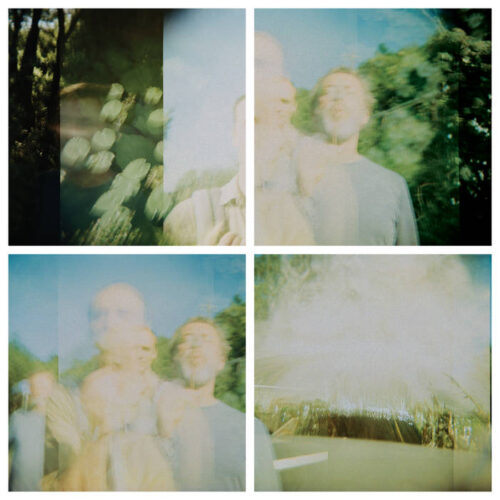

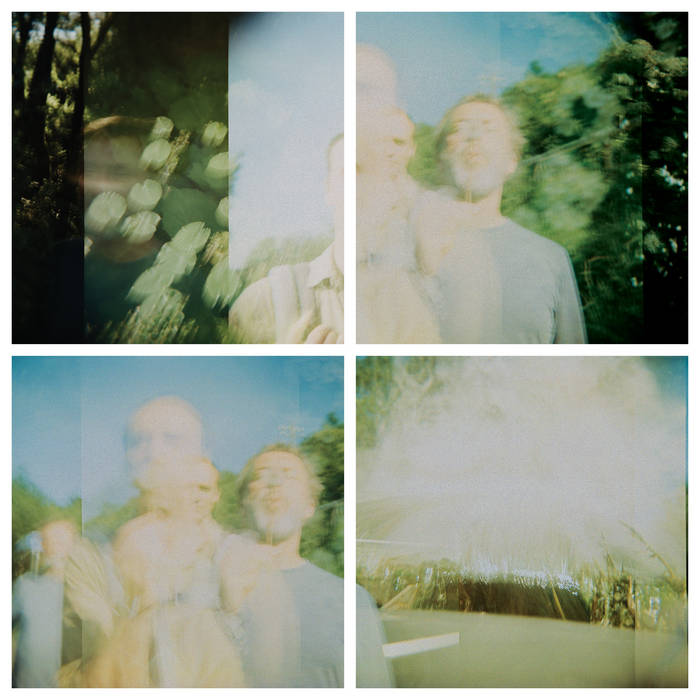
Experimental music doyens Daniel O’Sullivan and Richard Youngs have teamed up once before, on 2020’s Twelve of Hearts, a set of alluringly off-key songs. Persian Carpets, released by the excellent VHF, is entirely different. The prolific pair take a pair of aging instruments – an upright piano and a zither, both dating from 1915 – which they use to perform two improvised 20-minute pieces, filling either side of the LP. It is an exercise in exploring repetition and tiny, gradual variations. The resulting richness, created by restriction, is reflected in the album title: a set of intricate designs which reveal more, the longer you spend in their company.
The two sides offer contrasting atmospheres. Listening to ‘Side A’ is sometimes an unnerving experience. It opens with two insistent, repeated, notes on the zither, played by Youngs, echoed by O’Sullivan on the piano, like an emergency siren going off in a long-closed music shop. The repetition makes it uncomfortable to listen, but impossible not to – and then it sucks you in. You start to forget what you’re listening to, and begin to pick up variations. Sudden tempo changes may be real or imagined. The range of notes extends, but somehow without you noticing. The zither starts to sound like a sitar, and the piano becomes sweeter. Then Youngs’ zither begins to play offbeats, and the rhythm seems to reverse. The track expands into a transcendent lacuna in the centre, then contracts back out again. It is quite an experience: nagging, psychedelic and unexpected.
‘Side B’ is calmer, the zither strummed in a less confrontational manner and lower in the mix, playing on equal terms with the piano. The music moves more slowly, accompanied by a shuffling which, despite being zither-based, sounds like someone tidying up in the background. It’s as though there are other people in the room now. The zither becomes a clockwork toy, while O’Sullivan’s plays melancholy piano figures, which never settle into a key. The pace increases, both instruments get more agitated, and then pulls back to a walking pace before petering out.
The press material compares it to Strumming Music by Charlemagne Palestine, who has worked with Daniel O’Sullivan, and it does have a similar, somewhat frantic focus. It has the fried feel of an acoustic Sunroof! The only rule for the session was apparently ‘no majors or minors’. This immediately puts the music into a sort of limbo, where everything circulates without resolving, a technique which pulls the listener into the swirling current. Persian Carpets is a fascinating piece which, like the best improvisation, creates a world we never asked for, but find we cannot do without.