

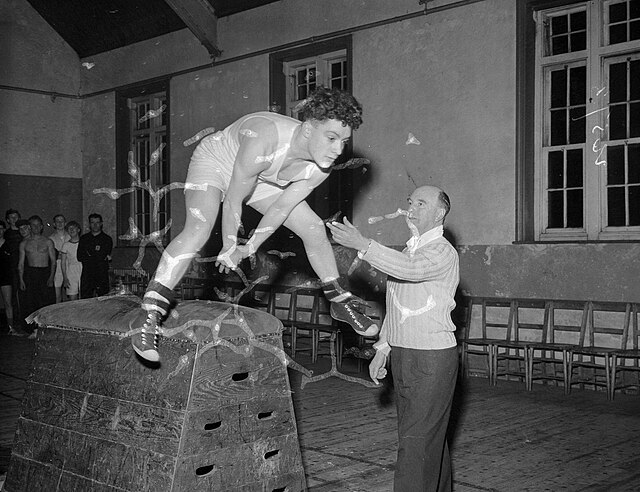
For all of its entrepreneurial vigour, the state was more present in the birth of grime than is sometimes realised. In Dan Hancox’s Inner City Pressure, Dizzee Rascal describes the informal circuit of youth clubs that became his apprenticeship: Canning Town and Deptford, the Canary Wharf club that financed Ruff Sqwad’s first ever released, and further east to Beckton, which was Kano’s local.
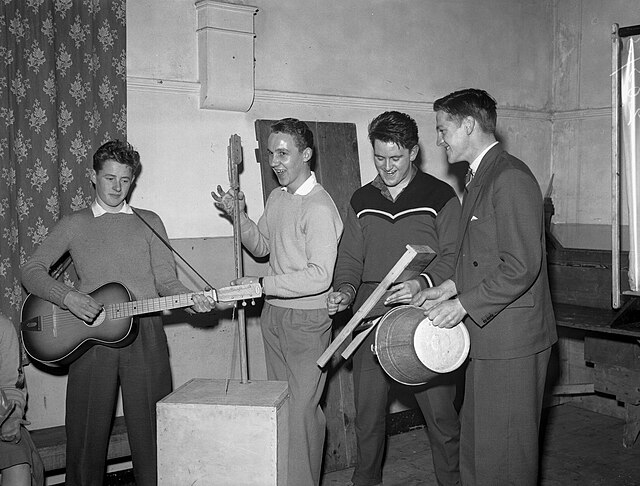
From Kano to Michael Caine, whose passion for acting first blossomed at Walworth’s Clubland youth club under the Lancashire youth work pioneer Reverend Jimmy Butterworth, the youth club has had a galvanising effect on British culture that has been hidden in plain sight.
I had an example of this just recently. On a train heading through Lewisham – a borough whose youth clubs fed directly into Franco Rosso’s now legendary 1980 Black British classic Babylon film – a man in his forties politely interrupted my reading to ask about the book in my hands, Emma Warren’s Up The Youth Club: Illuminating a Hidden History. It turned out that, though he had never really spoken about it to the young daughter beside him, a Baptist club in Brockley had played an important part in his teenage years.
No wonder, though, that the daughter needed some explaining about the British youth club. Following the election of the Conservative-Liberal Democrat coalition government in 2010, spending on youth services was reduced by 63 per cent across the UK, to the tune of £1bn. “Closing youth clubs was not cost effective,” wrote Institute for Fiscal Studies economist Carmen Villa in 2019, evidencing an estimated £3 of societal costs for every £1 “saved” by closing youth clubs.
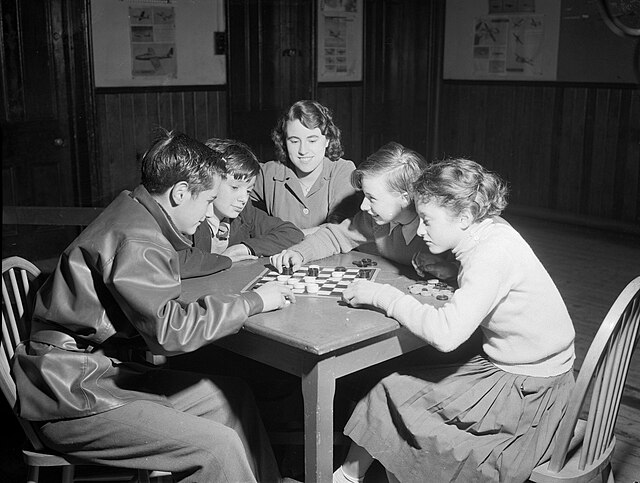
When I tell my train encounter to its catalyst, the author Emma Warren, she is pleased that the book is finding its function. “I really wanted [a book] that could generate sparks,” she says approvingly. “To be functional and useful, and to do something. To spark that feeling in someone: oh my God, I remember my club. It’s such a joyful thing.”
Emma Warren is a writer completely concerned with grassroots culture. Born to an Irish Catholic family in the Bromley town of Orpington, in the 2000s Warren was a founding contributor of dance publication Jockey Slut as well as a staffer at The Faace and an editorial mentor at youth-run Brixton publication Live Magazine. In 2019, Warren’s excellent Make Some Space mapped a cultural history of Stoke Newington’s Total Refreshment Centre. That experience informed 2019’s Document Your Own Culture, a refreshingly clear-eyed self-help manual for anyone wanting to follow her example and document their own space or community. Published in 2023, Dance Your Way Home: A Journey Through The Modern Dancefloor has since become something of a modern classic – inspiring a Southbank Centre summer season this year – as part cultural history, part memoir of Irish community centres, reggae dances and underground jungle raves that formed an alternative, and defiantly holistic, history of British dance culture, well away from exhausted myths about super clubs and star DJs. Now, Warren – herself a long-term youth club volunteer and former attendee – uncovers the hidden history of the youth club in the UK and Northern Ireland, and how they changed culture.
Books sometimes grow out of other books, and Dance Your Way Home contained a chapter pitching youth clubs as an undersung part of British dancefloor history.
I seem to be a big fan of self-bootlegging. Document Your Culture came from the last chapter of Make Some Space. A title from one thing turned into another thing, and in a way that’s because there’s no separation between anything I do. It’s all part of the same thing: my connection to and commitment to the value of doing things together. So I suppose it’s inevitable that there will be echoes of one in the other.
It helped focus my mind on the similarities between the night club and the youth club, both being informal spaces without achievable outcomes.
I really think I knew this on an undercurrent level but I hadn’t been able to articulate it for myself until Dance Your Way Home and then much more with Up The Youth Club. The youth club and the dancefloor are massively interconnected. Rooms in the same house, if you like. These are all places where at different times in our life we gather to do things together, often in environments where music plays a part.
There’s a bit of a consensus about youth clubs in Britain today, which is that they’re broadly a good thing if they “keep kids off the street.” And your book is quite a big rejection of that Daily Mail, “keep kids off the street” thing, instead arguing for a club space where adults aren’t expecting anything from young people, where they’re respected and allowed to ask for things.
There’s a reductive way of looking at youth clubs which is either about youth violence or keeping kids off the street. Both of which have some truth in them, but are so far from the whole truth of the youth club, which is that these are rich, powerful cultural spaces. These are spaces that are solutions to so many things that we think about as problems, and have had this huge effect on music, fashion, culture, sport. To reduce them down to that one thing is just really mean-spirited and completely inaccurate. There’s so much racism and classism in the idea that the youth club is just for certain users who also happen to correlate with violence. So I reject that in many, many ways, whilst also recognising that, you know, this is a rainy country and people who are in their teenage years need places to go!
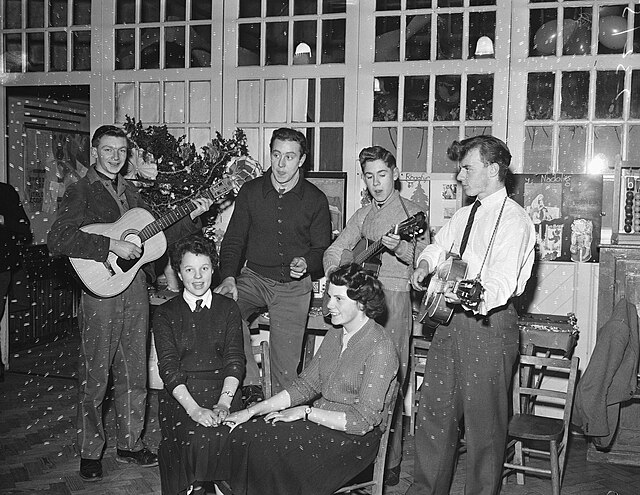
I was really taken with you restating the origins of the world clubbing, which I had never thought about in the sense of people clubbing together. Walk around St James and the aristocracy never gave up on clubbing or the value of having those spaces.
That [word] was a big surprise to me as well. My mind thinks quite lyrically, and I try to really think about what each bit of a word means. Take the word encourage: it has the word rage in the middle of it, so to be encouraging isn’t a soft thing, it’s a fiery and powerful thing. There’s this suggestion that clubbing related to the English Civil War, and suddenly it all makes sense: clubbing together. Humans do it, plants do it, coming together against prevailing forces that you can’t really do much about. Especially now at a time of great division and greater than ever wealth extraction, we need this clubbing together, so I felt that relevance.
Someone who is really important in that history is Josephine McAllister Brew (1904–1957). You seem very drawn to this funny, committed, no-nonsense woman and her role in youth club history. How did you find out about her?
As I began reading the existing work on youth clubs, her name came up very quickly. She wrote Service Of Youth (1943), which was the book on youth clubs. She was nationally known as a commentator, and I got a sense of her as a national treasure type who the system didn’t really know what to do with. She was not a particularly standard character. She was just like all the youth workers and people who care about this stuff, describing things in the 1930s which I saw in Live Magazine in the 2010s, on a publication run by teenagers in Brixton giving Jamal Edwards or Kae Tempest their first covers. There’s something she says: everything is culture, fish and chips! I could tell she was making that argument then like we have to make the argument now that ordinary things are cultural.
What do you remember of your own formative youth club experiences, which was a club ran by Methodists in Orpington?
I had really downplayed the importance of my own youth club. I’d mentioned it in Dance Your Way Home and was just like: oh yeah, that’s where I had wholesome fun with my friends. The real thing was the under-18’s disco, which was run by people from an early house music pirate. But I downplayed it because even I hadn’t realised what an important effect it had on me. It gave me a really fun place to be with my friends. I’m still friends with people I went to youth club with. I just had a right laugh. They had 24-hour, all-night parties. You could do graffiti. It was very ordinary, but that is extraordinary actually. To have a place where you can just go and be, with other people who are roughly your age.
Even though you wouldn’t think of it as an area that was very violent, as a young person there’s a lot of risk in any environment. There was a gang we called The Orpington. You just had to make sure you didn’t get on the wrong side of them. There were kids with different experiences of violence all in the same place, all being able to get on. Each of us would have had our own trickinesses in our family groups, and the youth club was a place where those challenges were less present.
A more extreme version of that is the Blue Lamp Discos in Northern Ireland, which were ran in huge numbers during the 1980s by the Royal Ulster Constabulary. It’s variously a shelter from the world outside, but also, as one of the people you speak to says, it’s arguably using entertainment to normalise what they’re all going through.
The thing for me is how important the youth club becomes in all environments where there is conflict or the risk of violence. That would be true in cities across the UK where people who are racialised are more likely to experience violence at the hands of the police or other entities. What young people of colour were experiencing in Handsworth or Coventry or Brixton, I wanted to connect [it to Northern Ireland] because it helped avoid [any sort of] exoticising or separating. As if these conflicts are away from each other. Because they’re not. So the Blue Lamp Discos were run by the police in a state when they were policing in an extraordinarily partial way.
In fact, someone told me that if you wanted to hear what it sounded like, go straight to The Specials. They felt that connection. That struck me very powerfully. And don’t you think it’s mad that Lankum have just done a cover of ‘Ghost Town’?
Likewise Kneecap sampling Dancing On Narrow Ground (director Des Bell’s 1995 documentary about youth and dance in Belfast) which was a brilliant find for me through Up The Youth Club. That past, of Two Tone or 1990s rave, isn’t really past in some respects.
Where there is oppression of certain groups, the past is informing the present in extremely powerful ways. I sense that through those links, for sure.
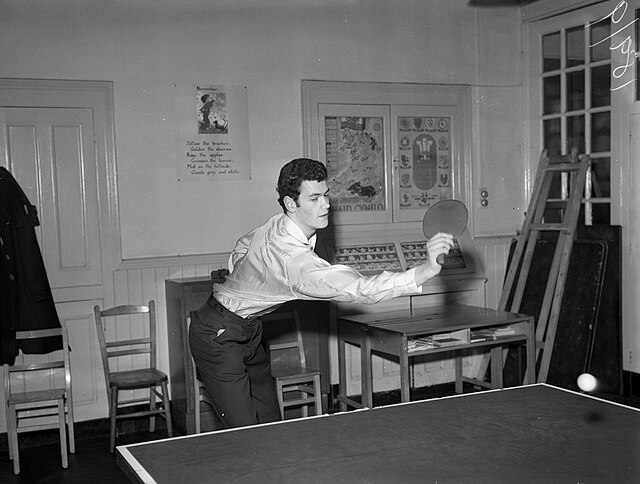
If the central argument of your book is about youth clubs impacting UK and Northern Ireland culture, Bristol’s Basement is probably the premier example of that.
The temptation is to think of the youth club as a charity, but actually it’s a cultural space and should be protected as a cultural space. Culture happens through the youth club. Look at the list of people who have been Mercury Prize winners or nominated, so many of them have very explicit youth club links, like Ezra Collective or Roni Size & Reprasent. Even The Beatles and the Stones went to youth clubs. You can track it right back.
Bristol had youth clubs which related very directly to music culture, particularly soundsystem culture. When you combine a youth club with a soundsystem, suddenly it helps explain why this country has produced so much incredible music over such a long period of time. It’s to do with the Empire’s echo, what [Sri Lankan writer and activist Ambalavaner] Sivanandan describes as “we are here because you were there.” All of those histories swirling together can be turned into something transmuted through the youth club.
Simon Wheatley’s Lost Dreams photographs of East London community centres in the 2000s are such an intimate and energetic visual expression of that. People might know how pirate radio shaped grime, but maybe less so youth clubs?
Tower Hamlets retained more of its youth clubs for longer than other boroughs. The network of youth clubs that managed to survive the Thatcher cuts was more intact than in other places. When your grime originators were young, people could go to the youth club to practice their things. I remember Dizzee Rascal telling me he began DJing at his youth club disco as a jungle DJ under the name Dizzee D. Then when I dug into it, it became evident that a lot of MCs began in adventure playgrounds. Roll Deep cited Crisp Street adventure playground. Wiley’s dad had been a youth worker. That generosity evident in grime, that crew mentality, it’s not that different from a youth club mentality. What do you want to do? We’ll make it happen. It’s something about DIY culture that’s also present in the youth worker mentality. So many people who came into youth work came there off the dancefloor, from the free parties or the raves. There’s a huge overlap between those things.
And that was blossoming at a point when youth clubs were already in decline. It’s interesting how in 1997, there’s a consensus between Labour and the Liberal Democrats to fund youth services after Thatcherism. But the product of that is Connexions, essentially a careers’ advice service (in Blackburn in the 2000s, I found out about this service because they advised my elder brother to join the army during the Afghanistan and Iraq wars.)
Simon Wheatley’s title Lost Dreams becomes relevant for the whole thing then, doesn’t it? There are many lost dreams. The long history of the youth club is one of patchwork. Lots of different people scrabbling up to use the resources that they can. It’s always been on shaky ground. Yeah, it’s outrageous that the money that could be spent on a statutory level isn’t spent on this important work. But it never really has been properly either?


I could focus on what has been lost, and I’m very angry about what has been lost, but I choose to focus on what remains, and what we can do with what remains. I’m very heartened by youth projects like in Devon, where they managed to retain eight out of their 35 youth clubs during austerity, and that’s one of the best outcomes nationally. The Warren Project in East Yorkshire is doing amazing work about the rise of the far-right, working with boys and young men. These things are very, very ordinary. The benefits can’t be seen for decades – if ever. But we just have to keep doing them and that’s what I choose to put my energies towards.
No money was saved by cutting and shutting youth clubs. It was an expensive thing to do, which the Institute of Fiscal Studies has shown. None of us benefited. Where did that money go? Wealth inequality increased, the very rich are getting very much richer. The story of what happened feels like daylight robbery. And yet, people still organise, come together, and make things happen.
Have you detected any shifts coming from the Labour government at all on youth clubs?
I had a strong view when I looked at the announcement in August about the funding for what they are calling youth clubs. It isn’t youth clubs at all, it’s after school projects. Twelve areas in the UK can apply for money to do very specific things like a climbing wall. What’s the point of a climbing wall if you don’t have a space? What’s the point of a music project if you don’t have a youth worker? £7.7 million of the money was for uniformed organisations and police cadets. We are paying for the recruitment pipeline for the police with youth club money? That manifesto promise has not been fulfilled, but there is still time for them to do better.
I’m loathe to say what needs to be done, but to recognise the value of long-haul, open-access youth spaces where you are not tied to short-term projects, outcomes or success metrics. You just recognise it’s value: spaces where young people can go locally and find out what they’re interested in, do interesting things and just be. It doesn’t matter if you can’t measure it, because it works.
Up The Youth Club: Illuminating a Hidden History by Emma Warren is published by Faber.