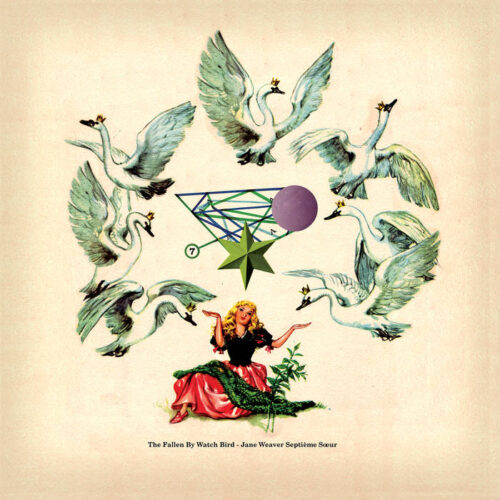
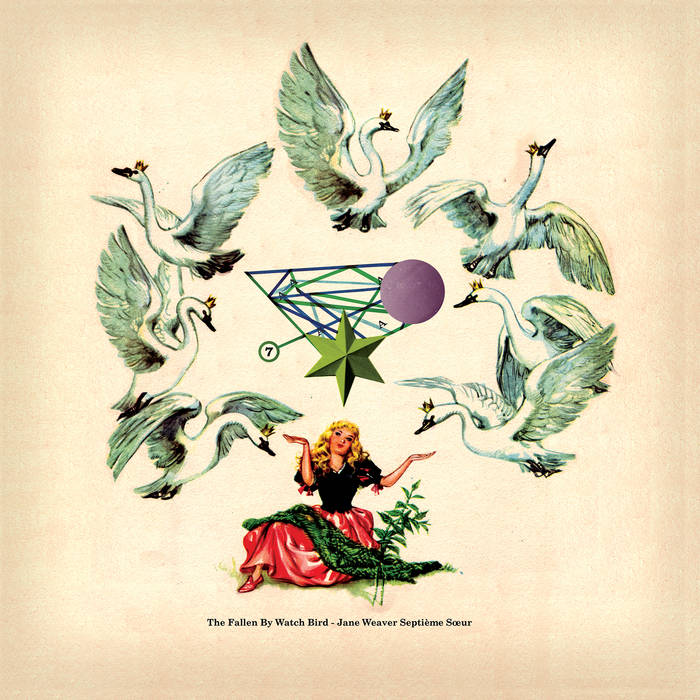
What is a watch bird? In Jane Weaver’s telling, it’s a remarkable creature that can travel long distances, seek out the lost, and weather great storms. This album, too, is of sweeping scope: it dances through eras and splashes through genres with abandon. Fifteen years on from its first release, and now in an expanded edition, The Fallen By Watch Bird remains as chimerical as it ever was.
Inspired by the nightmares for children that 1970s popular culture enjoyed churning out, The Fallen By Watch Bird recreates the sensation of ancient fables told through a flickering cathode ray. Weaver’s previous albums had been folk-oriented, and this influence is still palpable, but now she merges these impulses with spacerock, prog and psychedelia. Never quite analogue, never quite electronic, sounds trickle and cascade through the album’s fantastical panorama.
Weaver’s stylistic trysts are thoroughly successful – and reach their apogee on the title track and album centrepiece. ‘The Fallen By Watchbird’ represents soaring wings across a vast ocean, and Weaver creates a fervent, mythical-yet-earthy feel with real emotional weight. Elsewhere, particularly on ‘Hud A Llefrith’, Weaver’s power is wordless and less flamboyant – without losing any intensity.
The record is credited to Jane Weaver Septiéme Sœur, recognising the collaborative nature of the endeavour. Guests include Susan Christie and Wendy Flower (both of whom recorded psychedelic folk in the very late 1960s) alongside Weaver’s contemporaries, Lisa Jên of 9Bach and Bosnian singer-violinist Behar. The collective ebbs in and out of Weaver’s creation, sometimes with great presence – such as Christie’s narration on ‘A Circle And A Star’ – and at other times, with a waft, a mood. The cumulative effect is that Weaver, who is frequently singing of being disorientated or trapped, has unseen but powerful protectors surrounding her.
This expanded edition is packaged with The Watchbird Alluminate, originally released in 2011. An album of reinterpretations where Weaver works with a number of different artists, it doesn’t quite live up to its parent, although it has its moments: Demdike Stare on the opener ‘Europium Alluminate’ ramp up the menace, while Magpahi’s fluttery take on ‘My Soul Was Lost, My Soul Was Lost, And No One Saved Me’ perfectly matches the vulnerable lyrics.
Fifteen years ago, The Fallen By Watch Bird marked a new era for Jane Weaver. The earnestness of her earlier albums was swept away, replaced by supernatural happenings and a voluminous musical palette. It delights in finding the harmony between its sounds rather than glorifying in the differences and, as well as being a high-concept fairytale, is also a very approachable and lovable album.