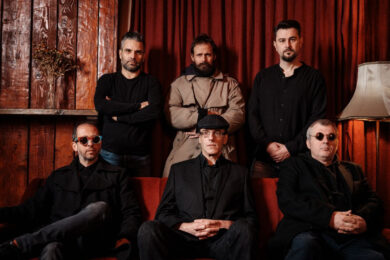

Sailing down the middle of the Danube, our guide points out that the largest parliament building in Europe is on our left. He says Hungary opened the first metro in Europe. Since the UK left the EU, he adds, we can now say that without hesitation.
We are at the Budapest Music Hub River Party. The event showcases music from Central and Eastern Europe, serving as an opportunity to meet and discuss perspectives on the music industry in the region. Earlier in the day, during a panel, a debate broke out over the future of the Sziget festival. For a moment, it seemed unlikely it would take place, after the company’s management terminated its agreement with the capital city, but fortunately, a solution was found: the festival is now back in the hands of its founder and management team
These kinds of meetings and initiatives are happening more and more frequently. Their increasing prevalence reveals the ongoing complexity of the European cultural ecosystem – showing how the continent’s countries, regions, and histories continue to interact, and how former borders still manifest in new divisions, albeit with different dynamics today.
At one such event, our discussions moved into a Budapest café with Elina Kalnibalotskaya of the Belarusian Council for Culture. Here, we turned our attention specifically to musicians from Belarus living in exile, examining the challenges of promoting music from abroad and the success stories of artists such as Molchat Doma, Soyuz, and Dlina Volny, who have attained global recognition.
Earlier this year in Poland, an argument erupted when it was revealed that Swada i Niczos was a contender to represent the country in the Eurovision Song Contest. The Polish public questioned how a band singing in pudlaśka mova, an East Slavic literary microlanguage based on the dialects spoken by inhabitants of the southern part of Podlachian Voivodeship in Poland, could represent the wider nation. Right wing circles expressed outrage, claiming “Poland is only for Poles.” Despite the controversy, the song quickly gathered plays on streaming platforms and emerged as a notable reflection of contemporary cultural diversity and European dialogue. Although the band ultimately lost to 1990s pop star Justyna Steczkowska, Swada i Niczos remained a topic of discussion – an outcome that marked their success.
Reflecting on these experiences, I started reading Goodbye, Eastern Europe, by Jakub Mikanowski. The book invites a different perspective, considering the continent as a mosaic of religions, empires, societies, and totalitarian legacies, rather than through the lens of statehood. This approach underscores that the identities of Eastern and Central Europe are inherently complex and multifaceted.
This notion echoes ideas expressed by Milan Kundera as early as the 1980s, in his essay ‘The Kidnapped West Or The Tragedy of Central Europe’, where the novelist argued that Central Europe was never unified politically, but rather bound by a shared fate. Culture and experience – not states or borders – shaped its identity, one where languages and religions coexisted and clashed, where ‘us’ and ‘them’ could be close neighbors, and where identity was continually negotiated. After the Second World War the Soviet Union aimed to impose a single narrative – one bloc, one language, one story. Kundera cautioned that this standardisation threatened the region’s core: its diversity and contradictions.
This historical and cultural richness has shaped the character of resistance in the region: as Kundera observed, in Central Europe, revolts often originate in culture rather than in politics.
Continuing this exploration, I recently discovered Amirtha Kidambi’s album New Monuments Live in Vilnius. Having known Amirtha for some time, I admire both her artistry and activism, particularly her outspoken stance against colonialism.
What particularly caught my attention was the album’s description on her Bandcamp, which begins by referencing – as she writes – “a searing performance in Eastern Europe.” This prompted me to reflect more deeply: what does this term, ‘Eastern Europe’, actually mean? Previously, I’ve written about its umbrella-like qualities, how it can flatten numerous cultures into a single notion, sometimes in a postcolonial sense. In this case, Kidambi seems to use the term to challenge both contemporary capitalist and postcolonial world orders. It’s important to note this is not about musical genres but places – Vilnius, Prague, Ljubljana, Gdańsk – each unique. I wondered, were the concert recorded in France, the Netherlands or the UK, she would have referred to it simply as ‘Western Europe.’ After several days of thought, I decided to write and ask her directly.
“I guess for me, the fact that Eastern Europe as a region where we get to play feels very different in orientation, to us in a positive way,” she replied. “I consider myself Eastern, so, in that sense, it always feels incredibly different for me to play in Poland, Slovenia, Latvia, the Czech Republic, Lithuania, and Hungary than it does in France or Germany. The audience feels younger. The political history, which is very different from Western Europe, feels closer. The themes resonate differently. And I guess I’d say, yes, I do think of those places as Western Europe and all the problematic political ties they have with imperialism, especially right now. I often refer to these places as “so-called” Western liberal democracies. The West, to me, is hegemonic. The East has the potential to be counter-hegemonic.”
Below are my top picks from 2025’s Central and Eastern European releases – 10 new albums and 10 classic reissues that are just as vital.
Jakub Knera’s Top 10 Central and Eastern European Albums of 2025
Heinali & Andriana-Yaroslava SaienkoГільдеґарда (Hildegard)Unsound
A reinterpretation of 12th century compositions by Hildegard Von Bingen, combining Heinali’s electronic suites with Andriana-Yaroslava Saienko’s polyphonic Ukrainian singing. The album consists of two long pieces – the lively ‘O Ignis Spiritus’ and the cooler, more contemplative ‘O Tu Suavissima Virga’. Both develop slowly and employ monumental drones. The songs were recorded – at a much slower tempo than the originals – at Sylvanès Abbey, whose clear, eight-second acoustics give the music a crystalline space. Heinali uses traditional techniques – long drones found in lyres and organs – and transfers them to synthesisers. Saienko interprets Von Bingen emotionally, singing in Ukrainian. This shows that early and traditional music does not belong in museums. Instead, it is alive, resonating between electronics and physical singing.
Kult Masek & Petr VrbaFumarolaMappa
Petr Vrba is a Czech experimental musician, improviser, and performer associated with the contemporary music, free improv, and sound art scenes in Prague. He is also known for using the trumpet, often prepared or amplified, to extract noise, air tones, micro-vibrations, and abstract sounds. Kult Masek is a project by Michael Nechvátal, a creator also known for groups such as the modular synth duo Jasnovidec and the band Raw Deal. He operates in the field of experimental music: electronics, drones, ambient and noise. This is not their first meeting, but it is their most convincing. The music is dense, dark, and extremely coherent. The language of both is present, but it recedes into the background to create a unified whole. The album develops linearly. Based on spatial collages, they create detailed interventions and sounds straight out of a horror movie.
Richard HronskýPohrebMappa
Ambient, field recordings, loops and jagged brass – everything in Richard Hronský’s music seems to function as found material, eroded by time and memory. It feels as if the sound must go through mourning before allowing the listener in. Pohreb (meaning Funeral) acts as a private rite of passage performed in semi-darkness. This is not a mournful album in the traditional sense, instead, it is the diary of someone trying to rebuild their relationship with the world after losing loved ones. The recordings from his home village are striking, intertwined with his grandmother’s whispered prayers, drone-like murmurs, and scattered electric guitar. Sounds echo in mountain valleys, returning in layers and changing shape, as if the music is trying to capture something that’s slipping away.
Syndrom SamazvancaMahajbaSelf-Released
Two years ago, I compared Syndrom Samazvanca to bands such as Osees and King Gizzard & The Lizard Wizard. Now, they’re turning more into krautrock. You can hear it in the opening track, ‘Kosmische Walatschobniken’, which lasts nearly 16 minutes. There are spacious moments in their music, but as a whole they’re moving more toward the Can style, with catchy riffs and rhythmic constants. What really sets their music apart, however, is their engagement with Belarusian history and heritage. On Radyjo Niamiha, released in 2023, they drew on the classics of Belarusian rock from the 1990s. Now they have turned to the country’s folk songs for inspiration. This makes for quite a psychedelic experience when they sing about working in the fields, a rebellious nobleman, or wartime ballads in search of contemporary meaning.
Penza PenzaHang Loose! I Got Dem Ol’ Surfer Bloos…Funk Night
Misha Panfilov is an Estonian composer and producer whose work moves fluidly between jazz, funk, psychedelia, and ambient sound design. His output is sprawling: solo records, theatre collaborations, film scores, and even original radio shows. He leads a number of ensembles, among them the Misha Panfilov Septet, which blends jazz-funk with hazy ambient textures, the Estrada Orchestra, and Center El Muusa, a project in which he dives deep into psychedelic jazz and experimental lounge. Then there’s Penza Penza, a psychedelic garage outfit whose latest album is equal parts strange, disquieting, and irresistibly gripping. Drenched in reverb, warped guitars, and the eerie energy of a beach party slipping into chaos, their music reframes the golden glow of the 1960s from an Estonian vantage point. It’s the decade’s mythology reimagined through Panfilov’s signature grit, eclectic instincts, and fearless approach to production.
Julek PloskiGive Up ChannelMappa
Julek Ploski creates music for our times – pulsating, for a society lacking concentration, rife with FOMO. He combines the baroque with computer game music, field recordings, club tracks, and post-classical samples, creating a blend of sounds that is at once strange and emotionally resonant. A kind of mirror of reality, a conglomeration of the chaos that surrounds us, which we can observe in slow motion. However, there is a subtle drama and sometimes even a cinematic quality (perhaps that is why one of his songs was included in the soundtrack to Stranger Things), which weaves the whole into a theatrical form, full of details, bizarre juxtapositions, ambiguities. It’s sometimes overwhelming, but if you allow yourself to be carried away by this music, it offers an extremely colourful, poignant, sometimes ecstatic, and sometimes moving picture of reality.
The Cyclist ConspiracyBack To Hermetics And Martial Arts Vol. 1Subsound
This Serbian collective from Belgrade has been making genre-defying music for over a decade, shifting between psychedelic rock, world music, folk and desert rock. Their distinctive sound is based on rich arrangements, copious instruments, a mystical mood, and quasi-cinematic drama. Their music remains largely instrumental, supported by vocals used as an element of atmosphere rather than a vehicle for lyrics. The band is inspired by Balkan and Middle Eastern traditions, rebetiko music, and the aesthetics of 1970s psychedelic rock. Their work resembles a journey through different cultures and eras, combining archaic and modern elements. On Back To Hermetics And Martial Arts, Vol. 1 they combine psychedelia, ritual music, Asian influences, and spaghetti western drama. Of course, with a touch of irony and a wink to the listener.
Ani ZakareishviliNeither In The Sky Nor On The GroundWarm Winters
Ani Zakareishvili’s latest album was originally created as a live set for the Tkeshi festival in Tbilisi, with its own dramaturgy and narrative. Her work is characterised by an interest in sound as material, experimenting with sampling, texture, and space. The studio version is instrumental, but retains the structure of a “story” with a beginning, middle, and end. It has a dreamlike, somewhat tape-like sound, as if the artist wanted to emphasise the artificiality of the medium: a stuttering cassette or looped vinyl. Zakareishvili experiments with rhythm, samples, loops, and glitches, sometimes building pulsating, hypnotic structures. There are fragments with distorted bass, spatial percussion, synthetic melodies, and elements reminiscent of mechanical noise or echoes. A bit of sampling, a bit of Philip Jeck influence, a modern music of decay and friction, but full of emotion.
ShishiFAQBirthday Cake
A super trio from Vilnius that juggles post punk, surf rock, free-flowing melodies, and feisty riffs. Add to that cool, short but meaningful lyrics that give the whole thing a slightly abstract vibe. English words dominate, but when the band reach for Lithuanian and sing choral polyphonies (post-post-sutarines in ‘Žalias taškas’), it has an extraordinary power and charm. Besides, it is very lively, raw, and pulsating – short but intense – showing that the classic rock band in its Baltic version is doing very well, neatly drawing on the guitar legacy and giving it a characterful verve that dominates the seaside melancholy often present in this type of band.
FigurasC-SidesSelf-Released
A project by Latvia-based Kaspars Groševs emerges from the borderland between sound art and visual practice. In the beginning, he consciously relied on what was raw, imperfect, and seemingly low-quality. He reached for old synthesisers, cassettes, tape recorders, and second-hand equipment, building a sound world that seems to have a life of its own – as if the songs could never begin and never end. Figūras’ music features a lot of improvisation, long-form pieces, drones, noise, ambient passages, distortion, and analogue randomness. It is a sound that does not want to be tidied up – it exists as a process rather than a product. Over the years, he has moved from using archaic synths and drum machines to more contemporary sequencers and samplers. The project shows that art can grow from minimal means when backed by consistency and sensitivity.
Reissues
Anna Nacher & Marek StyczyńskiBaryczInfinite Expanse
Nacher and Styczyński, better known as the Magic Carpathians Project, have been active in Poland since the late 90s. Sometimes referred to as the Eastern European Art Ensemble of Chicago, they blend jazz sonic and structural innovations inspired by ethnic sounds with minimalist ambient and environmental music. The album is set in the Barycz Valley, a national park in southern Poland, and features recordings of 35 different native animal species, along with a range of acoustic instruments. These are very dreamlike, slightly ambient recordings, but the animals have something unusual about them due to the unique combination of instruments and recordings. In addition, there is a section on nature reserves, which focuses in part on an ecological disaster that took place in the Oder River in 2022, which forms part of the sound history of the environment and serves to emphasise the impact of this event on the local area, as well as the human effort that followed.
Various ArtistsJugoslavia Wave: Yugoslavian New Wave & Post Punk, 1980-1989Death Is Not The End / World Gone Mad
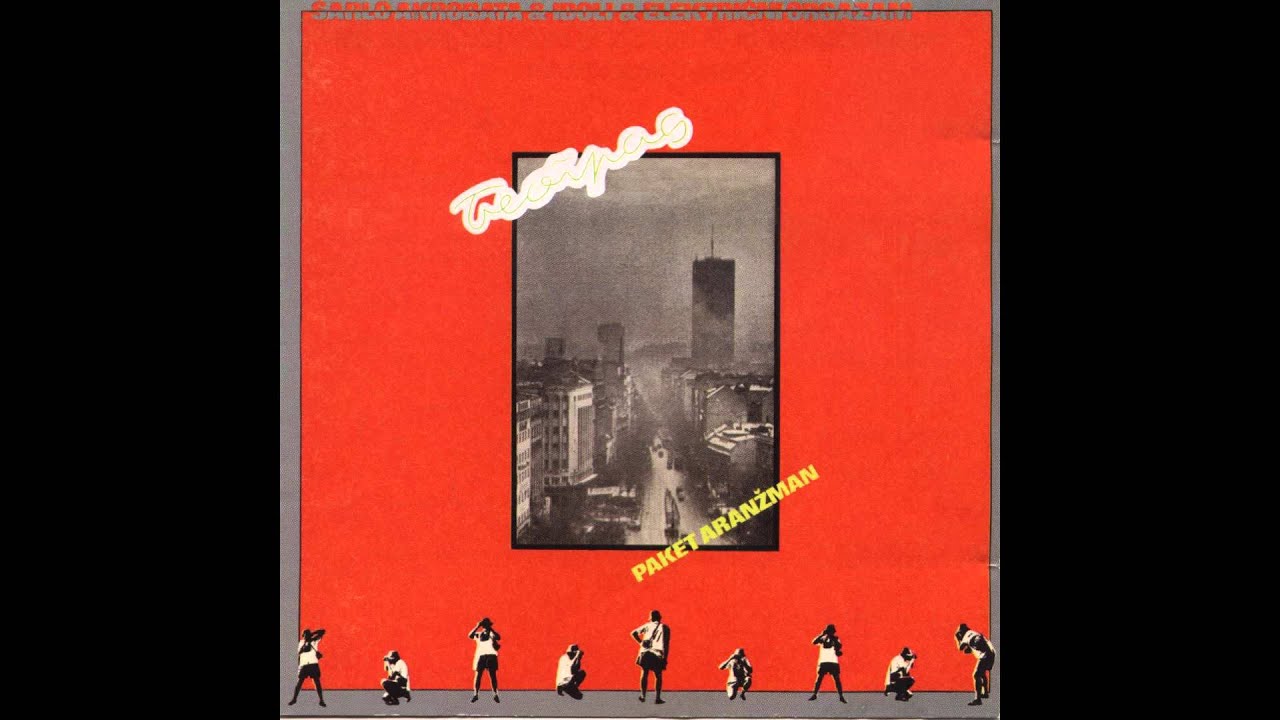
The Yugoslavian new wave (novi val) was one of the most dynamic and original musical movements in Europe at the turn of the 1970s and 1980s. It developed in the specific conditions of socialist but relatively open Yugoslavia, where access to Western culture was easier than in the countries of the Eastern Bloc. In large urban centers like Belgrade, Zagreb, Ljubljana, and Rijeka bands were formed that combined post punk rawness, energetic new wave, industrial influences, minimalism, and urban irony. Artists such as Šarlo Akrobata, Idoli, Paraf, and Električni Orgazam created sounds that were thoroughly modern, yet firmly rooted in local reality, full of social commentary and experimentation. Against the backdrop of this colourful and creative landscape, this cassette-only compilation emerges as a contemporary portrait of the scene. 90 minutes of music from the Yugoslav underground, reflecting the diversity and experimental nature of the era.
Zdeněk LiškaArchives Vol. 2 Music To Films By František VláčilAnimal Music
Zdeněk Liška was one of the most innovative and prolific film music composers in Central Europe. In the 1950s he was ahead of his time, combining orchestra with electronics, creating his own instruments and sound effects, and treating music as an integral part of film narrative. His collaborations with František Vláčil and Jan Švankmajer became sound laboratories in which image and music formed an inseparable whole. At the height of his career in the 1960s and 1970s, he composed music for more than a dozen films a year, becoming one of the most important figures in Czechoslovak cinema. The second part of the Zdeněk Liška Archives presents music from František Vláčil’s films Fires on Potato Fields (1976) and The Legend of the Silver Fir (1973), both reflecting Liška’s refreshed approach to film sound.
Arvo PärtSilentiumMississippi
Arvo Pärt is one of the most important figures in contemporary Estonian culture and the most performed living composer of classical music in the world. His distinctive minimalist style, known as tintinnabuli, combines spiritual contemplation with emotional depth, resulting in works such as Spiegel im Spiegel, Fratres, and Tabula Rasa, which are widely appreciated. For Estonians during the Soviet censorship era, Pärt’s deeply introspective music became a silent form of resistance – free from ideology, conveying a sense of inner freedom and dignity. Silentium combines simplicity, spirituality, and mathematical precision, moving listeners regardless of their culture. It develops slowly, inducing a state of meditation, calm, and inner reflection. Based on long notes and meaningful pauses, it creates a sense of suspension and timelessness – the music breathes, fades, and lingers, rather than ending definitively.
Röövel ÖöbikPopsubterraneaMemme Vaev
Although shoegaze is most often associated with the British scene of the late 1980s and early 1990s, bands also began to appear in Central and Eastern Europe that experimented with fuzzy guitars, melancholy, and noisy introspection. Röövel Ööbik are considered legends of the Estonian alternative scene, and their second album, Popsubterranea, is one of the most important releases of the 1990s in the region. In 1993, Röövel Ööbik became the first band from Eastern Europe to be invited for a Peel Session. After their provocative debut, Ilu, the musicians decided to create more immersive, sound-drenched recordings, and developed their own cool variation on the genre. The guitars float in reverb, the rhythm pulsates, and Tõnu Pedaru’s vocals oscillate between whisper and expression. Their music combines surreal pop, noise, and minimalism, where melancholy meets anxiety.
Gábor SzabóJazz RagaVampisoul
Jazz Raga from 1966 is a bold and ahead-of-its-time album in which Gábor Szabó combines jazz with psychedelia, Indian music, and a trance-like pulse, creating a sound that was extremely innovative for the mid-1960s. His fascination with raga and sitar is not just a decorative element here, but the foundation of the songs’ structure, and Szabó’s characteristic percussive playing intertwines influences from Hungarian folklore with Indian scales. ‘Mizrab’ can be seen as a precursor to later fusion and acid jazz, and Szabó’s courage is also evident in his reinterpretations of classics such as ‘Paint It Black’ and ‘Caravan’, to which he lends an eastern-psychedelic tone. As a result, Jazz Raga gained cult status, sought after by collectors and DJs as one of the first examples of jazz fused with Eastern aesthetics. To this day, it remains proof of Szabó’s extraordinary intuition.
Ozren DepoloChapters (Screen & Stage Dancefloor Jazz from Yugoslavia 1971-1984)Fox & His Friends
Ozren Depolo, a Croatian composer working within the Yugoslav cultural system, composed pieces for theatre and television in the 1970s and 1980s that, although functional, are funky, sensual, saturated with jazz, and deeply danceable, making them sound more like club gems than background music. In his perspective on library music, there is a combination of orchestral elegance and electric groove characteristic of the era, and Depolo himself goes far beyond the illustrative. That is why they still hold their own today and retain their autonomy when separated from the images they were designed to accompany – they balance between jazz, funk, and dance rhythms, while at the same time carrying the cinematic narrative typical of music for theatre and television. Chapters draws on the archives of a composer whose work remained unknown outside the region for years, but who today ranks alongside figures such as Piero Umiliani or Lalo Schifrin.
Tomasz StańkoPolish Radio Sessions 1970-91Polskie Radio
The fact that Tomasz Stańko, one of the most prominent jazz musicians in Europe, has hidden secrets in his work was demonstrated two years ago, when he presented previously unreleased 1972 material from his first band, a quintet, in its rawest, most frivolous, and uncompromising form, called Wooden Music. Following that, this huge box set reveals almost two decades of the trumpeter’s activity documented on Polish Radio. In addition to the aforementioned quintet, there is a duo with Adam Makowicz playing the bass version of the Fender Rhodes, an extraordinary suite with saxophonist Tomasz Szukalski, a hybrid of improvisation and electronics, minimalism written for double bass and trumpet, and a turn towards funk and Latin music. An incredibly vast archive that reveals a different side of a musician known mostly for something completely different.
Super Grupa Bez Fałszywej SkromnościThe Book Of JobHuveshta Rituals
The performance of The Book Of Job at the Jazz Jamboree in 1981 was a response to the tension that permeated Poland at the height of the Solidarity movement, where a group of leading jazz musicians and avant-garde artists interpreted the biblical story of Job as a metaphor for collective fear. Four years later, in the basement of Krakow’s STU Theater, they met to record an album, however, it was never released and lay forgotten. In 2007, a limited-edition CD was released, but it has now made a full comeback. It finds the band led by Milo Kurtis, who draws inspiration from spiritual jazz and has also played in important bands such as Maanam and Osjan. It’s a spiritualistic séance with jagged rhythms, sitar sounds, and psychedelic landscapes coming to the fore, leading to a mystical trance, a commentary on a country at a time of transformation, like a combination of Alice Coltrane and Holger Czukay behind the Iron Curtain.
Don Cherry, Krzysztof Penderecki, The New Eternal Rhythm OrchestraActionsIntuition
In 1971, at the Donaueschingen Festival, a unique meeting took place between two outstanding artists: Polish composer Krzysztof Penderecki and American trumpeter and free jazz pioneer Don Cherry. Together with the New Eternal Rhythm Orchestra – a band composed of leading representatives of the European and American avant-garde, including Peter Brötzmann, Han Bennink, Tomasz Stańko, and Kenny Wheeler – they created a concert that innovatively combined contemporary classical music with radical jazz. Released in 1973 by Wergo, the recording quickly became legendary. The album presents a fascinating dialogue of aesthetics: Cherry’s compositions (‘Humus – The Life Exploring Force’ and ‘Sita Rama Encores’) draw on Eastern music and Native American traditions, while Penderecki’s ‘Actions For Free Jazz Orchestra’, although inspired by jazz, remain rooted in 20th century classical music techniques and are largely written in score.