
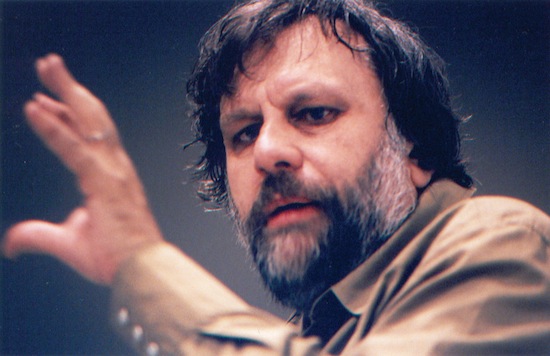
The Slovenian philosopher and cultural critic Slavoj Žižek is something of a divisive figure. His critics contend that his work is based on a misreading of his two great heroes, Hegel and Lacan, and that his style of argument is unreasoned and lacking in cohesion, whilst his fans marvel at the totality of an approach which incorporates the analysis of pop culture alongside heavy-duty philosophical theory. Žižek’s newest book, delivered only a few months after a magnum opus on Hegel, is a comparatively slim volume entitled The Year of Dreaming Dangerously. The year in question is 2011, and the dreams are those of the protesters who took to the streets of New York, Cairo, London and Athens in search of emancipation from tyranny and the shackles of the capitalist global economy. Žižek’s title is also an allusion to other, darker dreams – those of the opponents of multiculturalism around the world, dreams which found their most shocking realisation in the killing spree perpetrated by the Norwegian Anders Breivik.
Žižek’s method in The Year of Dreaming Dangerously is much like that of a curator: he takes the events of last year and loosely arranges them, looking for clues as to how they interact with each other, what they might mean, and what theories can be used to explain them. His use of theory is in itself curatorial, as he takes elements from different spheres of thought – chiefly the psychoanalytic theory of Lacan and the economic and social theory of Marx – and combines them, applying them to phenomena in unlikely ways. Of course, like all good curators, he has a guiding vision, an end-goal in mind, which is the destruction of capitalism. In his introduction to the book, Žižek describes his project as being able to provide a “‘cognitive mapping’ of our situation”. (Though, one might, perhaps all too easily, add: and to work out what any self-respecting radical leftist’s next move might be in that situation!)
He begins, logically, with a Marxist analysis of the contemporary socio-economic predicament, focusing in particular on Greece, which he describes as “Europe’s singular universality: the nodal point at which the historical tendency that shapes its present appears at its purest”. Unsurprisingly (and there are very few surprises in the Slovenian’s political train of thought – about which he has never made any pretence) Žižek warns against both of the principal methods currently on the table for dealing with Greece (trial and repeated error austerity measures versus "a return to the authentic Welfare State" and stricter banking regulation), arguing that it is clear neither will succeed in feeding and taming the beast of capitalism. The reason? America, the juggernaut which keeps the entire world economy running, is an empire in decline, vacuuming up other countries’ profits at an alarming rate and offering only hypothetical military protection in return. All questions regarding how to proceed with Greece pale into insignificance by comparison.
So runs Žižek’s spiralling logic. At times, at the end of a chapter, you are unsure quite how he has arrived at his final point, given the place he started from. And yet, if you retrace his steps, each move or shift of focus does make dialectical or associative sense. His method, as the earlier analogy of the curator was intended to suggest, is about drawing parallels between different areas and models of thought. For instance, he equates Marx’s assertions about the role of the economy in social causality with Lacan’s regarding the nature of Freudian slips. Both money and sex, he says, exert their influence from a distance, indirectly: sex is an “attractor… curving the space of the speech-flow”, just as “the economic inscribes itself in the course of the very translation or transposition of the political struggle into the popular-cultural struggle”. It is just this sort of juxtaposition of ideas which arms Žižek’s critics against him, but – viewed from another perspective – the freedom of association by which he makes such juxtapositions is his greatest strength. Is it not logical to apply psychoanalytic theories to sociological questions? It suggests a view of society as an organism – a sort of giant human being – albeit an organism enslaved by systems.
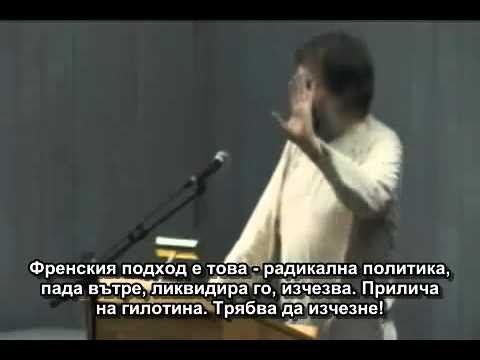
As he comes to the events which form the major focus of the book, however, it is often not Žižek’s inventive applications of theory which stand out, but rather the clarity of his more direct assertions about these events: “Clinging to ethnic identity,” he says, in relation to the Breivik killings and what he deems to be a rise in anti-immigrant feeling in Western countries, “serves as a protective shield against being caught up in the vortex of non-transparent financial abstraction”. This may at first seem slightly abstracted itself in its reasoning but there is undoubted truth in the notion that, when faced with something initially frightening which they do not understand or cannot instantly comprehend, people – as a rule with myriad historical precedent – are likely to transpose their fear into anger at something else; something simpler and more clear-cut. Similarly (and indeed following a similar reasoning), Žižek is clear-headed and eloquent about the nature of the UK riots: “More than anything else the riots were a consumerist carnival of destruction, an expression of acquisitive desire violently enacted when unable to realize itself in the ‘proper’ way (by shopping)… in Nietzschean terms it was reactive, not active…”
It is with an analysis of the Occupy Wall Street movement that Žižek’s study comes to its central preoccupation: the big – some might say biggest – question of what to do next in the struggle against capitalism. The strategy which emerges, via a typically Žižekean extended discussion of The Wire, in what forms the longest chapter of the book, is somewhat elusive: “In some political constellations, such as the late capitalist dynamic that requires constant self-revolutionizing to maintain the system, those who refuse to change anything are effectively the agents of true change: effecting a change in the very principle of change.” He goes on to state that the events of 2011 were “signs from the future” and that all we can do is be open to that future, and refer to these signs as guides.
It is seemingly a weak conclusion, lacking in any real substance, particularly given the tone of the book and its exhilarating promise in terms of what has come before. But what more could we really expect? As Žižek himself says: “Who knows what to do today? There is no Subject who knows, neither in the form of intellectuals nor ordinary people.”
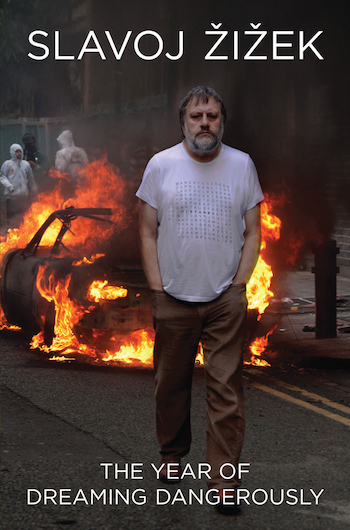
The Year Of Dreaming Dangerously is available now from Verso Books