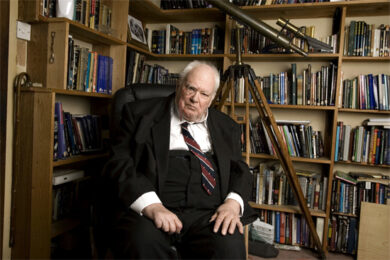


When Sir Patrick Moore died on December 9th, 2012, I was sad to hear it, but not much: you can only feel a certain amount of sadness when someone dies peacefully after a very long and fruitful life, the best possible outcome for any of us. I was cheered by the memories of this interview, though, which I did over the phone on June 17th, 2009. Why I did it by phone I have no idea, although it was probably out of laziness: the long-serving The Sky At Night host lived only a couple of hours’ drive away from me and I could easily have gone down to his house in Sussex and done the interview face to face. It would certainly have been easier to understand him that way: on the phone, his famously garbled speech was almost impossible to understand in places.
I liked him, though, and in August 2011 I called again and left a message asking if he fancied having me, my wife, my kids and my in-laws over later that month, as we were going to be on a seaside holiday near his home. His carer called back and said that the great man would be happy to host. So on the 19th over we went to his cottage, Farthings. He was charming, but unbelievably old and frail. My daughter, eight years old at the time, had drawn a picture of the solar system for him, which he received with good grace considering that the office where we sat and talked was festooned with astronomical tools and data. He presented copies of his mother Gertrude’s book, Mrs Moore In Space, to both my children and I gave him my Motörhead biography, which he skimmed with mild interest, commenting: “So this fellow is from Stoke? So am I!”
We had cups of tea and he showed me his latest book, a collection of his life’s work, which he knew would be his last. “I have nothing more to say,” he said, although he wasn’t bitter or depressed about it as far as I could see. He was ready to go, it seemed, sick of being immobile and ill and only hanging on because The Sky At Night came down to his house to film him every Saturday morning.
When he died, a lot was made of his political beliefs, which were some way to the right of mine, in particular when it came to immigration and equal rights for women. I didn’t really care, though. He was a clever, eccentric old bloke who had no connection with the 21st-century world. I imagine I’ll be a grumpy old misfit when my time comes too, if I get to live that long. I’m glad I met him, and grateful to John Doran at tQ for seeing the potential in this interview and suggesting many of its questions…
“It feels like a different age now,” ruminates Sir Patrick Moore, the 86-year- old TV presenter, astronomer and xylophone player, when you ask him if the 40 years since the first moon-landing have gone quickly for him. As well he might: he’s packed more into his long life than any other three people, having presented The Sky At Night for over half a century, established a global reputation as a maverick eccentric and made the mysteries of the cosmos understandable for the populace in doing so. On the release of an anniversary DVD of the 1969 Apollo 11 landing, what better time to ask Sir Patrick for his views on the juxtaposition of science and rock & roll? We took ten songs with a cosmic, planetary or otherwise scientific theme and presented them to the great man for his opinion.
‘Out Of Space’ – The Prodigy
===========================

Patrick Moore: I must be quite honest with you: this isn’t my kind of music.
That’s Essex techno crew the Prodge, warbling about outer space courtesy of a Max Romeo vocal sample. Does space actually have a boundary, and if so what lies beyond it?
PM: Well, we’re rather stuck here. Either space is finite or else it isn’t. If it’s finite, then what’s outside it? Maybe there’s nothing – no more space. If, on the other hand, space is infinite, you can’t think about something that goes on forever. My brain won’t do it and nor will yours. You can’t describe infinity in ordinary words – I can’t and neither could Einstein. I know because I asked him. Ha ha!
What is the furthest we can see with telescopes?
PM: At the present moment we can see over 13,000 million light years. If Hubble’s law is good – that the further away you are, the greater velocity you attain – then at about 13,800 million light years you’re going so fast that you’re travelling at the speed of light, at which point all communications are cut off.
What are the chances of the Kepler probe finding Earthlike worlds?
PM: Well, they’re certainly there, there’s no question about that. Apart from the 100,000 million stars in our galaxy, we know of about 1,000 million galaxies and that’s only some of them. The number of Earths that could be inhabited is vast. We’re quite sure that there are millions upon millions upon millions of worlds where life could appear. But if life can appear, will it? That’s the one thing that we can’t prove: we’ve no proof of any life outside the Earth. The key may be Mars. I don’t mean little green men, but if we find some trace of life there and we’re sure that it’s not just Earth contamination, I think there must be life elsewhere.
What would be the impact on the human race of discovering intelligent life?
PM: It would be colossal. In science fiction, all aliens are hostile, but I see no earthly reason why that should be so. It they contacted us, they’re more advanced than we are, and they would have gone through the period when they had enough scientific know-how to wipe themselves out and got enough civilisation not to do it. We have to get to that point too, and the quicker the better: after all, we’re not treating the Earth very well. I wonder how many wars are going on at the moment? How much are we spending muddling around in Afghanistan, for example?
‘Space Is Deep’ – Hawkwind
=======================

PM: I’m very sorry I wasn’t keener on your record.
Space is indeed rather deep, as Hawkwind, the original spacerockers, revealed. Tell us, is space as deep as it is wide?
PM: We’re back to the old question here: either space is finite, in which case what lies beyond it? Or it’s infinite, in which case our brains can’t conceive it.
Do the dimensions of the universe relate to the big bang?
PM: The problem here is that if space was created all at the same time, then the big bang happened everywhere, not just at the centre. But if space was created, what was there before there was any space? I compare it to an intelligent gentleman from Alpha Centauri C who comes down here and spends an hour on Bognor Regis High Street. He sees babies, and boys, and men, and old men. He can see that babies become boys, that boys become men and that men become old men, and he’ll be able to work out the complete evolutionary cycle of the human being – but unless someone’s told him the facts of life, he won’t know how the baby got there. In cosmology, our baby is the big bang.
Do you support the idea of the universe ending in a ‘big crunch’ scenario?
PM: Again, we’re not sure. The indications are that the universe will expand forever. On the other hand, there could be a big crunch. Or there could be a second big bang. The problem is that if the universe began at a set moment, what was there before is beyond us.
‘Set The Controls For The Heart Of The Sun’ – Pink Floyd
===========================

PM: To my ear, all these songs are universally awful.
Would it be possible to send a man-made probe into the heart of the sun, as Floyd suggest?
PM: No, of course you won’t. Ha ha ha ha ha! The pressure would make it quite impossible. It’s the sun’s powerhouse, where one element is being turned into another. The sun is shining by creating helium out of hydrogen, and that’s going on at the core at this moment. The sun is also losing weight at the same time: four million tons every second, you know. There’s plenty there for a while. Don’t panic. Ha ha! We’ve got about 1,000 million years, after which the sun will become so hot that all life on Earth will probably be wiped out. There’s a long way to go, though.
Should we move to another planet before that happens?
PM: Well, we don’t know how to do it at the present moment. If life exists on Earth at that stage, either we shift the Earth out [i.e away from the sun] or we go somewhere else. After all, the sun’s great heat won’t last: after it gets to its red- giant stage, which is tremendously powerful, it will go through a planetary nebula phase and then it will be a very small, feeble white dwarf. So certainly our solar system won’t be habitable forever.
Floyd also recorded the Dark Side Of The Moon LP, of course. Does the moon still have a value to science?
PM: Very much so. It has immense value in many ways – to medical research, for one thing. There are many things you can do on the moon which can’t be done here. And of course there’s astronomical photography: on the far side of the moon you’re completely radio-quiet, so it would be a good place for a radio observatory.
Do you still remember the events of the night of the first moon landing?
PM: Very vividly. My feelings as they went down [to the moon’s surface] were a sort of nervousness. After all, going down to the moon had never been done before, and if they’d made a faulty landing they couldn’t have got back. There would have been no rescue for them. And my other worry was when they blasted away again, because that had to work properly first time. Fortunately it did.
Why did the superpowers stop going to the moon after 1972?
PM: There was no point going back after that, because they could have told us more about the moon but it wouldn’t have been fundamental. It was sensible to delay going back until they had rescue provision, because sooner or later something would have gone wrong. The Russians ran out of money, of course. We will go back, but this time there will be rescue provision.
‘Space Oddity’ – David Bowie
===================
PM: I wonder if any of these people could sing even if someone showed them how to do it?
We’ve been quite lucky with avoiding space disasters so far, apart from the three notable disasters, when you consider the odds. Do the man-made objects currently in orbit represent a danger?
PM: To other man-made objects, of course, but it hasn’t happened yet. Space is very big. I think the dangers are not really very great.
Are the windows to go into space getting shorter because of all these orbiting objects?
PM: No. The chances of bumping into something are very slight indeed.
Do you have satellite TV yourself?
PM: Oh yes.
‘Ladies And Gentlemen We Are Floating In Space’ – Spiritualized
===================
PM: This was awful. Ha ha ha!
What would be the long-term effects on the human body of living in zero gravity?
PM: Well, they’re not too sure about that. Over a short period, it’s all right. Astronauts have been on the space station for over a year and they’re perfectly all right, but of course muscles are bound to deteriorate. That’s one of the great dangers. If we ever went to Mars, people would be in space for many weeks and there are no hospitals up there. I don’t know how our muscles would react. Over a short period it’s harmless, but the trouble is that we won’t be able to find out until somebody tries it.
Do you regret never having gone into space?
PM: Me? Ha ha ha! It would take a very massive rocket to launch me.
‘The Romance Of The Telescope’ – Orchestral Manoeuvres In The Dark
===========================
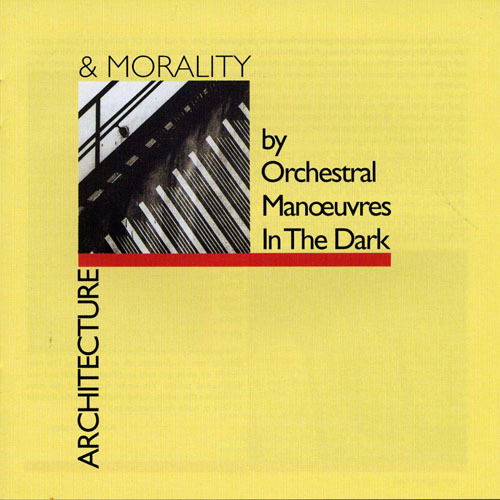
PM: These songs all sound rather alike to me.
What went wrong with the Hubble telescope?
PM: Initially it was made wrong. Human error. And they put it right, but things wear out, and it had to be replaced. Next time it goes wrong, it’ll be a million miles away and they won’t be able to repair it, so let’s hope they get it right first time.
What is the next big challenge facing astronomy?
PM: Well, there isn’t really a space race now, although there could be one with China. But I hope not; I hope they all come together. The next thing is going to be a base on the moon. And that’s quite possible. Beyond that, of course, they’re thinking about Mars, but there we do have one or two bad problems – the main one being radiation, because they’d be out in space exposed for many weeks, and that can be very nasty.
It was popularly supposed in the 60s that the space race would unite the nations. Did you take that idea seriously?
PM: I hoped so, but I was pretty sure it wouldn’t, so long as Russia was so strongly communist. It could be done now, I think, but I don’t know about China. During Chairman Mao’s Cultural Revolution they shot all the astronomers, which may have been a mistake.
‘Supermassive Black Hole’ – Muse
===================

PM: I remember this one! I think it’s dreadful.
What is the difference between supermassive black holes and common or garden black holes?
PM: Well, I’m not trying to be funny, but the answer is mass, of course! Supermassive black holes exist at the centre of galaxies and ordinary black holes are formed by the collapse of a single star. A supermassive black hole is the merger of several, and that’s why they’re in the middle of galaxies.
When the Large Hadron Collider was activated, did you think that we might be consumed by an accidental black hole?
PM: Ha ha! No, I didn’t think that. Don’t panic.
What is the nearest thing we have to physical evidence of the existence of black holes?
PM: Well, you can’t see them, obviously, but they’re there at the centre of our galaxy. We know where the centre is and we can see stars moving, and they’re going round at such a speed that they must be going around some immensely massive object. That’s a black hole. We know they’re there because there are gravitational effects.
What would happen to us if we fell into a black hole?
PM: We don’t really know, but you certainly wouldn’t come out of it alive. Absolutely nothing can escape from a black hole, therefore our ignorance is complete. Inside a black hole, all the ordinary laws of science break down, and all the ordinary laws of common sense break down. Just like the House of Commons! Ha ha!
‘My Dark Star’ – Suede
==================
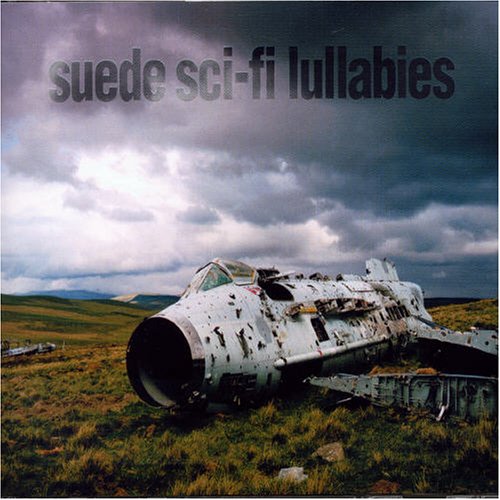
PM: This song did make an impression on me. A negative one. Ha ha ha!
What is a dark star?
PM: When a star exhausts all its energy it becomes a white dwarf, then it gradually fades away and will eventually turn into a black dwarf with no energy at all, but that takes an immensely long time. I’m not sure that the universe is yet old enough so that any black dwarfs have been formed. It’s only been 8,700 million years – they may take longer than that. There could be dead stars around but the only way to tell is by their gravitational effects.
‘Jupiter Room’ – Digitalism
========================
PM: I’m not being very helpful here, I’m very sorry.
What did you think of the film 2001: A Space Odyssey?
PM: I may – I say I may – have made a contribution to it, I don’t know. When they were working on the scene with the space station, I was having dinner with Arthur C Clarke, a very old friend of ours, and I said “Why not use Strauss’s ‘The Blue Danube’?“ And of course they did. Whether or not I had anything to do with it I don’t know. It was merely a chance remark. It was a great film. Kubrick cut off the last 20 minutes and spoiled the ending, but it was a great film.
What you think of the theory that Jupiter’s moon Europa may be capable of supporting life?
PM: I think there may well be an underground ocean there. Whether it can support life I don’t know, but I would think it rather unlikely because the conditions there are incredibly hostile. But they can’t disprove it. My personal view is probably not, but the emphasis is on the “probably”.
‘No Matter What Sign You Are’ – Diana Ross & The Supremes
========================
PM: All of these songs are nasty noises, but it was nice of you to send me a CD.
Why do you think that so many otherwise normal and intelligent people read horoscopes?
PM: I don’t know, but astrology does prove one scientific fact: there’s one born every minute, ha ha ha ha!